
- PRICING
- LIVE QUOTES
- LEARN
- HELP


EN
3 British Undervalued Stocks Trading Up To 35% Below Fair Value
The IMF’s recent praise for the United Kingdom’s stronger than expected growth has shifted global attention back to British assets. When bond markets reassess a country in this way, mispriced UK cash machines can linger in plain sight. That is where stocks generating solid cash potential yet priced below estimated fair value come in. This article highlights three such opportunities from our cash flow value screener.
The three stocks below are a small sample, with our full screen surfacing 24 more companies that share similar cash flow appeal and valuation gaps that are not covered in this article. To identify and analyze the highest conviction ideas straight from this process, head into the Undervalued Stocks Based On Cash Flows screener.
Morgan Sindall Group (LSE:MGNS)
Overview: Morgan Sindall Group is a UK construction and regeneration specialist, combining Partnership Housing, infrastructure projects and property services anchored by long-term contracts.
Operations: The group generates most of its £5.2b revenue in the United Kingdom, led by Fit Out at £1.9b and Partnership Housing at £845 million.
Market Cap: £1.8b
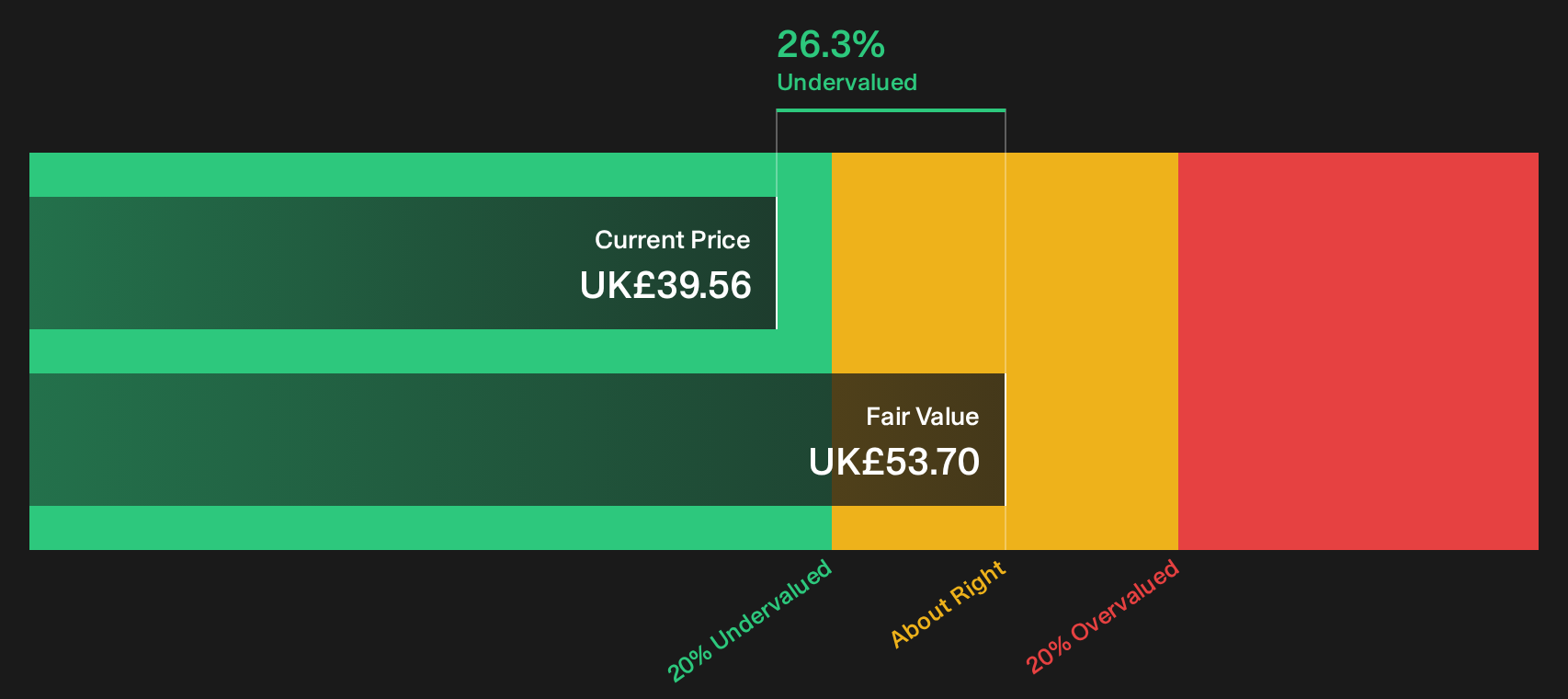
Morgan Sindall Group fits this cash flow focused screen through its mix of housing partnerships and long-duration public-sector contracts, which together create a visible stream of project income that our valuation model still prices below estimated fair value.
"The Group's record-high, rapidly expanding secured order book (up 39% to £12bn) and strong pipeline in both Partnership Housing and Mixed Use suggest robust forward visibility, but reliance on these large, long-duration projects also increases exposure to risks of regulatory delays, planning bottlenecks and changes in government policy.
Future cash returns for Morgan Sindall may hinge on how quietly one pressure on project timing and profitability resolves behind the scenes.
That quiet pressure point is exactly where the story gets interesting, and the full narrative for Morgan Sindall Group maps how contract visibility, cash generation and policy risk are really interacting.
Shell (LSE:SHEL)
Overview: Shell is a global energy group that produces and trades oil, gas, petrochemicals and low carbon solutions, including biofuels and power.
Operations: Shell earns most of its revenue from Marketing at US$134.6b and Chemicals and Products at US$131.8b, with Renewables and Energy Solutions contributing US$41.8b.
Market Cap: £225.1b
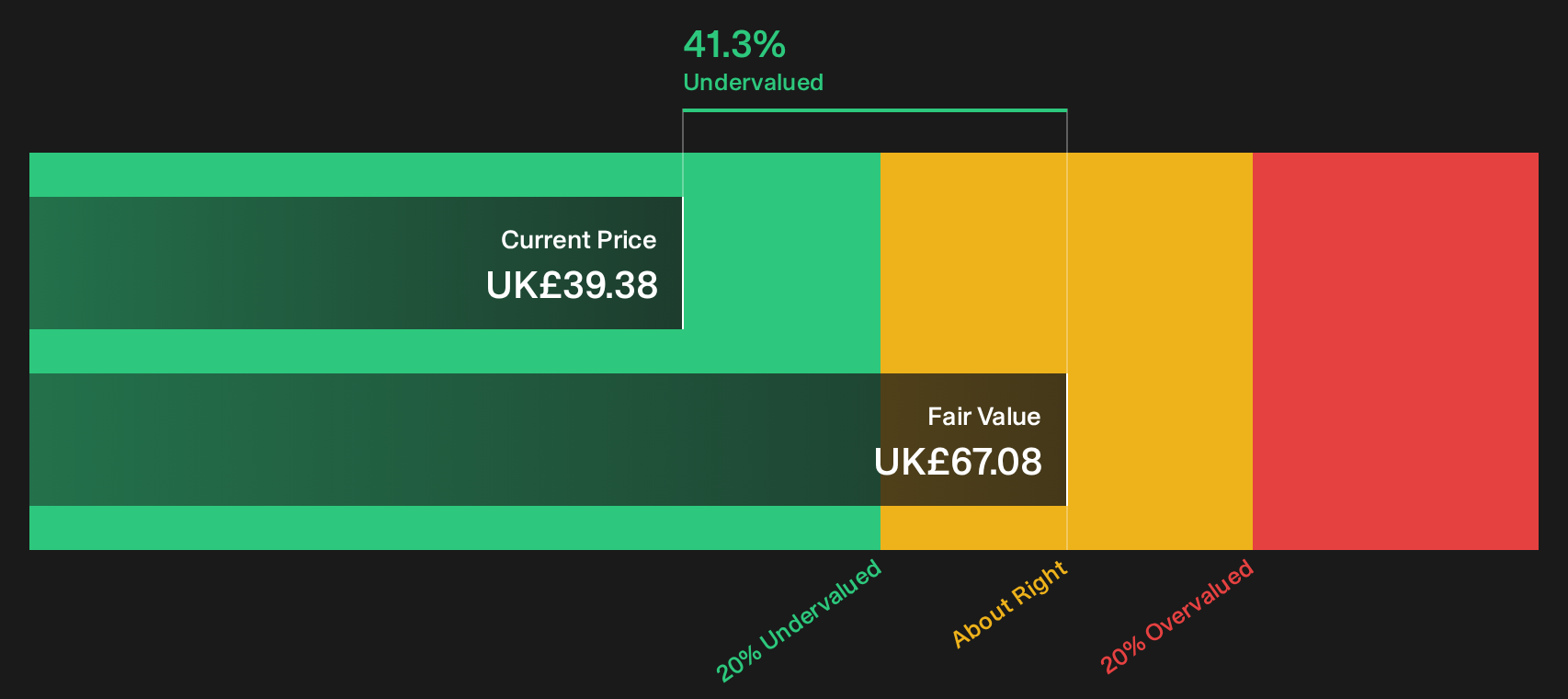
Shell matters for this cash flow focused screen because its traditional hydrocarbons engine and newer low carbon activities both feed into a large, diversified pool of earnings that our discounted cash flow work judges to be undervalued by the market.
"With an LNG portfolio exceeding 60 million tons and unparalleled trading capabilities, Shell is the company that benefits most from the volatility in the global gas market."
What happens to that cash flow picture if a single assumption around future gas pricing and contract mix shifts even slightly?
If that shift matters to your thesis, the full narrative for Shell shows how Shell’s cash engine could accelerate or stall as pricing and contracts gradually reset.
Premier Foods (LSE:PFD)
Overview: Premier Foods is a UK-based packaged food business whose branded ambient grocery lines generate steady cash flows from everyday pantry staples.
Operations: Premier Foods earns £860.4 million from Grocery and £315.1 million from Sweet Treats, mostly from £1.1b of sales in the United Kingdom.
Market Cap: £1.7b
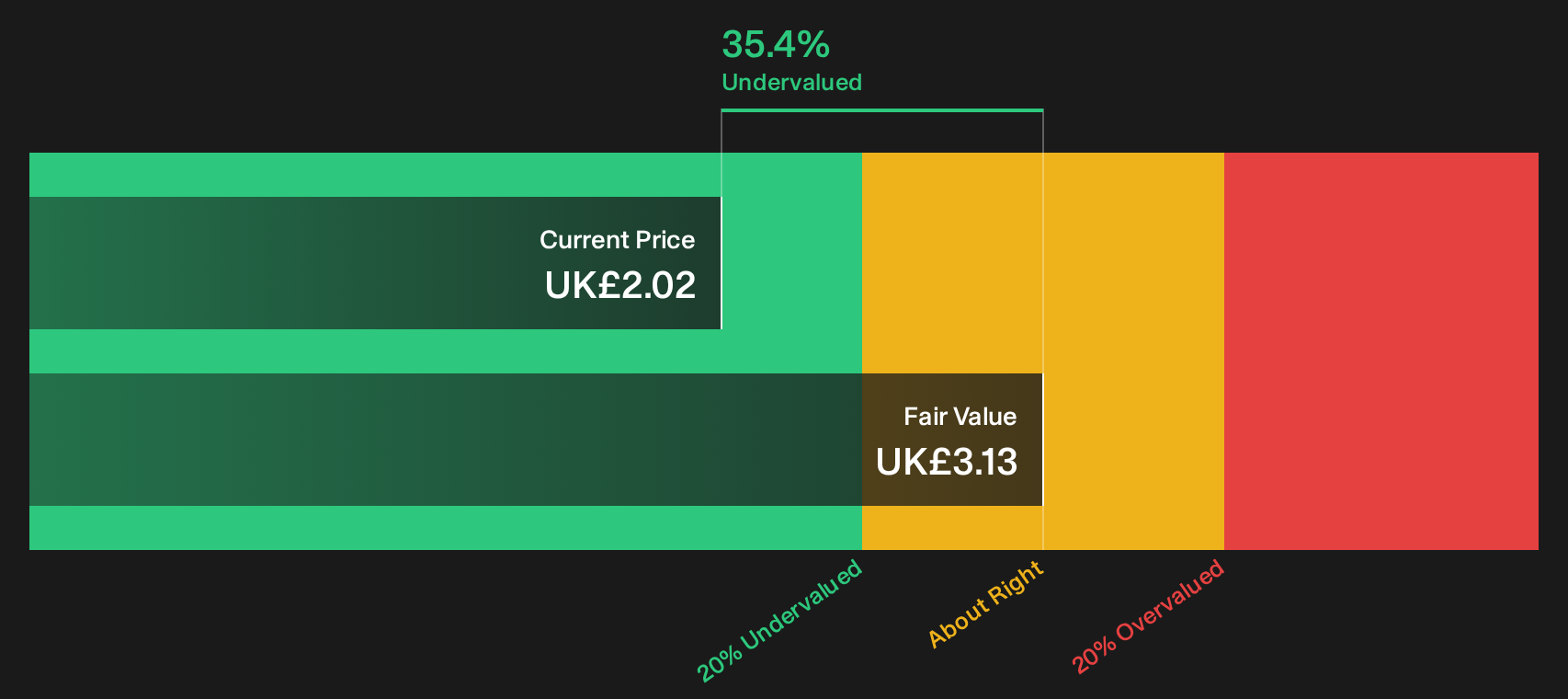
Premier Foods trades on a P/E of 12.7x versus a European Food industry average of 15.6x, with branded ambient products like Mr Kipling and Bisto supporting cash generation that underpins a discounted cash flow value of £3.13 per share versus a £2.02 market price. The key question is what could happen if a shift in demand or costs starts to pressure that cash engine.
Those pressures are exactly why the analysis report for Premier Foods cuts through the headline P/E gap and tests how resilient Premier Foods’ cash engine really is.
Seeking Fresh Alternatives Beyond These Picks
Fresh ideas tend to move first. Once momentum breaks out and prices start flying, the easy entry window can shrink quickly. Scan these curated lists early so you can review them before they become widely followed.
- Identify companies with strong balance sheets at an earlier stage by using the list of solid balance sheet and fundamentals (9 results) to find businesses that may still be relatively under the radar.
- Explore potential income opportunities with the 2 dividend fortresses while yields remain elevated and sentiment has not fully adjusted.
- Monitor the next phase of automation by tracking the 92 robotics and automation stocks, which focuses on selected industrials that may be influenced by trends in robotics spending.
This article by Simply Wall St is general in nature. We provide commentary based on historical data and analyst forecasts only using an unbiased methodology and our articles are not intended to be financial advice. It does not constitute a recommendation to buy or sell any stock, and does not take account of your objectives, or your financial situation. We aim to bring you long-term focused analysis driven by fundamental data. Note that our analysis may not factor in the latest price-sensitive company announcements or qualitative material. Simply Wall St has no position in any stocks mentioned.
Have feedback on this article? Concerned about the content? Get in touch with us directly. Alternatively, email editorial-team@simplywallst.com