
- PRICING
- LIVE QUOTES
- LEARN
- HELP


EN
The End of the Bull Market in Grains?
(CORN) (ZCZ26) (SOYB) (ZSX26) (WEAT) (ZWZ26) (DBA) (TAGS)
“The End of the Bull Market in Grains?”
by Jim Roemer - Meteorologist - Commodity Trading Advisor - Principal, Best Weather Inc. & Climate Predict - Publisher, Weather Wealth Newsletter and Co-Producer of Climatelligence
Edited by Scott Mathews: Co-Producer of Climatelligence
- October 16, 2026
The weather story that helped fuel grain-market optimism is beginning to unravel. Improving rainfall across the U.S. Plains, favorable early-season conditions in South America, and substantial speculative exposure could leave corn, soybeans, and wheat vulnerable to additional selling.
Part of the big summer rally in grains was due to inflationary fears of higher crude oil prices and multiple wars. Of course, some of it was weather, but still the US just produced a record soybean crop and the second largest corn crop ever.
So much for all of this “bull” - painting death and destruction to US grain crops. It was the wheat crop, which was affected the most last spring. In fact, US wheat production was the lowest in 73 years. That is already built into wheat prices.
The important distinction is that a bearish weather outlook does not automatically mean a permanent end to the grain bull market. It means the burden of proof is shifting back to the bulls.
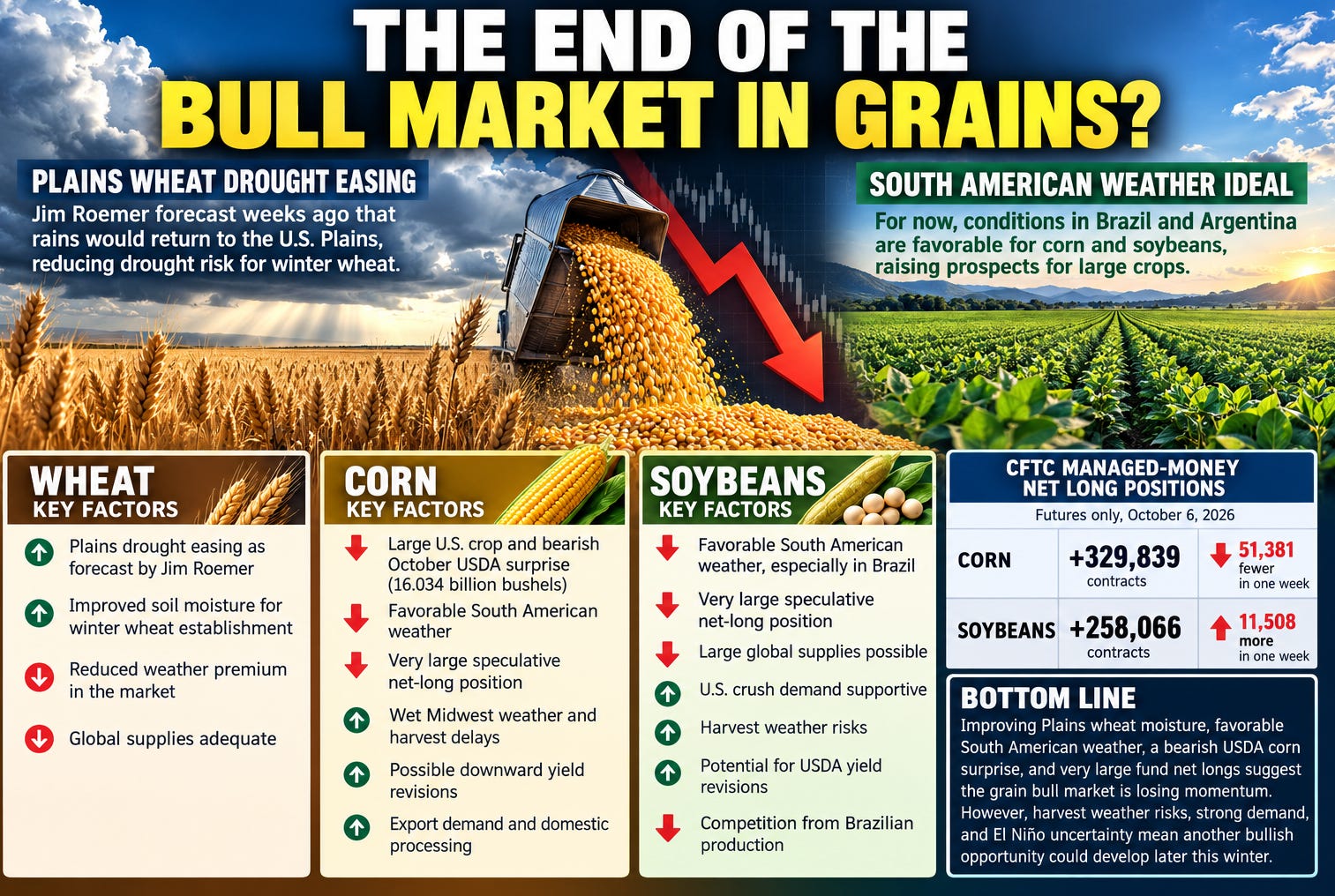
I caught the top of the wheat market weeks ago, and I felt that the Ukraine-Russia war was built into prices and that the easing Plains drought would create a swarm of bullish traders running for the hills.
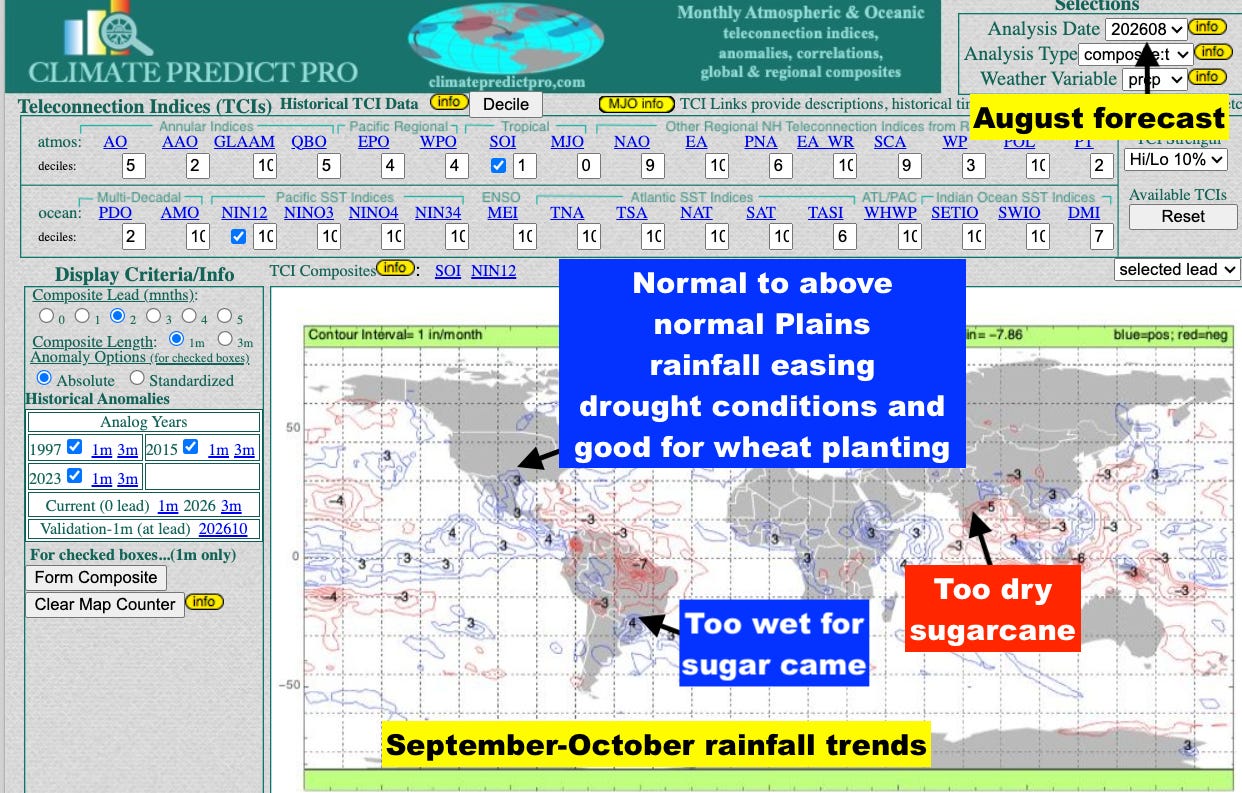
Image Source: Climate Predict, LLC (A BestWeather, Inc. affiliated company)
More of these images for global commodities are available with a subscription to Weather Wealth or Climatelligence:
GET A TWO-WEEK FREE TRIAL TO WEATHERWEALTH,
OR, CHECK OUT OUR LOWER PRICED CLIMATELLIGENCE NEWSLETTER BELOW

https://www.bestweatherinc.com/membership-sign-up/
https://climatelligence.substack.com/
My early call on the Plains wheat drought
Weeks ago, my longer-range analysis anticipated that the stubborn drought across the US Plains wheat belt would begin easing.
Rather than extrapolating summer drought indefinitely, my ClimatePredict approach emphasized changing global atmospheric circulation patterns, including the developing strong El Niño, and the potential for more favorable autumn rainfall.
That distinction matters enormously to wheat traders.
Wheat prices often build in a weather-risk premium when producers are planting into dry soils. However, once widespread rainfall begins replenishing soil moisture, the market may start discounting better establishment of the winter wheat crop months before harvest.
My forecast was not simply about rain arriving on a particular day. It was about recognizing a broader seasonal shift that could reduce the threat to winter wheat production.
The lesson for commodity traders: Sometimes the most profitable weather forecast is identifying when a drought-driven bullish narrative is about to lose its credibility.
The biggest danger: Funds are still heavily long corn and soybeans
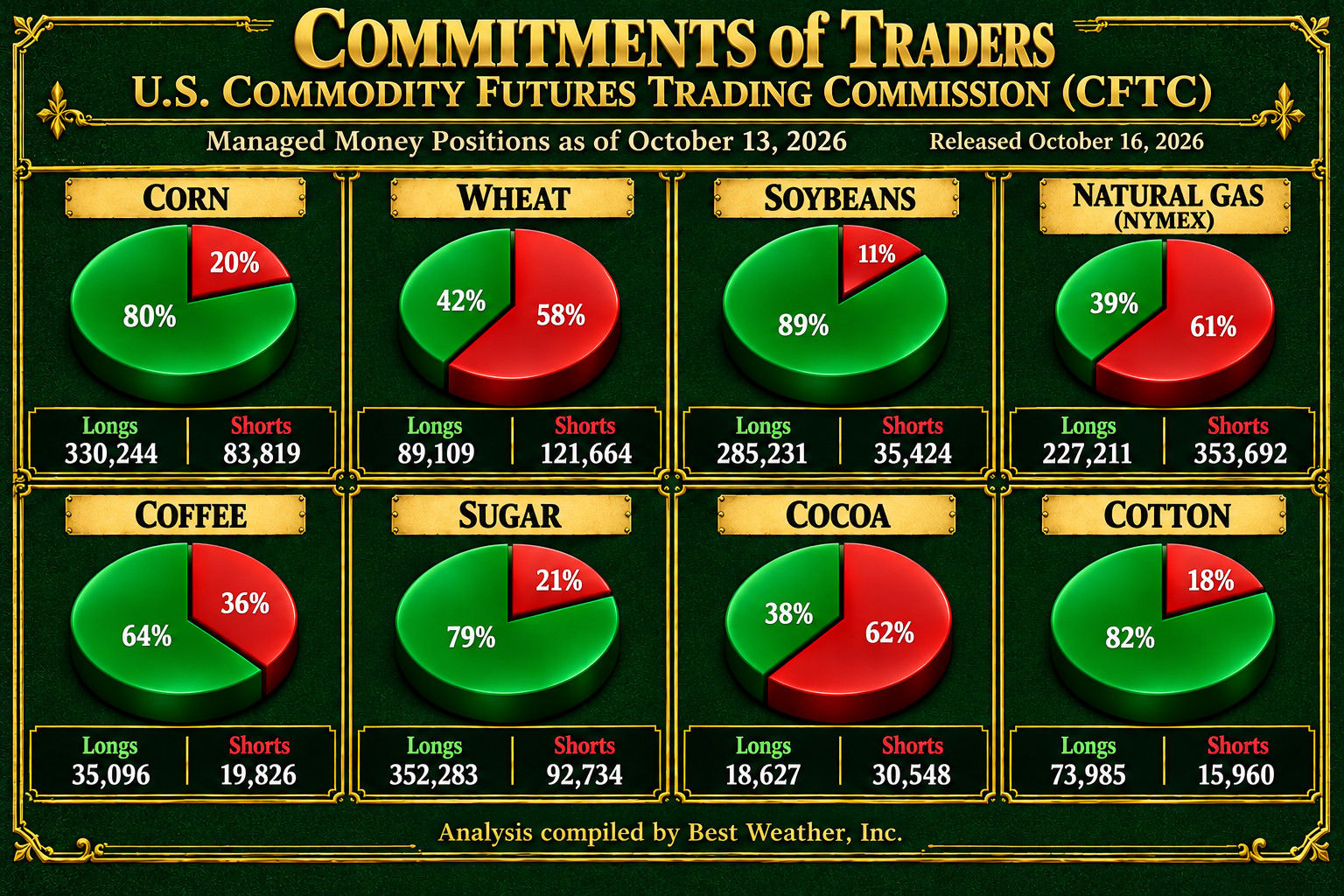
This is particularly important because large speculative net-long positions represent potential future selling pressure. If favorable South American weather persists and USDA production remains large, fund managers may be forced to reduce exposure even without a major new bearish surprise.
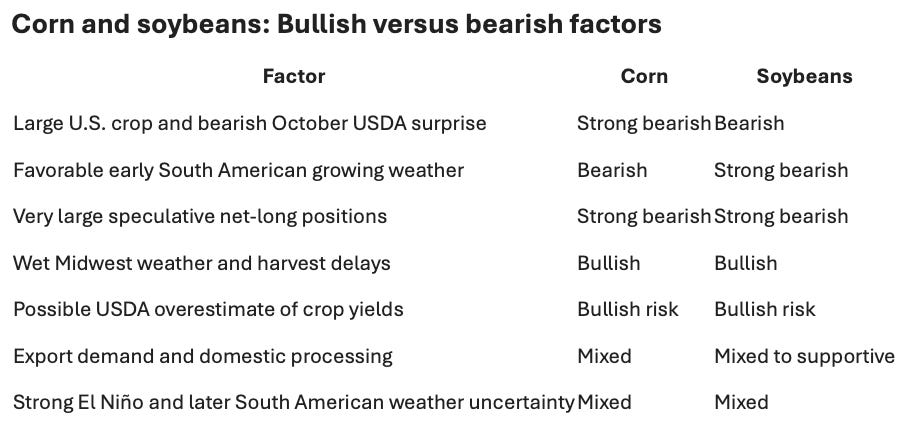
The October USDA report was particularly damaging to corn’s bullish narrative. USDA estimated US corn production at approximately 16.034 billion bushels, surprising traders who had expected a reduction in production.
There are, nevertheless, two reasons not to become excessively bearish.
First, the recent very wet Midwest weather could still cause harvest delays, quality problems, and localized yield losses. Second, USDA’s October production estimate is not necessarily its final word. There remains some possibility of downward adjustments in subsequent reports.
South America: Why the next 60–90 days matter
For now, the favorable South American weather scenario is bearish for grain prices, particularly soybeans.
Brazil soybeans: Favorable planting moisture and timely rains would encourage acreage establishment and strong early growth.
Argentina corn and soybeans: Adequate moisture during planting and early development would reduce concerns about immediate crop stress.
El Niño uncertainty: A strong El Niño can increase the likelihood of wetter conditions in portions of southern Brazil and Argentina, but rainfall distribution matters. Excessive rainfall, flooding, or later heat and dryness could still alter production expectations.
These are conditional weather assessments, rather than verified statements that every major growing region currently has ideal soil moisture.
For soybeans especially, the market will need to consider whether strong Brazilian production prospects could eventually outweigh supportive US crush demand and relatively tight domestic supplies.
We greatly appreciate your interest in Commodity Weather Intelligence!
Jim Roemer, Scott Mathews, and the Best Weather Team
Mr. Roemer owns Best Weather Inc., offering weather-related blogs for commodity traders and farmers. He is also a co-founder of Climate Predict, a detailed long-range global weather forecast tool. As one of the first meteorologists to become an NFA-registered Commodity Trading Advisor, he has worked with major hedge funds, Midwest farmers, and individual traders for over 35 years. With a special emphasis on interpreting market psychology, coupled with his short-term and long-term trend forecasting in grains, softs, and energy markets, he commands a unique standing among advisors in the commodity risk management industry.