
- PRICING
- LIVE QUOTES
- LEARN
- HELP


EN
Should Earnings Growth Recognition Require Action From Hanover Insurance Group Stock Investors?
- Recent commentary on Hanover Insurance Group highlights above-average earnings growth, a favorable Growth Style Score, and positive revisions to earnings estimates compared with peers.
- The focus on efficient asset utilization and profitability metrics brings attention to how Hanover Insurance Group is converting premium and capital into earnings quality.
- This analysis examines how Hanover Insurance Group's investment narrative is affected by analysts spotlighting its earnings growth and estimate upgrades.
Compare Hanover Insurance Group's growth profile with a curated set of peers by scanning our 20 high quality undiscovered gems that combine solid earnings trends with stronger fundamentals.
Hanover Insurance Group Investment Narrative Recap
To stay invested in Hanover Insurance Group, you need to be comfortable with a story that leans on execution in Specialty and Small Commercial while managing catastrophe volatility. Earnings growth has been strong recently, helped by high quality profits and a 20.5% return on equity. However, consensus expects earnings to shrink over the next few years. The main near term swing factor is whether underwriting discipline and AI driven efficiency can offset any cooling in rate momentum.
The biggest risk right now is that revenue growth, already forecast at a modest 4.2% a year, softens further if competition bites in Core and Small Commercial or if catastrophe losses reverse recent reserve benefits. The latest focus on Hanover Insurance Group's earnings growth and estimate revisions does not fundamentally change that risk reward equation. It does, however, sharpen attention on how resilient those margins look through the next couple of renewal cycles.
One element that ties closely to this growth focused news is Hanover Insurance Group's ongoing push into AI enabled underwriting and claims workflows. Management is using embedded AI agents for intake, appetite checks, routing, pricing guidance and customer service, with the goal of raising straight through processing and cutting the expense ratio. For investors, that operational shift is central to the argument that the business can protect earnings quality even if top line growth slows.
On the claims side, a unified platform and planned 30 to 50 basis point reduction in the unallocated loss adjustment expense ratio show where further efficiency could come from. Combined with Specialty and Small Commercial premium targets and catastrophe risk management actions, these efforts form the core operational catalysts that need to show up in reported combined ratios over time for the current growth narrative to hold up.
Hanover Insurance Group's current analyst blueprint points to US$7.4b in revenue and US$629.6m in earnings by 2029, based on an assumed 3.2% yearly revenue growth rate. That outcome would represent an earnings decline of US$124.2m from US$753.8m today, implying lower profit contribution even if the top line increases over time.
Uncover why Hanover Insurance Group's fair value is essentially aligned with its current price.
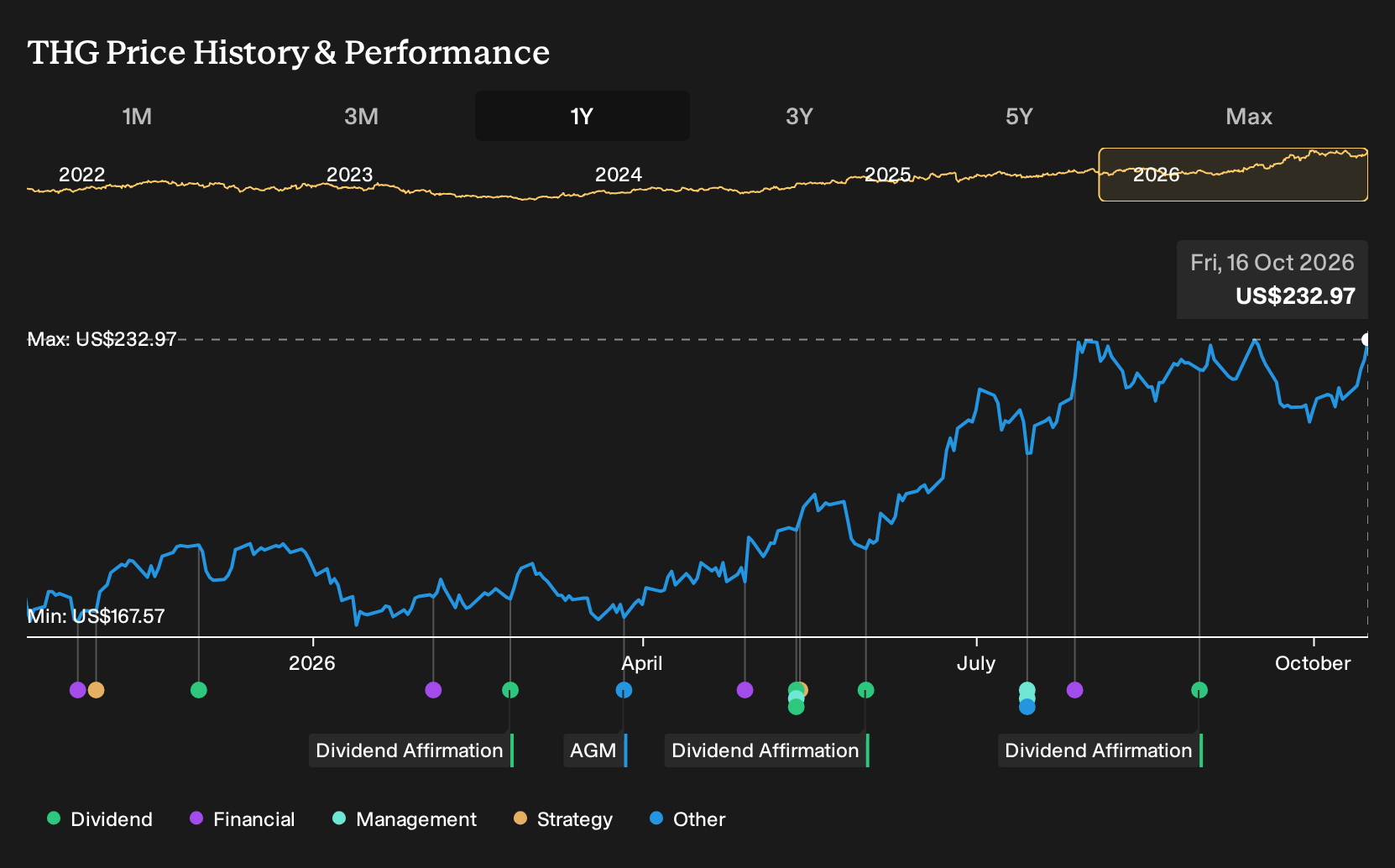
Exploring Other Perspectives
Two fair value estimates from the Simply Wall St Community span a wide band, from US$238.25 up to about US$473.15 per share. This shows how far apart views on Hanover Insurance Group can be. Set that against risks around slower Specialty premium growth and catastrophe exposure, then decide which scenario you think is more realistic.
Explore another Hanover Insurance Group fair value estimate, including one that suggests potential upside of up to 103% from the current price.
Decide For Yourself
Don't just follow the ticker; dig into the data and build a conviction that's truly your own.
- A great starting point for your Hanover Insurance Group research is our analysis highlighting 3 key rewards and 2 important warning signs that could impact your investment decision.
- See our latest analysis for Hanover Insurance Group. The report includes a comprehensive fundamental analysis summarized in a single visual, the Snowflake, making it easy to evaluate Hanover Insurance Group's overall financial health at a glance.
Looking For More Investment Ideas Beyond Hanover Insurance Group?
Once you have a view on Hanover Insurance Group, it can help to cross check that thesis against other companies with different growth, income, or balance sheet profiles. The Simply Wall St Screener lets you do that in a structured way so you are not just reacting to headlines but comparing Hanover against a wider watchlist built around your own priorities.
- If you care about quality at a reasonable entry point, scan a curated 33 high quality undervalued stocks that match solid fundamentals with more appealing pricing.
- For investors who want income to do more of the work, review a focused 7 dividend fortresses that aims for yields above 5% without ignoring balance sheet strength.
- When capital preservation is near the top of your checklist, start with a 32 resilient stocks with low risk scores that screens for resilience and lower risk profiles before you compare anything else.
This article by Simply Wall St is general in nature. We provide commentary based on historical data and analyst forecasts only using an unbiased methodology and our articles are not intended to be financial advice. It does not constitute a recommendation to buy or sell any stock, and does not take account of your objectives, or your financial situation. We aim to bring you long-term focused analysis driven by fundamental data. Note that our analysis may not factor in the latest price-sensitive company announcements or qualitative material. Simply Wall St has no position in any stocks mentioned.
Have feedback on this article? Concerned about the content? Get in touch with us directly. Alternatively, email editorial-team@simplywallst.com