
- PRICING
- LIVE QUOTES
- LEARN
- HELP


EN
Missed Yamaha Motor's 77% Run? What Holders Had To Believe
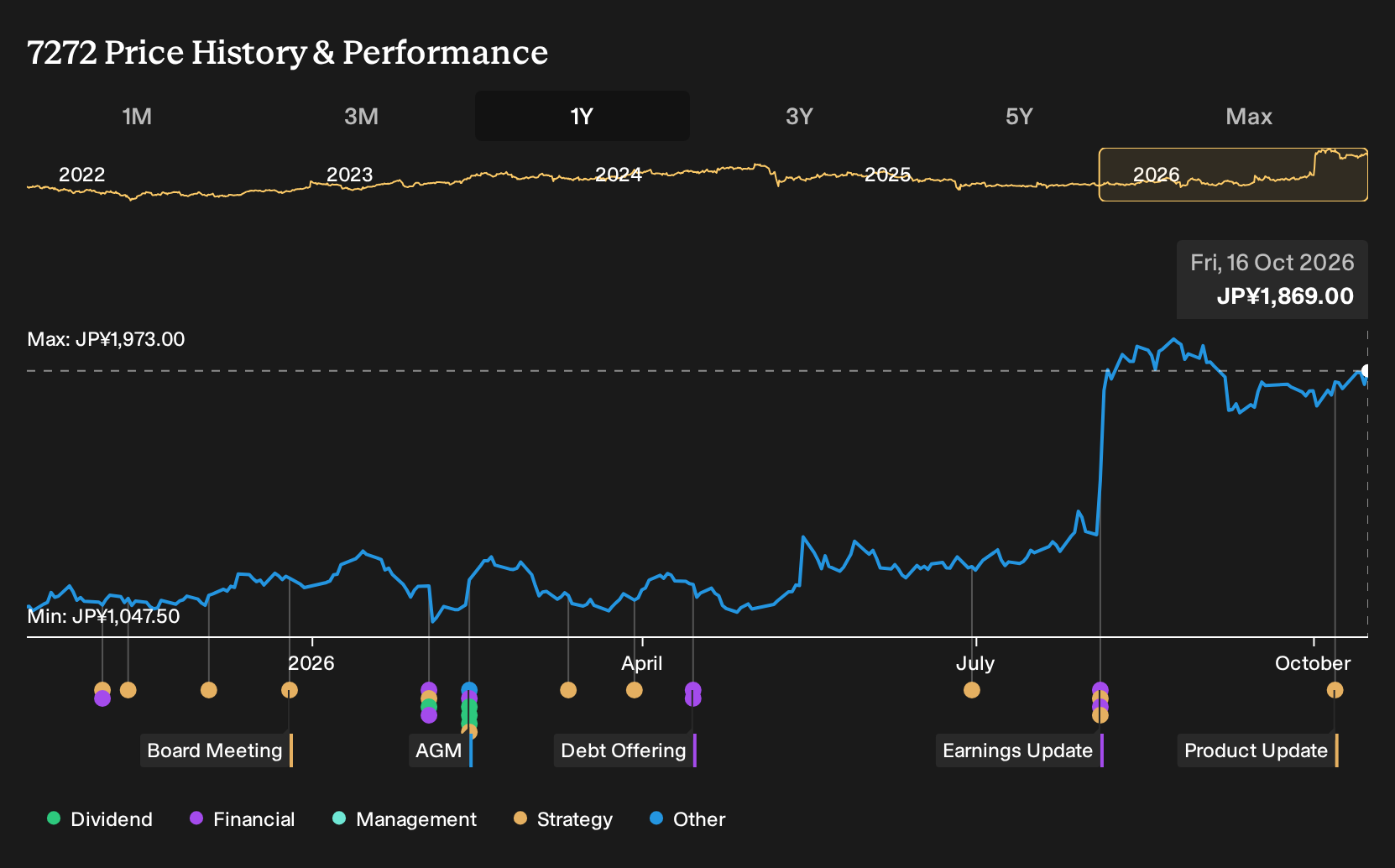
If you only skimmed the headlines about Yamaha Motor’s recycled aluminum DiASil cylinders and carbon neutrality plans, you might have seen a sustainability story rather than an earnings story. Holding Yamaha Motor over the past year would have returned 77.5%, including dividends. If you had been deciding whether to buy on 16 October 2025, what would you have needed to believe about premium motorcycles, financing growth, and regulatory pressure for that outcome to feel plausible?
Yamaha Motor is not the only name tied to this theme. Zero in on 91 robotics and automation stocks and compare how each one is priced.
The Two Yamaha Motor Stories Investors Were Arguing About
The shares cost ¥1,098 at the start of the period, and anyone looking at Yamaha Motor then had to choose which story felt more realistic.
The bullish narrative pinned a Fair Value of ¥1,300. This was described as the price implied if expansion in premium models, digital services, and marine outboard investments really did lift margins and market share beyond what most expected.
The bearish view pointed to a Fair Value of ¥1,000. This assumed that regulatory pressure on internal combustion engines and slower electrification would cap revenue and squeeze returns despite diversification efforts.
What The Results Changed For The Yamaha Motor Debate
Q2 2026 gave Yamaha Motor hard numbers. Revenue reached ¥767,868 million and net income came in at ¥72,640 million, with net margin rising to 9.5% from 3.4% a year earlier. Record first half results and raised full year guidance supported the optimistic case on premium motorcycles and cost control, although procurement risks and tariffs kept the picture from being one sided.
The key lesson is simple. When a story hinges on better mix and higher pricing, track the net margin line and segment commentary rather than just unit volumes. That is how to test whether a premium or financing thesis is actually showing up in the accounts at any other manufacturer you follow.
What Yamaha Motor’s Price Already Assumes
Yamaha Motor now trades at ¥1,869, with the highlighted Narrative arguing that its Fair Value sits below that quote despite the 77.5% gain over the past year.
The Narrative centers on tariff burdens, cost reforms, and dealer inventory quality. Anyone paying today’s price is assuming resilient earnings power, so how do concentrated robotics demand and loss making SPV electrification affect that thesis?
"Although Yamaha Motor is lifting motorcycle volumes and mix in India, ASEAN and other emerging markets, the earlier pattern of wholesale shipments often running ahead of local demand raises the risk of future inventory adjustments that could curtail revenue and compress operating leverage if dealers need to destock. While management is rolling out cross business cost reforms, the very large U.S. tariff burden that is expected to drag earnings by JPY 17.1b in 2025 and a planned JPY 54.3b in 2026 before mitigation means that even small shortfalls in procurement savings or price actions could leave group operating margins structurally weaker than recent guidance suggests."
One Narrative has put a figure on that disagreement. → See the Narrative with its lower Fair Value, assumptions and all
Where Yamaha’s Story Bends
Yamaha Motor points riders toward premium hardware, financing, and cleaner engines. The tension appears when mobility looks more like software.
Riders paying for features on top of machines resemble drivers paying for automation on top of electric cars. Both groups want comfort, safety, and less friction on every trip.
One younger manufacturer is betting hard on that second pattern. It builds electric vehicles around an AI stack that also runs robotaxis and humanoid robots.
The aim is to turn physical products into recurring software and robotics income. The open question is whether those layers materially change how markets value the effort.
It is written up in full, assumptions and all. → Explore the Narrative that puts this company 162% above its price
This article by Simply Wall St is general in nature. We provide commentary based on historical data and analyst forecasts only using an unbiased methodology and our articles are not intended to be financial advice. It does not constitute a recommendation to buy or sell any stock, and does not take account of your objectives, or your financial situation. We aim to bring you long-term focused analysis driven by fundamental data. Note that our analysis may not factor in the latest price-sensitive company announcements or qualitative material. Simply Wall St has no position in any stocks mentioned.
Have feedback on this article? Concerned about the content? Get in touch with us directly. Alternatively, email editorial-team@simplywallst.com