
- PRICING
- LIVE QUOTES
- LEARN
- HELP


EN
3 Supply Chain Tech Stocks Worth Watching As Tariffs Reshape Global Logistics
Tariffs have jumped from around 2.5% to just over 20% on average, and global supply chains are being ripped up and rewired, which is quietly reshaping who wins and who struggles in supply chain technology. Investors who identify businesses that help importers cut total landed cost or build more resilient logistics systems could see very different outcomes over the next few years. This piece walks through three stocks linked to these tariff and supply chain shifts, all filtered from a Supply Chain Technology Providers screener, to help you evaluate which stories deserve a closer look and which might belong on your watchlist.
The three stocks below are only a small sample from this tariff reshuffle, and the full Supply Chain Technology Providers screen surfaced 37 more companies with equally compelling supply, logistics and warehouse management stories that are not covered here.
To identify and analyze the rest of this cohort, head straight into the Supply Chain Technology Providers screener.
Cyient (BSE:532175)
Overview: Cyient is an India headquartered technology services group that combines engineering, geospatial data, and analytics to help global clients design, manage, and optimize complex physical networks including supply chains and transportation systems.
Operations: Cyient generates most of its ₹76,523 million business revenue from Digital, Engineering & Technology at ₹59,666 million, with Design Led Manufacturing adding ₹13,569 million and smaller contributions from Semiconductors and Others.
Market Cap: ₹124.0b
Cyient fits this supply chain technology screen because its engineering, data, and AI platforms aim to make physical networks, from logistics to utilities, smarter and more resilient as tariffs and trade routes keep shifting.
"Cyient's focus on building proprietary digital platforms (such as the AI-powered VISMON platform for Vodafone and ongoing investments in digital/AI-driven engineering solutions) positions the company well to capture growing digital transformation and Industry 4.0 spend among global enterprises. This is expected to drive broad-based revenue growth and support elevated net margins through higher-margin, IP-led offerings."
What really matters for investors now is how a single pressure on execution could tilt that margin story in either direction.
If that single execution risk is what you keep circling back to, the full narrative for Cyient explains where Cyient could either accelerate or stall next.

Quarterhill (TSX:QTRH)
Overview: Quarterhill delivers AI enabled tolling, traffic management, and mobility data platforms that can feed smarter routing and monitoring across supply chains.
Operations: Quarterhill generates $159 million from Intelligent Transportation Systems, with about $138 million coming from the United States and smaller contributions from Canada, Asia, and Europe.
Market Cap: CA$403 million
Quarterhill matters in this supply chain technology screen because its tolling and mobility platforms sit where freight, traffic data, and routing decisions meet.
"The increasing adoption of AI and data analytics in transportation infrastructure is driving demand for Quarterhill's next-generation, software-centric platforms such as iTHEIA and their new microservices-based tolling system. This supports long-term growth in high-margin software revenue that can boost both top-line performance and improve the company's net margin profile."
What could significantly change the story is how one unresolved pressure on contract execution ultimately affects those higher margin ambitions.
That execution swing is exactly what the full narrative for Quarterhill unpacks. It shows where contract risk could be masking Quarterhill’s most overlooked upside.

Landstar System (LSTR)
Overview: Landstar System runs an asset light freight brokerage platform that coordinates trucks, rail, air and ocean transport for shippers worldwide.
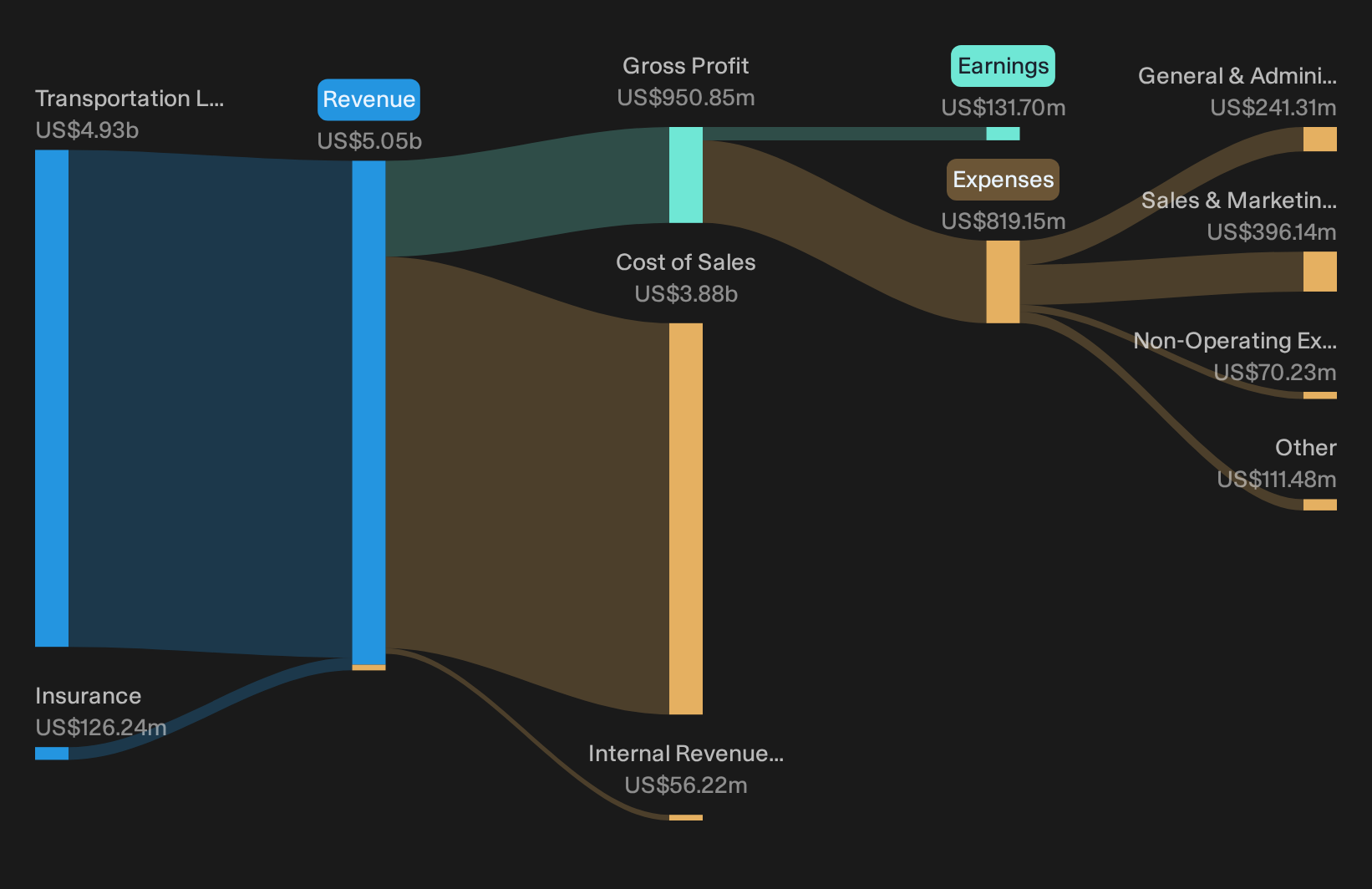
Operations: Landstar System produces about US$4.9b from Transportation Logistics, around US$126 million from Insurance and records US$56 million of internal revenue offsets.
Market Cap: US$5.7b
For a supply chain screen built around visibility and control, Landstar System provides the digital routing and freight orchestration layer that importers and exporters use when tariffs and trade rules keep moving.
"Persistent industry digitization, together with Landstar System directing roughly 50% of its 2026 IT capital expenditure budget to AI tools and running live pilots that early users say deliver meaningful time savings and higher shipment throughput, is cited by the company as a potential source of further efficiency gains that could support net margins."
One development that could reshape the investment case is how pressure on insurance and claims costs ultimately affects those margins.
That insurance pressure is only half the story, and the full narrative for Landstar System shows how Landstar System’s AI spend, contract mix and freight cycles could be quietly reshaping its earnings power.
Seeking Fresh Alternatives Before They Fly
Fresh ideas move first and slow research often gets caught chasing momentum. Scan under the radar for now, before prices start breaking away. Act now.
- Spot potential early movers with solid cash flow and balance sheet strength by scanning the 195 high quality undervalued stocks before the crowd starts bidding them up.
- Explore potential income opportunities by tracking companies in the 217 dividend fortresses while yields remain attractive and prices have not yet fully reflected that strength.
- Review potential exposure to next generation compute shifts by examining the 25 quantum computing stocks while many investors still overlook this corner of the market.
This article by Simply Wall St is general in nature. We provide commentary based on historical data and analyst forecasts only using an unbiased methodology and our articles are not intended to be financial advice. It does not constitute a recommendation to buy or sell any stock, and does not take account of your objectives, or your financial situation. We aim to bring you long-term focused analysis driven by fundamental data. Note that our analysis may not factor in the latest price-sensitive company announcements or qualitative material. Simply Wall St has no position in any stocks mentioned.
Have feedback on this article? Concerned about the content? Get in touch with us directly. Alternatively, email editorial-team@simplywallst.com