
- PRICING
- LIVE QUOTES
- LEARN
- HELP


EN
Will Earnings Beat Change Knight Swift's (KNX) Narrative
- Knight-Swift Transportation Holdings recently attracted attention ahead of its September 2026 quarter report, with analysts expecting higher year-over-year earnings and revenue from its diversified freight operations.
- The key angle for investors is how any improvement in profitability, particularly from truckload, LTL and intermodal, might reflect progress on cost controls and network efficiency rather than short term trading sentiment.
- The focus now shifts to how Knight-Swift Transportation Holdings' investment narrative could be affected if upcoming earnings materially outpace current analyst expectations.
Scan how Knight-Swift Transportation Holdings stacks up against other freight and logistics players by reviewing our hand picked list of solid balance sheet and fundamentals (25 results) today.
Knight-Swift Transportation Holdings Investment Narrative Recap
To own Knight-Swift Transportation Holdings, you need to believe the freight cycle and the company’s own cost work eventually show up in cleaner margins across truckload, LTL and intermodal. In the near term, an important swing factor is whether soft freight demand starts to ease and lets contract pricing and network optimization show through in operating ratios.
The biggest risk right now is that LTL expansion and integration costs, plus higher insurance and logistics carrier expenses, keep squeezing already thin 0.6% net margins. The latest expectation of higher earnings for the September 2026 quarter may influence sentiment, but it does not erase those execution and cost pressures.
One of the more relevant recent developments for Knight-Swift Transportation Holdings is the push to expand and integrate its LTL network, including new terminals in Phoenix, Olympia, Detroit and Toledo. Management has indicated the current LTL footprint can support up to US$2b of annualized revenue, which gives this segment real scale potential if volumes cooperate.
For you as a shareholder, the key question is whether these LTL investments eventually bring operating ratio improvement faster than they add complexity and claims risk. If upcoming earnings show cleaner contribution from LTL and steadier intermodal performance, that would support the idea that the cost and technology program is translating into more durable earnings power.
Knight-Swift Transportation Holdings is currently modeled to grow revenue by 7.9% per year, reaching about US$9.7b of sales and US$746.2m of earnings by 2029. This would mean earnings rising by roughly US$703m from US$42.9m today.
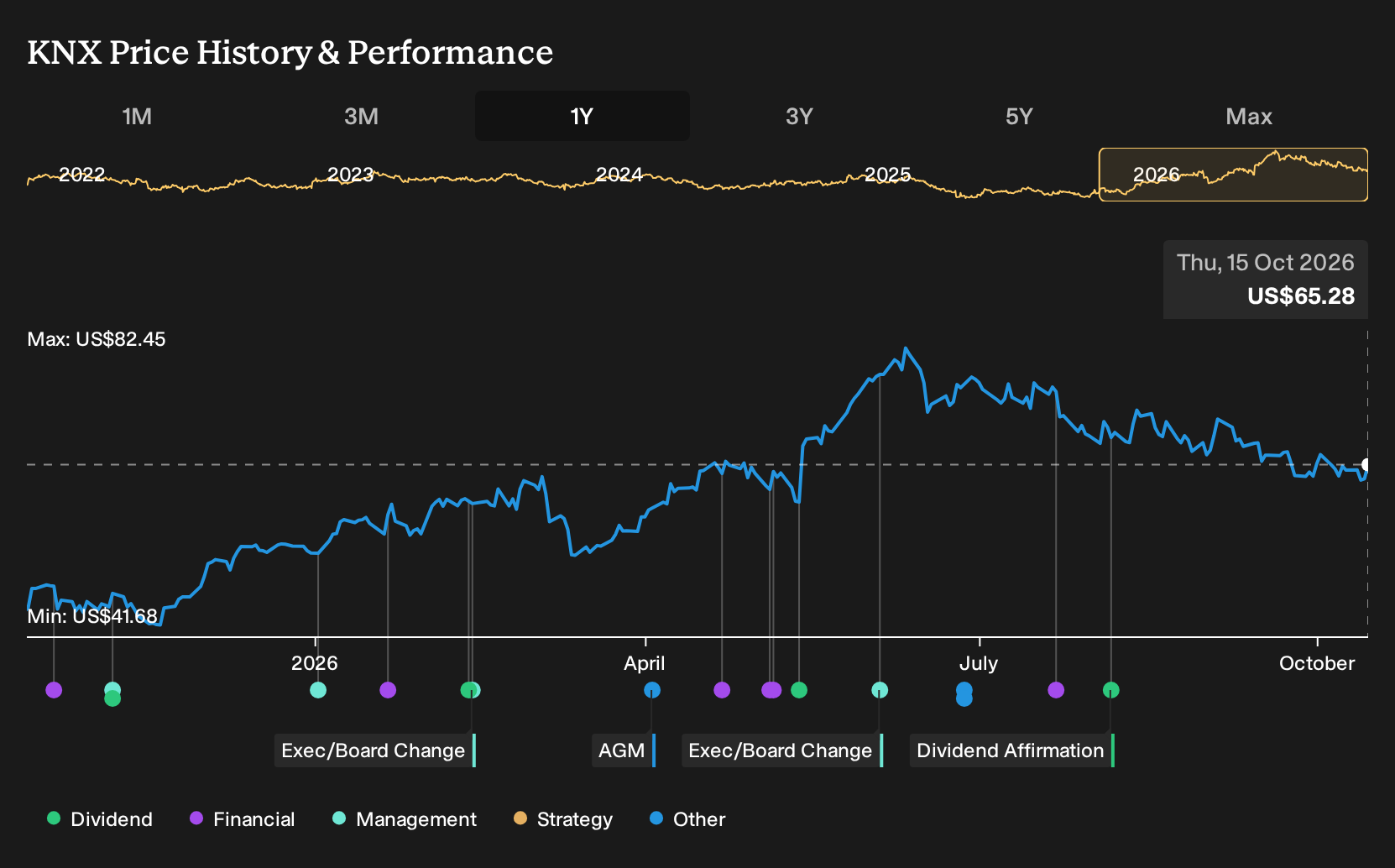
Explore why Knight-Swift Transportation Holdings' fair value indicates a 35% potential upside to its current price before the market closes that gap.
Exploring Other Perspectives
One alternate view leans heavily on insurance and compliance risk. That bearish group argued before this earnings report that rising logistics insurance costs could cap Knight-Swift Transportation Holdings’ progress, even while still modeling about US$9.6b of revenue and US$789.6m of earnings by 2029. Use those more cautious assumptions as a reference point while you compare shifting narratives.
Explore 3 other Knight-Swift Transportation Holdings fair value estimates, including one that suggests as much as 23% downside from the current price.
Reach Your Own Conclusion
Don't just follow the ticker; dig into the data and build a conviction that's truly your own.
- A great starting point for your Knight-Swift Transportation Holdings research is our analysis highlighting 3 key rewards and 2 important warning signs that could impact your investment decision.
- See our latest analysis for Knight-Swift Transportation Holdings. The report includes a comprehensive fundamental analysis summarized in a single visual, the Snowflake, making it easy to evaluate Knight-Swift Transportation Holdings' overall financial health at a glance.
Looking For More Investment Ideas Beyond Knight-Swift Transportation Holdings?
If you want to stress test your view on Knight-Swift Transportation Holdings, one of the most useful steps is to compare it with other companies that fit clear financial themes. The Simply Wall St Screener lets you scan for stocks that match the balance sheet strength, income profile or risk level you want to focus on, so your portfolio reflects your own priorities rather than someone else’s list.
- If capital preservation sits high on your list, filter for sturdier businesses using the 32 resilient stocks with low risk scores and see which tickers line up with your risk tolerance.
- If dependable income matters more, shortlist potential payers by running the 8 dividend fortresses and checking which companies offer sizeable yields backed by fundamentals.
- If you prefer hunting for quality that is not widely followed, cast a wider net with the 20 high quality undiscovered gems and compare those stocks to Knight-Swift Transportation Holdings on your own terms.
This article by Simply Wall St is general in nature. We provide commentary based on historical data and analyst forecasts only using an unbiased methodology and our articles are not intended to be financial advice. It does not constitute a recommendation to buy or sell any stock, and does not take account of your objectives, or your financial situation. We aim to bring you long-term focused analysis driven by fundamental data. Note that our analysis may not factor in the latest price-sensitive company announcements or qualitative material. Simply Wall St has no position in any stocks mentioned.
Have feedback on this article? Concerned about the content? Get in touch with us directly. Alternatively, email editorial-team@simplywallst.com