
- PRICING
- LIVE QUOTES
- LEARN
- HELP


EN
Does Job Cuts Change The Bull Case For Netflix (NFLX)?
- Netflix has announced its largest workforce reduction since 2022, cutting about 1,000 roles, or 6% of staff, mainly across product, technology, legal and HR, as management reallocates spending toward what it calls higher impact priorities.
- The decision to trim corporate functions while still funding content, ads and live formats highlights pressure to contain overheads, as competition and slowing growth put more weight on cost discipline in Netflix's operating model.
- Next, the focus will be on how Netflix's decision to cut 6% of its workforce could reshape the longer term investment narrative.
Netflix Investment Narrative Recap
To remain a shareholder in Netflix, you need to believe the firm can turn its broad entertainment offering and ad tech stack into consistent engagement despite tougher streaming competition. The key near-term swing factor is whether ad-supported tiers, live formats, and international content keep viewing time from drifting toward free platforms.
The 6% workforce reduction and reports of higher churn highlight the risk that cost cuts and slowing engagement might occur at the same time. Management still talks about investing in high-impact areas, so the restructuring appears more like a margin and efficiency story rather than a change to the near-term revenue catalyst.
The most relevant recent development, aside from the layoffs, is Netflix promoting Craig Ferguson to director of content acquisition. His background across studios and digital platforms points to a push for sharper licensing decisions, which matters when competition, new formats, and AI tools are already stretching the content budget.
For you, the question is whether a more experienced buyer at the table improves the hit rate of licensed shows and films enough to support ad growth and reduce the impact of any viewing softness. Execution on that content mix sits alongside churn and viewing share as the main operational risk to monitor into upcoming earnings.
Netflix's narrative projects US$65.5b revenue and US$19.7b earnings by 2029. Analysts assume 10.6% yearly revenue growth, and this path implies an earnings increase of about US$6.1b from US$13.6b today.
Uncover why Netflix's fair value indicates a 28% potential upside to its current price before sentiment closes that gap.
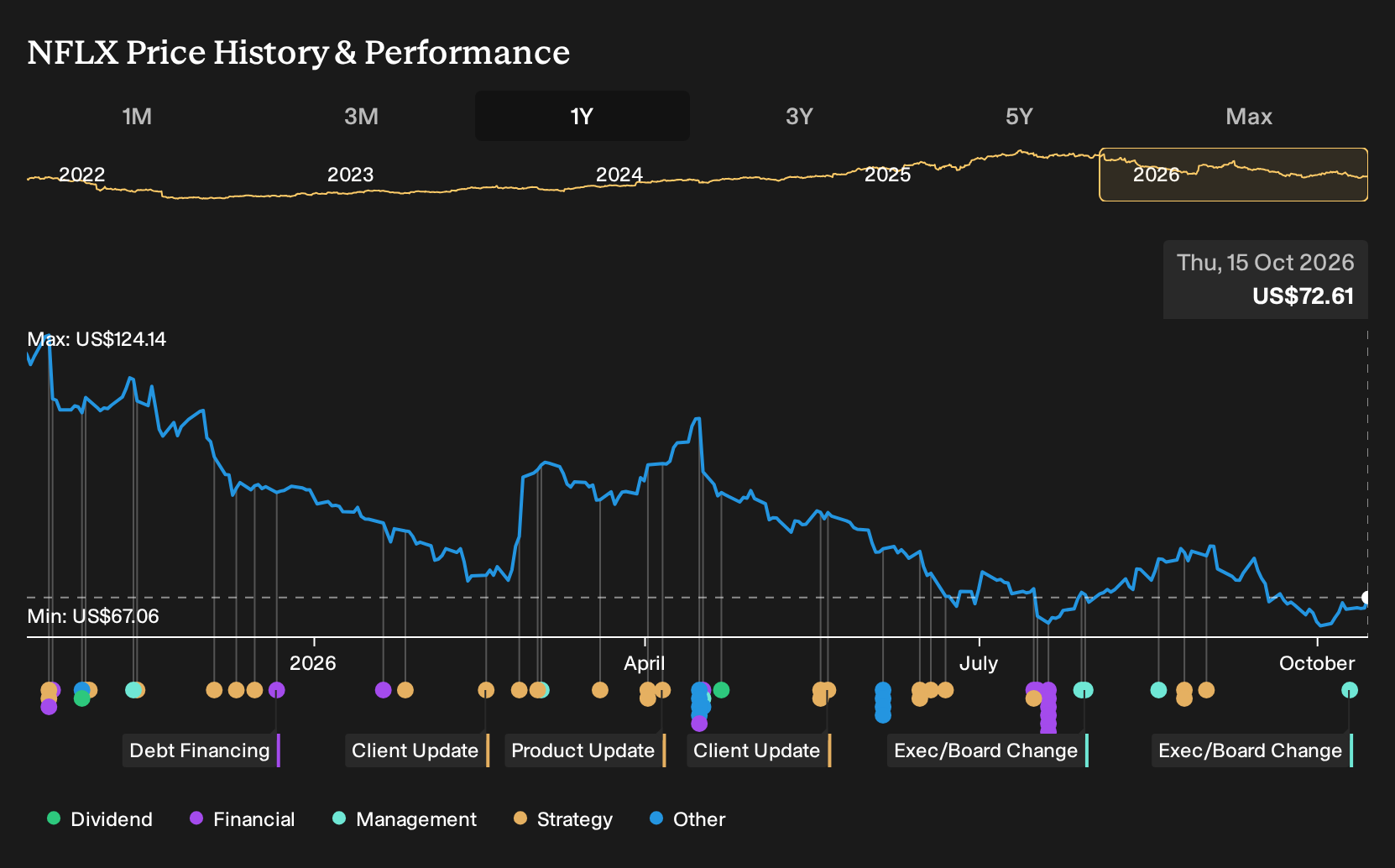
Exploring Other Perspectives
Some of the lowest Netflix forecasts lean into a different risk. You see ad and content costs squeezing margins, with earnings in 2029 closer to US$17.1b on revenue of about US$63.8b, rather than the US$19.7b path in the base case. After the layoffs and Craig Ferguson’s promotion, those stories may be rewritten.
Explore 43 other Netflix fair value estimates, including one that suggests as much as 17% downside from the current price.
The Verdict Is Yours
Disagree with existing narratives? Extraordinary investment returns rarely come from following the herd, so go with your instincts.
- A great starting point for your Netflix research is our analysis highlighting 3 key rewards and 2 important warning signs that could impact your investment decision.
- See our latest analysis for Netflix. The report includes a comprehensive fundamental analysis summarized in a single visual, the Snowflake, making it easy to evaluate Netflix's overall financial health at a glance.
Looking for more investment ideas beyond Netflix?
If you want to stress test your Netflix thesis against other opportunities, the Simply Wall St Screener can help you line up potential alternatives that match your preferred balance of quality, income and risk.
- For investors who care most about resilient cash generation and capital strength, check out a list of solid balance sheet and fundamentals (25 results) that could complement or contrast with your Netflix position.
- If capital preservation is a higher priority for you right now, scan through 32 resilient stocks with low risk scores that may offer a smoother ride than a pure growth-focused stock.
- When you want to widen the opportunity set beyond well-known tickers, consider a 20 high quality undiscovered gems that pair healthy fundamentals with less crowded investor attention.
This article by Simply Wall St is general in nature. We provide commentary based on historical data and analyst forecasts only using an unbiased methodology and our articles are not intended to be financial advice. It does not constitute a recommendation to buy or sell any stock, and does not take account of your objectives, or your financial situation. We aim to bring you long-term focused analysis driven by fundamental data. Note that our analysis may not factor in the latest price-sensitive company announcements or qualitative material. Simply Wall St has no position in any stocks mentioned.
Have feedback on this article? Concerned about the content? Get in touch with us directly. Alternatively, email editorial-team@simplywallst.com