
- PRICING
- LIVE QUOTES
- LEARN
- HELP


EN
CPI, PPI, and “horror data” are all saying one thing: energy inflation is penetrating the US economy, and the pressure on the Federal Reserve to raise interest rates is increasing sharply
The US Department of Commerce and the Bureau of Labor Statistics released two pieces of data on Thursday, explaining “how the energy shock is penetrating the US economy” more clearly than Wednesday's CPI.
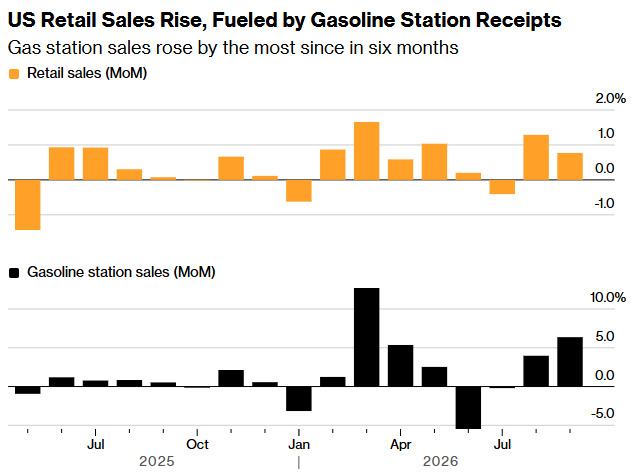
On the one hand, retail sales: retail sales increased 0.8% month-on-month in September, higher than the 0.3% expected by economists, but the previous value was revised to 1.3% in August — only 0.2% after excluding automobiles and gasoline, while “control group” sales excluding catering services, car dealers, building materials stores and gas stations increased by only 0.1%, far lower than the expected 0.3%. Eight of the 13 categories rose, led by gas stations, which jumped 6.4% in sales.
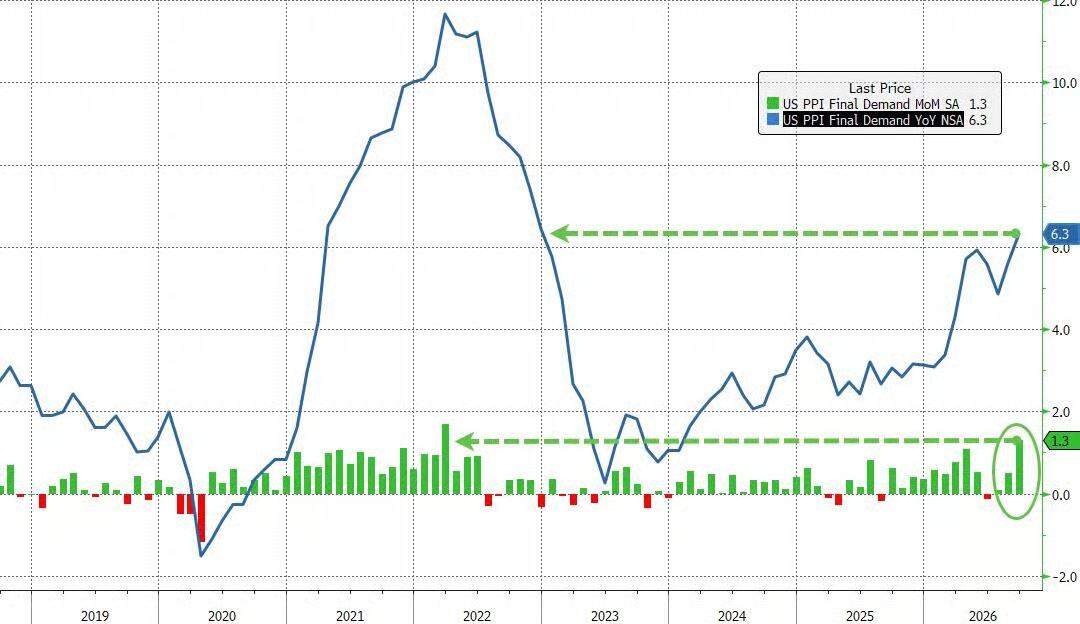
On the other side is inflation: The producer price index (PPI) rose 1.3% month-on-month and 6.3% year-on-year in September, the biggest monthly increase since March 2022 and the highest annual increase since December 2022, all of which greatly exceeded expectations. Excluding food and energy, the core PPI rose 0.7% month-on-month and 5.0% year-on-year, up from both 0.2% and 4.6% in August.
From the oil field to the cashier: a transmission chain that has already been opened
The first link in this chain is crude oil. Brent crude rose 0.35% to $106.06 per barrel on Wednesday after two ships were attacked in the Strait of Hormuz, Iranian officials said they were deploying new tactics to attack the ships, and the risk of supply disruptions was revived. This geolocation has been a major driver of US inflation since the start of the US-Iran war in February.
The second ring is a gas station. Gasoline prices surged 7.1% month-on-month in September, directly pushing the CPI for the month to 3.7% year-on-year (3.4% in August), higher than the expected 3.6%. Gasoline prices rose 9.1% from August to September, contributing more than half of the overall increase in CPI alone.
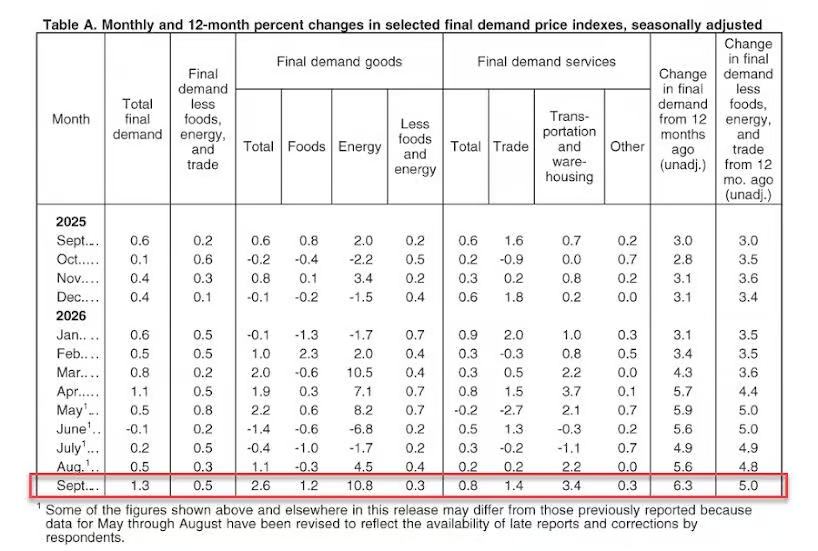
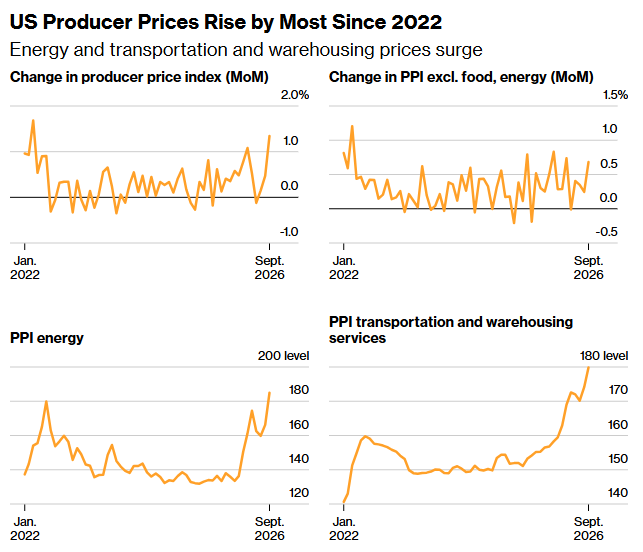
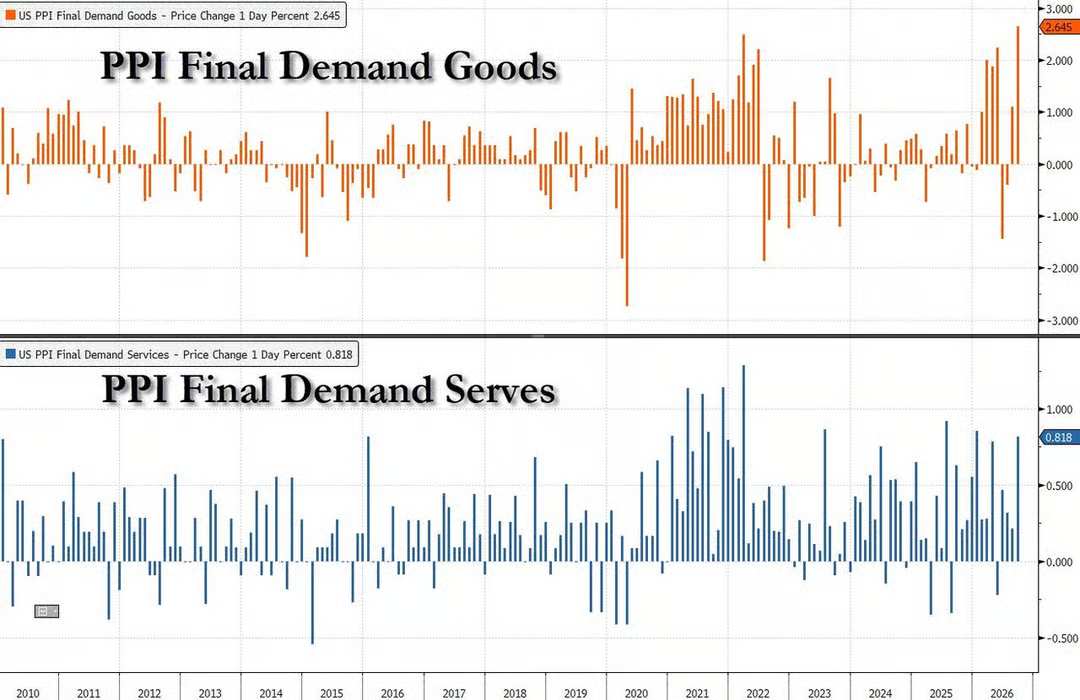
The third stage is the enterprise side. This is exactly what the PPI report on Thursday revealed: energy prices rose 10.8% month-on-month, transportation and storage prices rose 3.4%, and food rose 1.2%. One notable transmission sample is air tickets — as an input to the PCE price index, ticket prices jumped 5% month-on-month — that is, fuel costs are entering service pricing through the transportation process. Half of the increase in the PPI final demand commodity index in September can be attributed to rising gasoline prices, which rose 20.3%. Price indices for diesel, fresh and dried vegetables, aviation kerosene, residential electricity, and crude oil have also risen.
Another clue is that profit margins on wholesale and retail trade services jumped 1.4% month-on-month, the biggest increase since April; this indicator has always been used by the market to observe whether enterprises absorb tariff costs on their own or pass them on to customers. The Supreme Court overturned most of Trump's tariffs earlier this year, but the administration is invoking other mandates to continue to increase them, and the trade war with Canada escalated after negotiations broke down in August.
But conduction is not indiscriminate. Some PPI prices related to data center construction have instead cooled down: prices of electronic components and accessories fell 0.3% month-on-month, prices of computers and computer equipment rose slightly by 0.1%, and the general construction cost index remained flat; various categories of healthcare were also relatively weak. This set of numbers shows that the current price pressure is focused on energy and its direct downstream rather than full diffusion—at least in September.
Consumption: numbers haven't collapsed, but purchasing power is being eroded
Total retail sales exceeded expectations, which can easily be interpreted as “consumption is still strong.” If you take the structure apart, the conclusion is much more cautious. First, the 0.8% increase is highly dependent on the gas station category. After exclusion, only 0.2% remained; after excluding automobiles, building materials, and catering services, only 0.1% remained. The retail data is seasonally adjusted but not adjusted for inflation. If the 0.6% monthly price increase in September is included, actual retail sales are “flatter than flat.”
Second, actual purchasing power is declining. The report pointed out that wages fell again after adjustment for inflation in September; the reason why consumers are still spending money is largely due to high-income households supported by stock earnings — the so-called K-type economy. The Beige Book released by the Federal Reserve on Wednesday confirms this: from late August to early October, most jurisdictions reported “little or no change” in consumer spending; even in jurisdictions where companies like Dallas reported steady retail sales, there were “some reports that low-income customers are becoming more cautious.”
Another set of data from the Bank of America Research this week provides further evidence: the use of buy now, pay later (BNPL) is rising. The agency called this pace “not excessively worrisome,” but at the same time warned that “nearly one in every five households using BNPL has a debt of more than $500.” The CEO of Domino's Pizza and Albertsons (Albertsons) both acknowledged during recent earnings calls that many consumers are still in a difficult economic environment.
The quantitative estimates given by Moody's chief economist Mark Zandi (Mark Zandi) on October 12 are even more impactful: Since the outbreak of the US-Iran war in February, the total cost of each household in the US has risen to nearly $2,000, totaling about $265 billion; of these, the average price of gasoline has risen from less than $3 to $4.37 per gallon before the war, diesel has nearly doubled, aviation fuel has nearly doubled, and each household has spent nearly $1,100 more on energy items (including direct payments at gas stations and truck and air transportation costs driving up commodity prices), and “household energy expenses are still increasing by an additional $50 per week at current fuel prices.” At the same time, he pointed out that the interest rate hike raised the cost of mortgages to 7.5%, which is equivalent to increasing the burden of about 540 US dollars per household, and military expenses are about 360 US dollars per household — the total cost of the war has offset about half of the increase in the income of ordinary American households over the past eight months.
On the other side is abnormal resilience: a healthy job market, higher-than-normal tax rebates, and stock market earnings have all supported consumer demand for most of this year. Economists expect consumer spending to grow at an annualized rate of about 3.4% in the third quarter (3.8% in the second quarter), and the GDP growth rate for the third quarter is estimated at about 3.0% (2.2% in the second quarter). Another data on Thursday was also strong: the New York Federal Reserve's manufacturing sentiment index surged 17.9 points to 25.5, higher than the estimates of all economists in the Bloomberg survey. It was the strongest in the past five years, with significant growth in new orders and shipments — but in the same report, the price payment expectations index for the next six months rose to the highest level since 2022, which means that the companies themselves predicted that the pressure would continue.
The Federal Reserve is helpless in the face of supply-driven inflation: October is likely to be on hold, and the pressure is piling up until December
The combination of the two inflation reports has pushed the Federal Reserve to a more difficult position. Inflation has been above the 2% target for five and a half years. Currently, the federal funds rate is 3.75% — 4.00%. Last month, the Federal Reserve raised interest rates for the first time in three years, and the next interest rate meeting is October 27-28. According to CME FedWatch, after the CPI was announced on Wednesday, the probability of this month's rate hike rose from about 22% to 50%, then fell back and stabilized at about 30%; while the pricing for the December rate hike was firmly locked in. Citi expects the December rate hike, and the market's probability for this month was close to 90%.
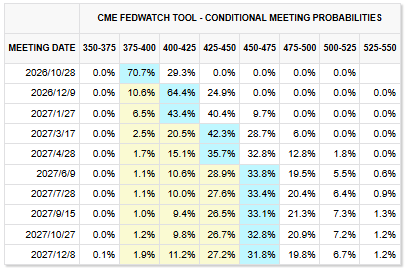
Wall Street's point of disagreement is almost entirely centered on “October or December”
TD Securities strategists Oscar Munoz and Gennadiy Goldberg: Today's report raised the possibility of an October rate hike, “but we still think the Fed will stay on hold and choose December because the market is already doing some work for them”;
Regan Capital's Skyler Weinand: “Inflation is stubborn and moving in the wrong direction, it can't be more clear”, and the rate hike is expected to be suspended in October and resumed in December;
Principal Asset Management's Seema Shah: The question is whether stronger core inflation will be enough to change the Fed's path. The market is clearly uneasy, “but this report is not enough to restart the reason for the October rate hike”;
Jeff Roach of LPL Financial: Inflationary pressure is spreading beyond energy, which means that the final return to the target may be bumpy and interest rates will remain high. This report complicates the Fed's decision this month;
Chicago Federal Reserve Chairman Austan Goolsbee's statement last month is a footnote to this round of policy dilemmas: supply-driven inflation may be easier to control than post-pandemic demand-driven inflation, but “it won't be painless”;
US Bank Chief Economist Beth Ann Bovino: “Inflation is a disease, and the medicine the Federal Reserve is bringing now is higher interest rates — I don't know which one hurts more because both hurt.”
This is probably the “2026 policy trap”: the Federal Reserve can neither produce an extra barrel of oil, end a war, or create more memory chips out of thin air; all it can do is slow down the rest of the economy unrelated to oil drilling or data center construction — and those who are most likely to feel this are those who are already paying more. Walsh has promised not to use his short-term policy outlook to guide the market. He will have a fireside conversation with IMF Managing Director Kristalina Georgieva (Kristalina Georgieva) in Bangkok on Friday. The tone of this speech will receive special scrutiny.
US stocks are facing a test: high yields are an obstacle
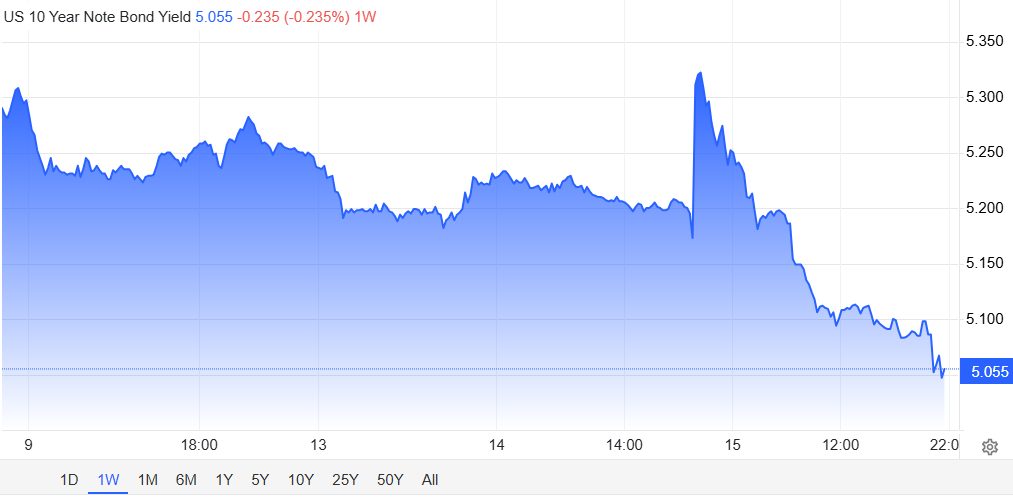
After Wednesday's CPI, the S&P 500 fell 1.11% to 7718 points, the end of the longest “no 1% single-day decline” record in six years, and the worst single-day performance since July; the Nasdaq Composite Index fell 1.88% to 26692 points; the Russell 2000 Index entered a pullback range; a chip giant index fell 4.3%, with a cumulative decline of about 12% over six trading days. The 10-year US Treasury yield once jumped from below 5.17% to above 5.32%, then regained most of the gains; the dollar hit its highest level since May 2025.
After PPI and retail sales were announced on Thursday, US bond yields continued to decline, and the NASDAQ and S&P 500 opened lower. However, safe-haven demand drove 10-year yields down 11 basis points to 5.08%, NASDAQ 100 futures fell 1.1%, and Brent crude fell back to around $104 — the market did not respond along the simple path of “higher inflation → more intense interest rate hikes”, but instead used the continued collapse of AI transactions (Anthropic's latest investor disclosure showed a slowdown in growth, Korea's KOSPI plummeted 7.6% at one point, and Samsung and SK Hynix fell more than 9%) as the main line of safe haven.
At the institutional level, high yields are suppressing US stocks in two ways: first, rising discount rates directly reduce the valuation of highly valued assets; second, huge capital expenses for data centers and AI chips are highly dependent on financing, and rising borrowing costs will directly raise the project threshold — this is also the reason why the AI sector spread from “valuation concerns” to “corporate debt concerns” this week. Macro strategist Tatiana Darie stated: “The specter of high yield returned to the market after Wednesday's inflation data, plaguing stocks and prompting traders to hide in value stocks and low beta sectors.”
However, there is also a reverse sound. Ulrike Hoffmann-Burchardi of UBS's Chief Investment Office believes that increased competition in the AI sector, rising demand for financing, and higher interest rates may gradually amplify fluctuations, but “we see this round of adjustments as an expected recalibration, not a fundamental breakdown in the AI investment story”; Adam Schickling, senior economist at Vanguard, pointed out that as Americans become more “price sensitive” while the economy benefits from increased productivity, inflation should slow down, but “patience is needed.”