
- PRICING
- LIVE QUOTES
- LEARN
- HELP


EN
Learn Why The Bull Case For Melrose Industries Stock Could Change Following Garden Grove Settlement
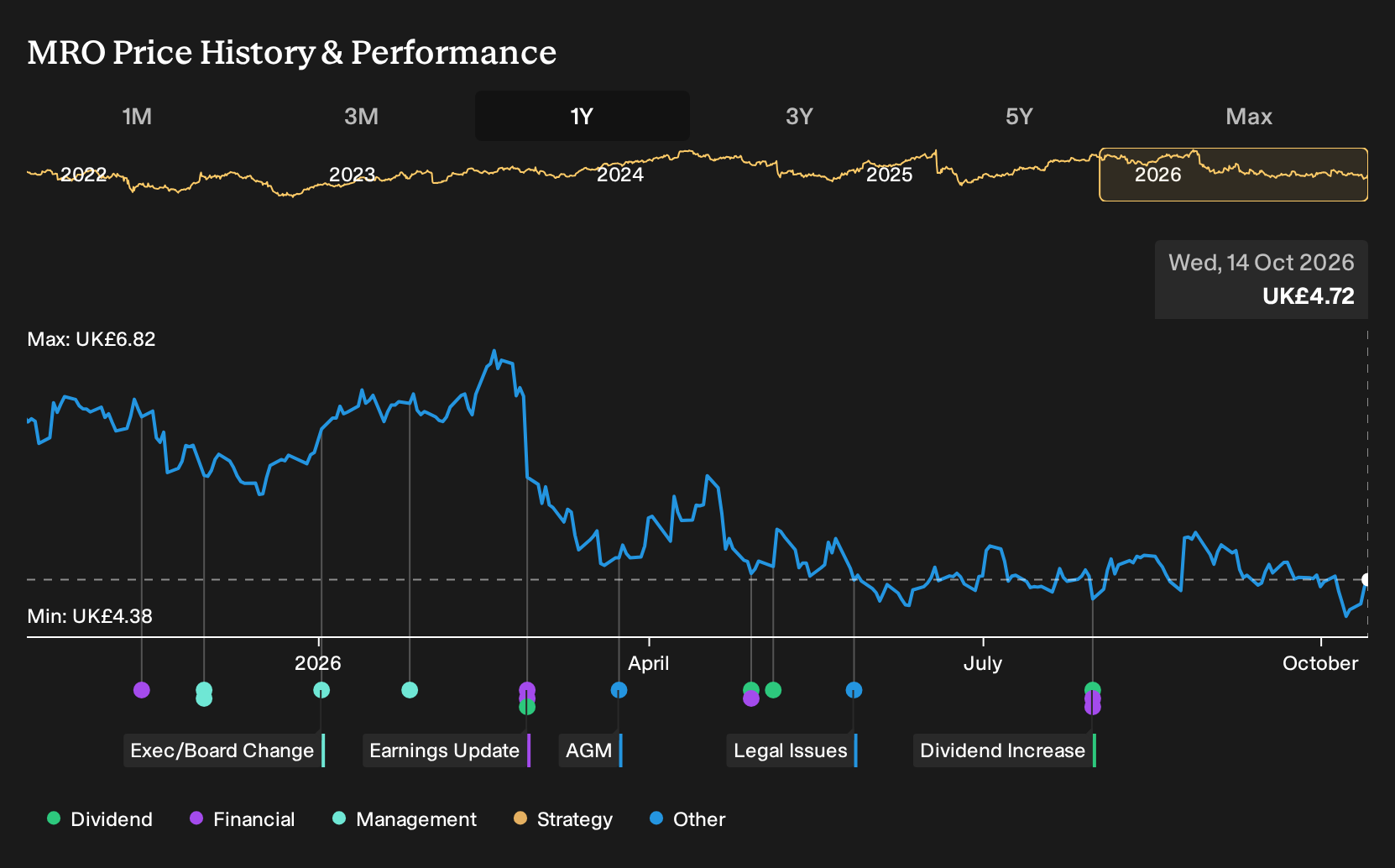
- Melrose Industries' GKN Aerospace unit has agreed a $125 million settlement with California authorities over a prior chemical incident at its Garden Grove facility, including civil penalties and a claims program, and is working toward a phased return to full capacity.
- The sharp drop in Melrose Industries' net margin in the first half of 2026 to 4.0% from 16.6%, despite higher revenue, highlights pressure on costs and execution just as the business absorbs the financial and operational impact of the Garden Grove settlement.
- We will now see how Melrose Industries' investment narrative holds up against a costly settlement and a sharply weaker net margin profile.
Scan how other UK industrials are handling risk, margins, and cash generation by reviewing the hand picked list of solid balance sheet and fundamentals (9 results) alongside Melrose Industries' latest setback.
Melrose Industries Investment Narrative Recap
To stay invested in Melrose Industries, you need to believe the focused aerospace portfolio can translate multi year backlogs and manufacturing investments into steadier earnings and healthier margins. The sharp move in net margin to 4.0% puts near term execution under the microscope. The Garden Grove settlement removes one source of uncertainty, but it also crystallises real cash and reputational costs.
The key short term catalyst is straightforward: a clean and timely ramp back to full capacity at Garden Grove that supports margin recovery and cash generation across Engines and Airframes. The biggest risk is that operational and regulatory pressures linger, which could keep profitability subdued while interest costs remain a drag on already thin earnings cover.
The Garden Grove agreement is the disclosure that matters most here. A defined $125 million package, including civil penalties and a claims program, gives investors clearer bookends for the financial hit. With the investigation moving toward closure, attention shifts to whether production and customer relationships at GKN Aerospace stabilise as planned.
Execution at this facility now ties directly into the broader Melrose Industries thesis around footprint consolidation, cost control and cash flow improvement. Any delays to the phased return to full capacity, or any incremental compliance spending, would work against the margin rebuild that many investors are watching and would sit alongside existing risks from leverage and interest cover.
Melrose Industries' current analyst narrative points to £4.7b in revenue and £512.0 million in earnings by 2029. That profile assumes 7.7% yearly revenue growth and an earnings increase of about £352.0 million from £160.0 million today.
Uncover why Melrose Industries' fair value indicates a 40% potential upside to its current price before that discount starts to close.
Exploring Other Perspectives
The bullish narrative around Melrose Industries leans heavily on engines aftermarket cash flow as a potential upside catalyst. Some of the most optimistic analysts were modelling revenue of about £5.0b and earnings of roughly £625.4 million by 2029. Those views were set before the Garden Grove settlement, so you should expect that forecasts and opinions may shift as more details emerge.
Explore 3 other Melrose Industries fair value estimates, including one that suggests there could be as much as 75% upside from the current price.
Decide For Yourself
Disagree with existing narratives? Extraordinary investment returns rarely come from following the herd, so consider your own analysis and judgement.
- A great starting point for your Melrose Industries research is our analysis highlighting 2 key rewards and 2 important warning signs that could impact your investment decision.
- See our latest analysis for Melrose Industries. The report includes a comprehensive fundamental analysis summarized in a single visual, the Snowflake, making it easy to evaluate Melrose Industries' overall financial health at a glance.
Looking for more investment ideas beyond Melrose Industries?
If the Melrose Industries story has sharpened your focus on risk, balance sheets, and earnings quality, use that same lens across the wider market with the Simply Wall St Screener.
- For investors who want resilience first, start with a 4 resilient stocks with low risk scores that have historically paired steadier fundamentals with more measured volatility.
- If value is your priority, filter for companies that combine solid cash generation with attractive pricing using our 8 high quality undervalued stocks.
- For those hunting for potential future leaders before they are widely followed, scan the 5 high quality undiscovered gems and build your own watchlist of early ideas.
This article by Simply Wall St is general in nature. We provide commentary based on historical data and analyst forecasts only using an unbiased methodology and our articles are not intended to be financial advice. It does not constitute a recommendation to buy or sell any stock, and does not take account of your objectives, or your financial situation. We aim to bring you long-term focused analysis driven by fundamental data. Note that our analysis may not factor in the latest price-sensitive company announcements or qualitative material. Simply Wall St has no position in any stocks mentioned.
Have feedback on this article? Concerned about the content? Get in touch with us directly. Alternatively, email editorial-team@simplywallst.com