
- PRICING
- LIVE QUOTES
- LEARN
- HELP


EN
3 Stocks Linked To Sovereign Debt Restructuring as IMF Deficit Warnings Grow
IMF warnings on swollen government deficits, rising bond yields and fragile emerging market borrowers have pushed sovereign debt risks back into the spotlight, and that reroutes attention to a small group of listed firms that live and breathe this world every day. When funding costs shift and restructurings move to the front page, fee pools, mandates and reputations can all be on the line. This article walks through three stocks linked to emerging market sovereign work that appear particularly exposed to the latest IMF shockwave, and explains why the same headlines that worry broad equity markets might create openings for more targeted investors.
The three stocks below are just a starting sample, since the full screen surfaced 13 more companies with equally detailed emerging market sovereign debt stories that are not covered here and may warrant a closer look from patient capital.
If you want to identify and analyze potential beneficiaries of future restructurings or IMF programs in seconds, go straight to the Emerging Market Sovereign Debt and Restructuring Beneficiaries screener.
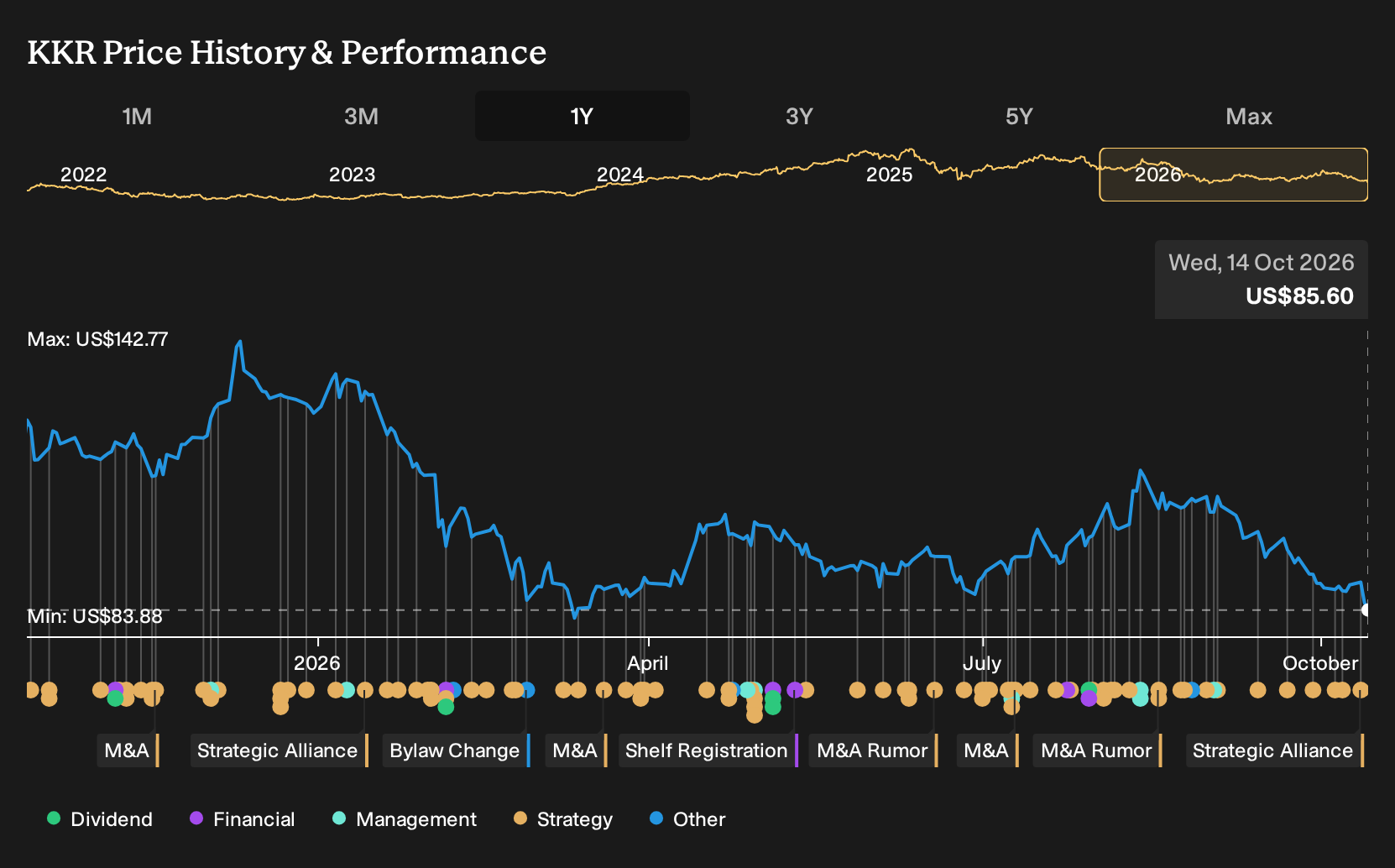
KKR (KKR)
Overview: KKR is a global alternative asset manager that raises capital to buy, lend against and restructure businesses, assets and real estate worldwide, including opportunistic credit tied to emerging market sovereign situations.
Operations: KKR generates about US$12.6b from insurance activities and records a US$6.9b segment adjustment within its reported business mix.
Market Cap: US$78.2b
For an investor tracking emerging market sovereign stress, KKR matters because its broad credit toolkit can be directed toward distressed government and quasi government borrowers when higher yields and restructurings create opportunities for complex deals.
Expansion of credit and asset-based finance platforms, with KKR now a leader in a $6 trillion+ market and positioned for further expansion within that space, provides a broader and more durable base of fee-related earnings while also increasing the potential for performance fees as these businesses scale.
The key variable is how one unseen pressure on that fee engine ultimately affects profitability when conditions shift again.
Those pressure points are exactly what the full narrative for KKR unpacks, showing where KKR’s fee engine could accelerate or stall as sovereign stress reshapes credit flows.
StepStone Group (STEP)
Overview: StepStone Group is a global private markets investor that builds and manages funds and portfolios, including emerging market credit and distressed debt exposure.
Operations: StepStone generates about US$2.0b from its fully integrated private markets platform, with roughly US$1.2b from the United States and US$0.8b from other regions.
Market Cap: US$5.1b
StepStone Group provides access to higher yielding emerging market sovereign and quasi sovereign situations through its private credit, secondaries and distressed strategies, without requiring investors to pick individual bonds or restructurings themselves.
That curated access is just the starting point, with the analysis report for StepStone Group revealing how StepStone Group’s fee engine and sovereign exposure could shift if restructurings accelerate.

Lazard (LAZ)
Overview: Lazard is a global adviser and asset manager that counsels governments on sovereign debt restructurings and runs emerging market debt portfolios.
Operations: Lazard generates about US$1.8b from Financial Advisory and US$1.5b from Asset Management, with smaller corporate segment losses.
Market Cap: US$3.6b
For investors focused on emerging market sovereign stress, Lazard matters because its advisory bench often sits at the table when countries and creditors renegotiate. Its funds also give clients portfolio exposure to the very debt being reworked.
"Lazard's expansion in the Middle East with a new Financial Advisory office in Abu Dhabi could strain resources and lead to higher operating costs without immediate revenue impact, potentially affecting net margins."
What happens to Lazard’s earnings power if that extra advisory firepower eventually meets a wave of complex sovereign restructurings?
If that question is on your mind, the full narrative for Lazard shows where Lazard’s restructuring work could accelerate, stall or be quietly masked by other fee engines.

Seeking Fresh Alternatives Beyond Sovereign Stress
Markets move fast and early capital often captures the cleanest breakout moves while attention is still elsewhere and information is fresh. Before these ideas get caught by the crowd, act now.
- Spot income engines before yields start dropping by running the 7 dividend fortresses that screens for high payouts backed by resilient balance sheets and dependable underlying cash generation.
- Track the next wave of infrastructure momentum by scanning the 43 power grid technology and infrastructure stocks that highlights businesses tied to grid upgrades, electrification trends and capital-heavy renewal projects.
- Get ahead of niche growth stories with the 20 high quality undiscovered gems that flags under-the-radar operators where fundamentals, not headlines, drive the early phase of share price moves.
This article by Simply Wall St is general in nature. We provide commentary based on historical data and analyst forecasts only using an unbiased methodology and our articles are not intended to be financial advice. It does not constitute a recommendation to buy or sell any stock, and does not take account of your objectives, or your financial situation. We aim to bring you long-term focused analysis driven by fundamental data. Note that our analysis may not factor in the latest price-sensitive company announcements or qualitative material. Simply Wall St has no position in any stocks mentioned.
Have feedback on this article? Concerned about the content? Get in touch with us directly. Alternatively, email editorial-team@simplywallst.com