
- PRICING
- LIVE QUOTES
- LEARN
- HELP


EN
Why Wall Street Is So Worried About Skydance’s Debt
If you have watched a Harry Potter movie, streamed a show on HBO, or caught the NFL on CBS, you have already watched a ton of content from Skydance. These brands now sit under one roof.
Now called Skydance (SKYD), Paramount Skydance closed its acquisition of Warner Bros. Discovery on Oct. 6, forming a combined company projected to generate close to $70 billion in annual sales. CEO David Ellison called it a “historic day,” saying that Skydance's focus will now turn toward building a company that "empowers creatives, entertains audiences and rewards shareholders."
But Wall Street is looking at a different number. It sits on the balance sheet, and it is enormous. Let's dive in.
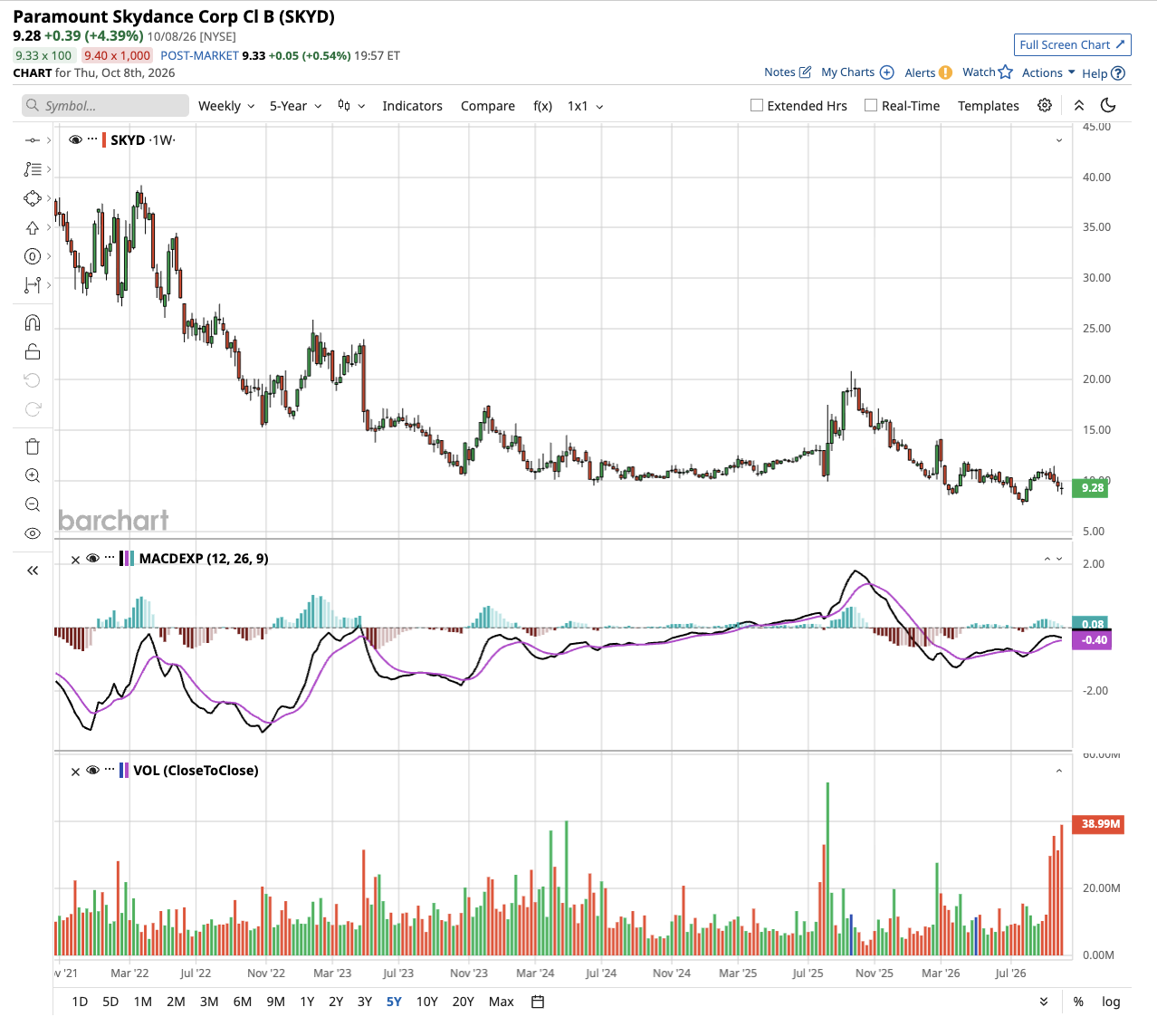
Skydance's Debt Tops $78 Billion
Skydance’s investor presentation put the company's net debt at about $78.9 billion, with total debt of $86.8 billion. Variety described it as a “nearly unprecedented” debt load for a large media deal. The outlet also noted that the smaller Paramount Skydance took over the larger Warner Bros. Discovery through layered financing and a group of lenders that included sovereign wealth funds from the Middle East. Skydance has said those investors will have no governance role or operational influence.
Notably, the company presentation shows a pro forma net loss for the six months ended June 30, 2026. Analysts told Variety that Skydance is “walking a tightrope,” as it must blend two media giants while customer behavior shifts in the entertainment business.
S&P Global and others calculate that debt will equal about 7 times earnings in 2026 and 2027. Skydance is committed to net leverage of 3 times in 2029. Moody's rates the debt as Ba3, one notch below investment grade, while S&P Global and CreditSights rate it slightly higher.
Cable TV Still Pays the Bills
According to CreditSights analyst Hunter Martin, traditional channels like CNN, TBS, Nickelodeon, and CBS are shrinking, yet these segments deliver more than 70% of the company's profits and “almost all the free cash flow.” MoffettNathanson analyst Robert Fishman believes that Skydance will have to grow HBO Max and Paramount+ while maintaining the health of its cash-generating channels.
Streaming scale is also a question for Skydance. The company reported more than 200 million combined subscribers, but that figure does not necessarily account for overlap. Analysts estimate about 120 million paying subscribers after removing duplicates, according to Forbes. Netflix (NFLX) reported 325 million subscribers at the end of 2025, so Skydance's subscriber base equates to roughly 40% of Netflix's count.
Forbes also noted that U.S. streaming growth remains largely flat. The bigger opportunity is in international markets, and that will require heavy spending on local programming.
The $6 Billion Savings Plan
Skydance is reportedly targeting at least $6 billion in run-rate savings within three years. The company expects 30% in year one and 70% in year two.
Most of the savings should come from staff cuts and smoothing out operations. However, Martin believes that severance, a move to a new tech platform, and exits from old real-estate leases will create short-term cost pressures. The analyst also noted that a multi-state antitrust lawsuit filed in July 2026 likely added about $500 million in interest costs on short-term debt.
Skydance has pledged at least 30 theatrical films a year, each with a minimum 45-day theatrical window.
What Investors Should Watch Next
S&P Global's Jawad Hussain wants to see a clear strategy and timeline from management after the third quarter, and again when the company reports Q4 results early next year. Meanwhile, Moody's Rating's Jason Cuomo believes that investors may need more time to judge Skydance's true potential.
The company's long-term goals are bold, targeting more than $10 billion in free cash flow by 2030 while spending more than $30 billion on content.
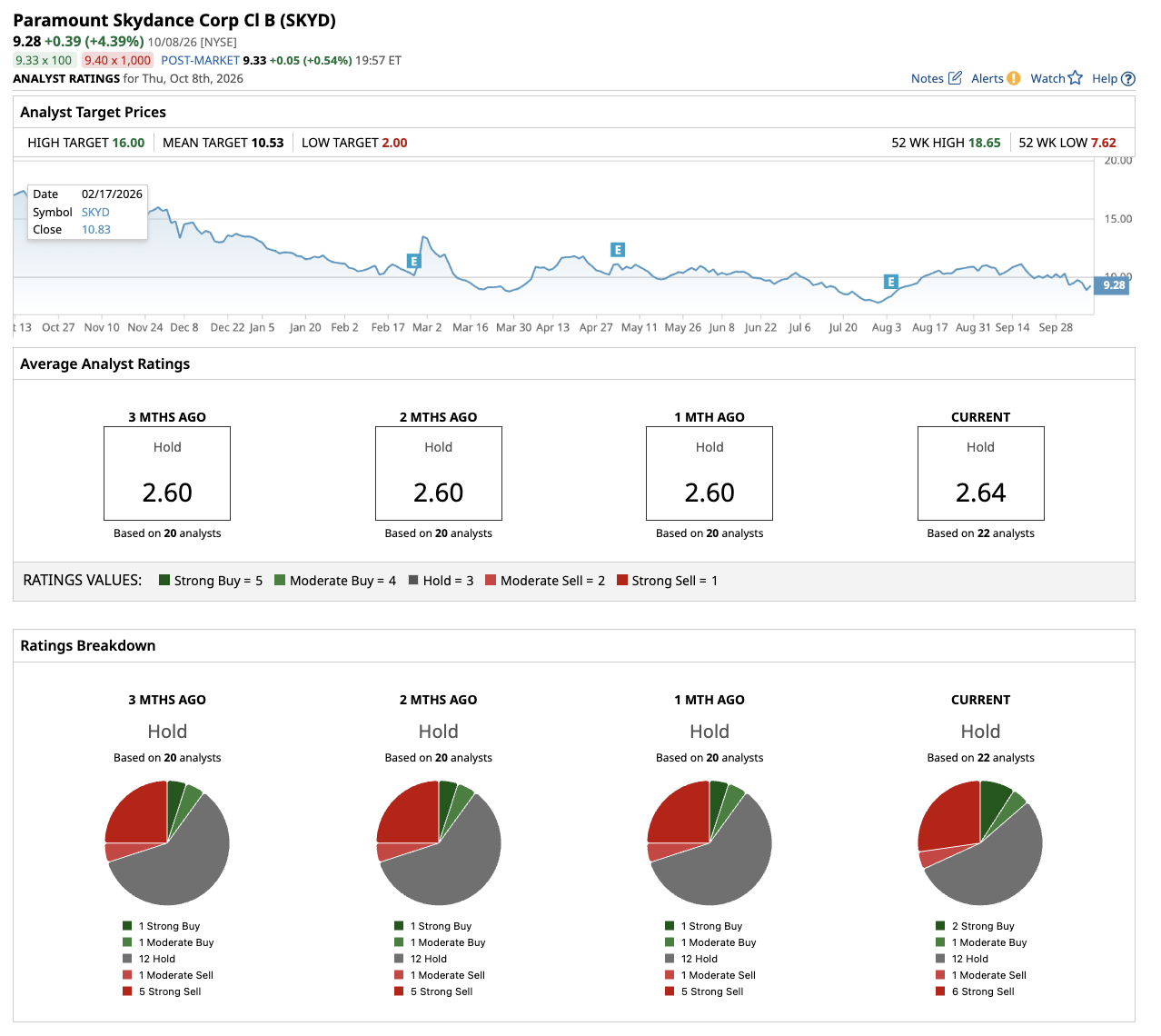
Overall, Skydance stock has a consensus “Hold” rating on Wall Street. Out of the 22 analysts covering SKYD stock, two recommend a “Strong Buy” rating, one recommends a “Moderate Buy,” 12 recommend a “Hold” rating, one analyst recommends a “Moderate Sell,” and six recommend a “Strong Sell” rating. The average price target of $10.53 implies potential upside of 15% from current levels.
On the date of publication, Aditya Raghunath did not have (either directly or indirectly) positions in any of the securities mentioned in this article. All information and data in this article is solely for informational purposes. For more information please view the Barchart Disclosure Policy here.