
- PRICING
- LIVE QUOTES
- LEARN
- HELP


EN
Trump Bought SpaceX Debt. What That Means for SPCX Stock.
President Donald Trump has added another investment to his portfolio, and this one comes with an interesting twist. Rather than buying more shares of Elon Musk's SpaceX (SPCX), the president purchased millions of dollars in the company's debt.
Trump purchased between $1 million and $5 million in SpaceX notes during August, part of 517 securities transactions disclosed for the month. The purchase came shortly before Trump signed a policy favoring commercial space operations, raising questions about the relationship between his investments and his administration's decisions.
But what does the transaction actually mean for SPCX investors?
Trump Is Lending Money to SpaceX
Buying corporate debt isn't the same as purchasing stock. When investors buy bonds, they're effectively lending money to a company in exchange for contractual payments and repayment of principal according to the bond's terms. But when they buy stock, they own a piece of the business and participate in changes in the equity value.
SpaceX had a strong cash position at the end of the second half, but it’s also burning through significant cash. Its three businesses—the rocket-launch business, the Starlink satellite communications network, and an artificial intelligence business that includes xAI—require substantial capital.
In June, SpaceX issued $25 billion in senior unsecured notes, according to its second-quarter regulatory filing. The company used the proceeds to repay bridge financing, cover related expenses, and support general corporate purposes.
Trump's purchase gives him exposure to SpaceX as a creditor. It doesn't, by itself, establish that he expects the company's stock price to rise.
What Does This Mean for SPCX Stock?
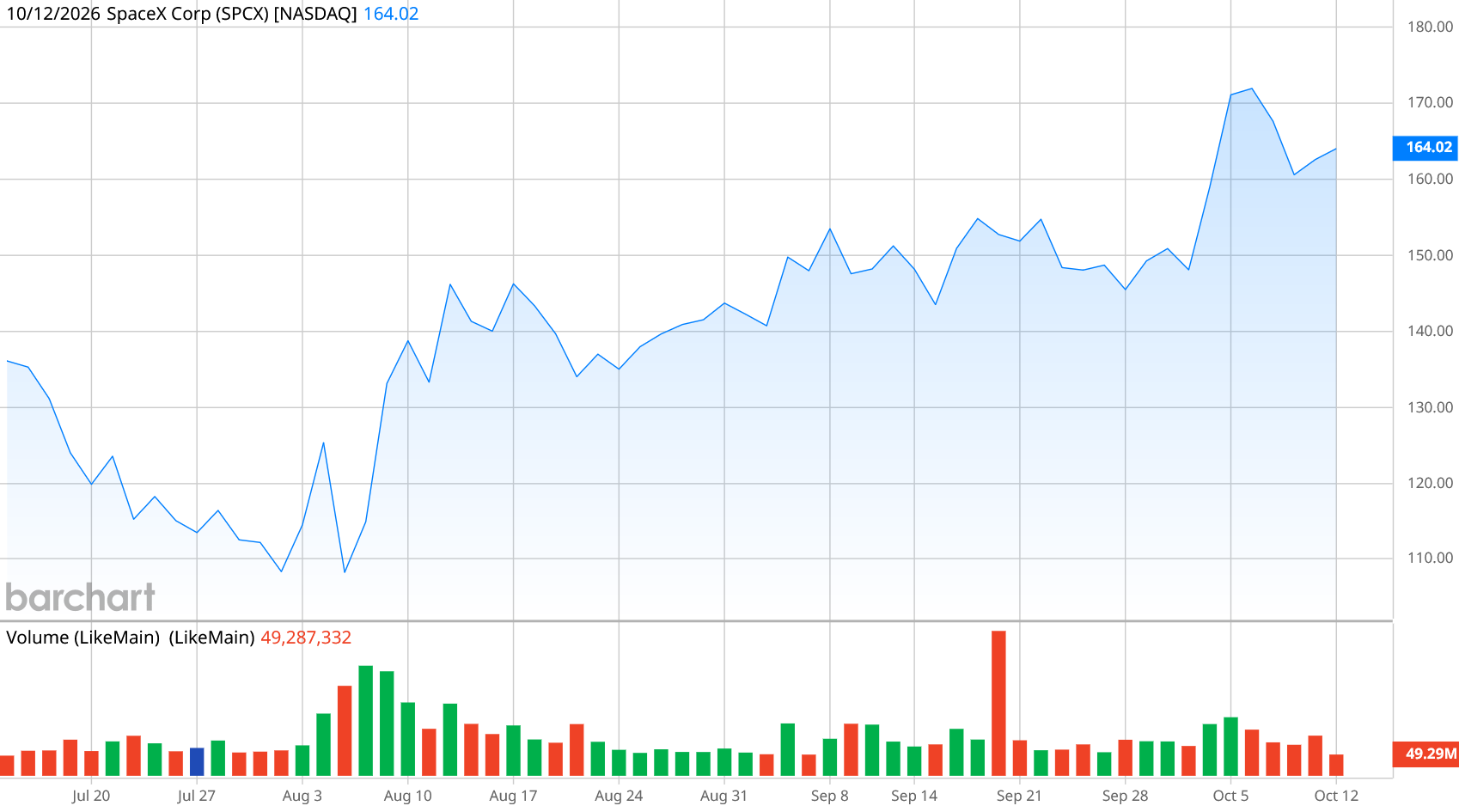
SpaceX has had an up-and-down road since the company went public in June. Shares began trading at $150 and immediately jumped to more than $200 before sagging. SPCX stock traded below its opening price until just recently and currently sits at about $164. That means shares are up about 2.5% now but are still 27% off their all-time high. The company currently has a market cap of about $2.1 trillion.
Revenue in the second quarter was $7.81 billion, up from $4.07 billion a year ago. And while all three of the company’s businesses are growing revenue rapidly, only its Connectivity business—the one that includes Starlink—is making money.
| Segment | Q2 2026 Revenue | Q2 2025 Revenue | Percentage Change | Income (Loss) from Operations |
| Space | $962 million | $746 million | 28.9% | ($542 million) |
| Connectivity | $4.29 billion | $2.58 billion | 66.2% | $1.56 billion |
| AI | $2.56 billion | $737 million | 247% | ($1.25 billion) |
| Total | $7.81 billion | $4.07 billion | 91.9% | ($143 million) |
Source: SpaceX
The company ended the quarter with $100 billion in cash, cash equivalents, and marketable securities, as well as a backlog of $47.5 billion.
“This financial strength gives us substantial capacity to invest in Starship, Starlink Broadband and Mobile satellites, and our AI platform, while maintaining a disciplined long-term capital allocation framework,” CFO Bret Johnsen said.
What Are the Bigger Issues?
While Trump’s purchase of SpaceX notes is relatively small compared to the company’s cash position at the end of the second quarter, the bigger issue for shareholders involves SpaceX's relationship with the federal government.
SpaceX provides launch and communications services to government customers, making federal spending and regulatory decisions important considerations for its business.
A policy that makes commercial launches easier could benefit SpaceX operationally. But investors shouldn't assume that Trump's personal debt investment guarantees favorable treatment, additional contracts, or higher earnings.
The White House has said Trump's investments are managed independently, without his input. Nevertheless, the combination of a financial interest in SpaceX and presidential authority over policies affecting the company raises legitimate conflict-of-interest questions.
The Bottom Line
Trump's purchase puts another spotlight on SpaceX, but it isn't a conventional bullish stock trade. Investors should pay closer attention to the company's financing needs, government relationships, and ability to turn its ambitious expansion plans into profitable growth.
On the date of publication, Patrick Sanders did not have (either directly or indirectly) positions in any of the securities mentioned in this article. All information and data in this article is solely for informational purposes. For more information please view the Barchart Disclosure Policy here.