
- PRICING
- LIVE QUOTES
- LEARN
- HELP


EN
Here’s Why I’m Not Worried About SpaceX Insider Selling
Space Exploration Technologies (SPCX) President Gwynne Shotwell recently filed to sell 342,170 shares worth roughly $52 million, a headline that could quickly raise concerns about insider selling. Yet the company is already facing a much larger wave of post-IPO share unlocks, with hundreds of billions of dollars in previously restricted stock set to become tradable through year-end. Against that backdrop, a $52 million sale by one of SpaceX’s most senior executives looks more like background activity than a red flag. In August, a $100 billion lockup expiration failed to crash the stock, showcasing how the company's future prospects are more important in the grand scheme of things.
About SpaceX Stock
Space Exploration Technologies is an aerospace and AI company that builds and launches rockets, operates Starlink, and provides AI computing services. Its product portfolio includes the Falcon 9 and Falcon Heavy rockets, the Dragon spacecraft, Starship, and Starlink. Founded in 2002, the company is headquartered in Starbase, Texas, and is led by CEO Elon Musk.
SpaceX's stock is up about 3% since its first trading day on June 12, when it opened at roughly $160. It then surged to its all-time high of $225.64 within a week. By early August, that figure had been cut by more than half, reaching a low of $104.83. SPCX stock has recovered well since then, and now trades at around $163. Investors were bullish last week, driving a rally on the back of a busy launch week, including Starship's first orbital flight, along with bullish analyst calls.
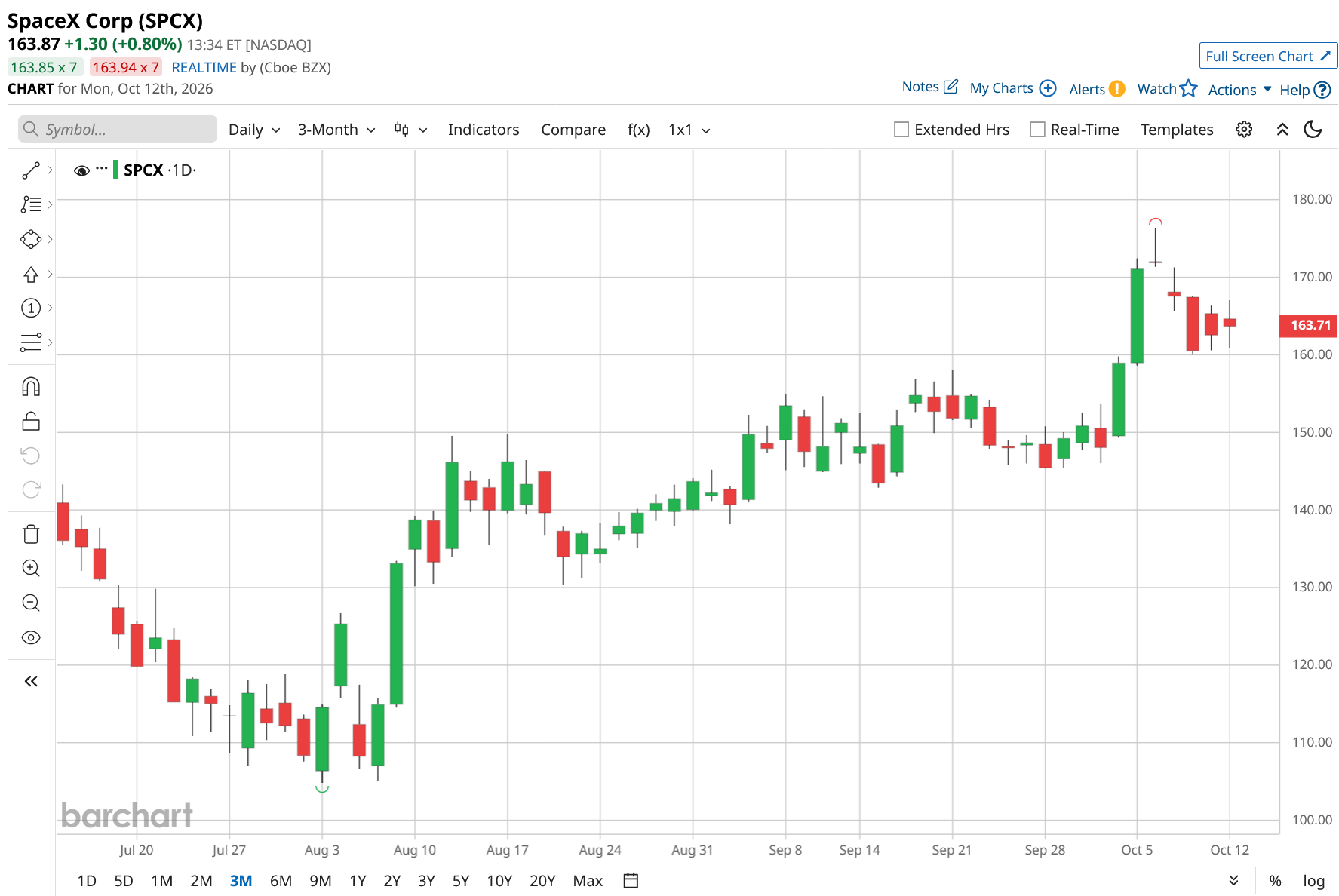
Shotwell Files to Sell $52 Million of SPCX Stock
Shotwell filed a Form 144 to sell 342,170 shares worth nearly $52 million, or about $151.85 per share. The filing named Morgan Stanley Smith Barney as the broker and listed Sept. 22 as the proposed sale date. She obtained the shares that same day by exercising stock options and paying in cash. The transaction falls under a Rule 10b5-1 trading plan adopted on June 23, shortly after SpaceX’s June IPO, meaning the sale was scheduled in advance rather than arranged in response to recent events. Shotwell had not reported any other securities sale over the prior three months, and the transaction represents only a small portion of the company’s roughly 7.7 billion shares outstanding.
Why This Shouldn’t Worry Investors
SpaceX’s tradable float has been expanding in waves that are far larger than any individual insider sale. Only about 4% to 5% of the company’s shares were available to trade at the IPO, followed by more than 1.2 billion shares becoming unlocked in August alone. More tranches are due on Oct. 9 and Oct. 24, with a larger release after third-quarter results. Against that scale, Shotwell's pre-scheduled sale barely registers. Elon Musk’s much larger 6.4 billion-share stake will remain locked until June 2027, leaving the biggest potential source of future share supply out of the market for now.
Insider sales naturally draw attention, but the context matters here. Shotwell’s transaction is small, pre-scheduled, and tied to a routine option exercise. Meanwhile, it comes as SpaceX’s lockup calendar is already releasing far larger amounts of stock independently of her filing, making the broader increase in tradable supply the more important factor to watch.
SpaceX Beats in First Report as a Public Company, but Spending Jumps
SpaceX reported its second-quarter 2026 earnings on Aug. 4, its first as a public company. Revenue jumped 92% year-over-year (YoY) to $7.81 billion, beating the $6.8 billion estimate, while the net loss narrowed to $541 million. However, capital spending of $18.4 billion far exceeded expectations, and the stock fell more than 13% the next day.
CFO Bret Johnsen said SpaceX is on pace to reach $100 billion in annualized recurring revenue by year-end. The company ended the quarter with $100 billion in cash and marketable securities, along with a $47.5 billion backlog. Third-quarter results, expected in late October, will also trigger a larger lockup release, adding to the share supply investors are watching.
What Do Analysts Expect for SPCX Stock?
Morgan Stanley's Adam Jonas kept a “Buy” rating and a $300 price target on SPCX, calling the stock a cheap way to invest in AI infrastructure. He also sees upcoming milestones such as Starship Flight 15 as near-term catalysts. The very next day, Goldman Sachs’ Eric Sheridan raised SpaceX’s price target from $220 to $230 while also keeping a “Buy” rating.
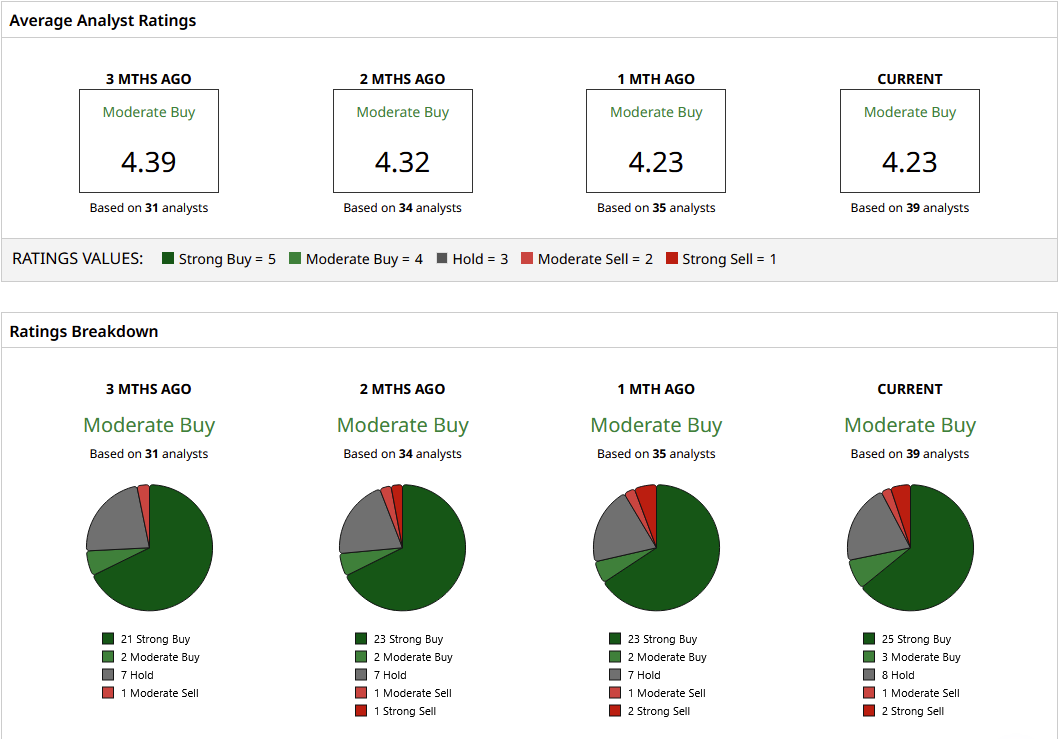
Based on 37 Wall Street analysts, SpaceX holds a “Moderate Buy” rating with a mean price target of $224.58, indicating a 26% upside. The upside suggests analysts see the share supply pressure as temporary.
On the date of publication, Jabran Kundi did not have (either directly or indirectly) positions in any of the securities mentioned in this article. All information and data in this article is solely for informational purposes. For more information please view the Barchart Disclosure Policy here.