
- PRICING
- LIVE QUOTES
- LEARN
- HELP


EN
Verizon Stock Sinks Lower as SpaceX Braces to Gain Telecom Traction
Over the past 12 months, Verizon (VZ) focused on improving its operations and customer engagement. These efforts led to a lower churn rate and steady cash flow growth, allowing management to raise guidance.
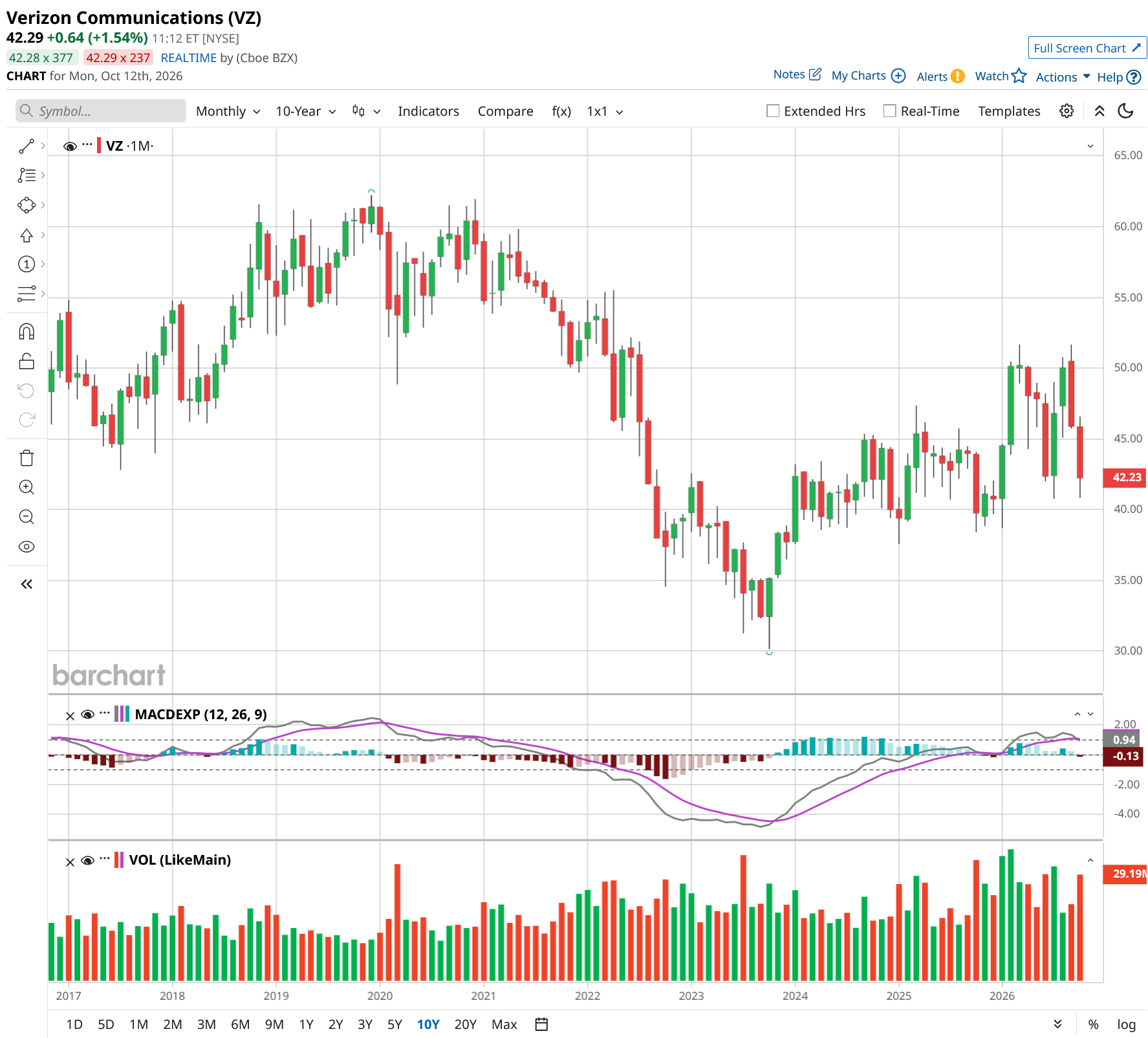
However, on Oct. 9, the telecom stock tanked more than 8% after a deal from Elon Musk’s SpaceX (SPCX) rattled the telecom sector. Is the ongoing pullback a buying opportunity for Verizon stock investors in October 2026?
What SpaceX Is Buying
Last week, SpaceX announced a deal to buy a nationwide spectrum portfolio from Grain Management, a digital infrastructure firm. However, the Federal Communications Commission (FCC) has not yet approved the deal.
SpaceX called it a “license portfolio of up to 14 megahertz of paired spectrum in the 800 MHz band,” according to its statement. The company said the spectrum fills a key technical gap on the path to becoming a major U.S. mobile carrier. Musk called it a “very big deal” in a post on X, formerly Twitter.
Just last week, AT&T (T), T-Mobile (TMUS), and Verizon (VZ) formed a joint venture to expand satellite coverage in underserved areas, according to a Verizon statement.
CNBC also reported that T-Mobile has dropped Starlink from its satellite promotions. SpaceX now appears set to compete directly with the big carriers by selling its own mobile service.
Starlink is SpaceX's cash cow. CNBC reported:
- It ended Q2 with 12 million subscribers.
- In the second quarter, the segment earned $1.66 billion in operating income on $4.29 billion in revenue.
- Deutsche Bank estimates the base reached 13.5 million by the end of September, including 4.1 million in the U.S. SpaceX went public in June and is now valued at over $2 trillion.
- The FCC said it will vote on auctioning 25 megahertz of spectrum for direct-to-device services. A second vote on Oct. 29 would open public comment on 482 MHz more.
FCC Chair Brendan Carr said the agency will bring over $100 billion of spectrum to market in two years. “It's not for us ultimately to pick winners and losers,” he told CNBC.
Verizon's CEO Called Satellites a Partner
Weeks before the deal, Verizon leaders addressed this exact scenario.
Speaking at the Goldman Sachs Communacopia + Technology Conference on Sept. 9, CEO Dan Schulman said Verizon had seen “zero” discernible impact on broadband growth from any low-earth-orbit (LEO) provider, including Starlink. He offered a price comparison. Starlink sells 400 megabytes for $130, he said. Verizon sells 500 megabytes of broadband plus mobile for $70.
He also ruled out opening Verizon's network to a satellite virtual carrier. CFO Tony Skiadas said the same at Citi's Global TMT Conference that day. He added that Verizon earns over 95% of its revenue in urban and suburban areas, where satellites struggle.
Analysts largely agree on timing, even as they praise the deal, according to CNBC.
- Evercore ISI said SpaceX “now has the outline of a real network.”
- JPMorgan said the purchase makes Starlink Mobile's long-term case “more credible.” But JPMorgan still sees limited near-term risk to incumbents, given the time, infrastructure, and capital needed.
VZ Offers a Dividend Yield of 6.9%
The drawdown in VZ stock has meant it now offers shareholders a dividend yield of almost 7%.
Notably, Verizon operates in a mature industry that allows it to generate steady cash flow across market cycles. The telecom giant has increased the annual dividend from $1.62 per share in 2007 to $2.83 per share in 2026.
Verizon's annual dividend expense is around $11.75 billion, while the company is forecast to report $22 billion in free cash flow this year, indicating a payout ratio of 53.5%.
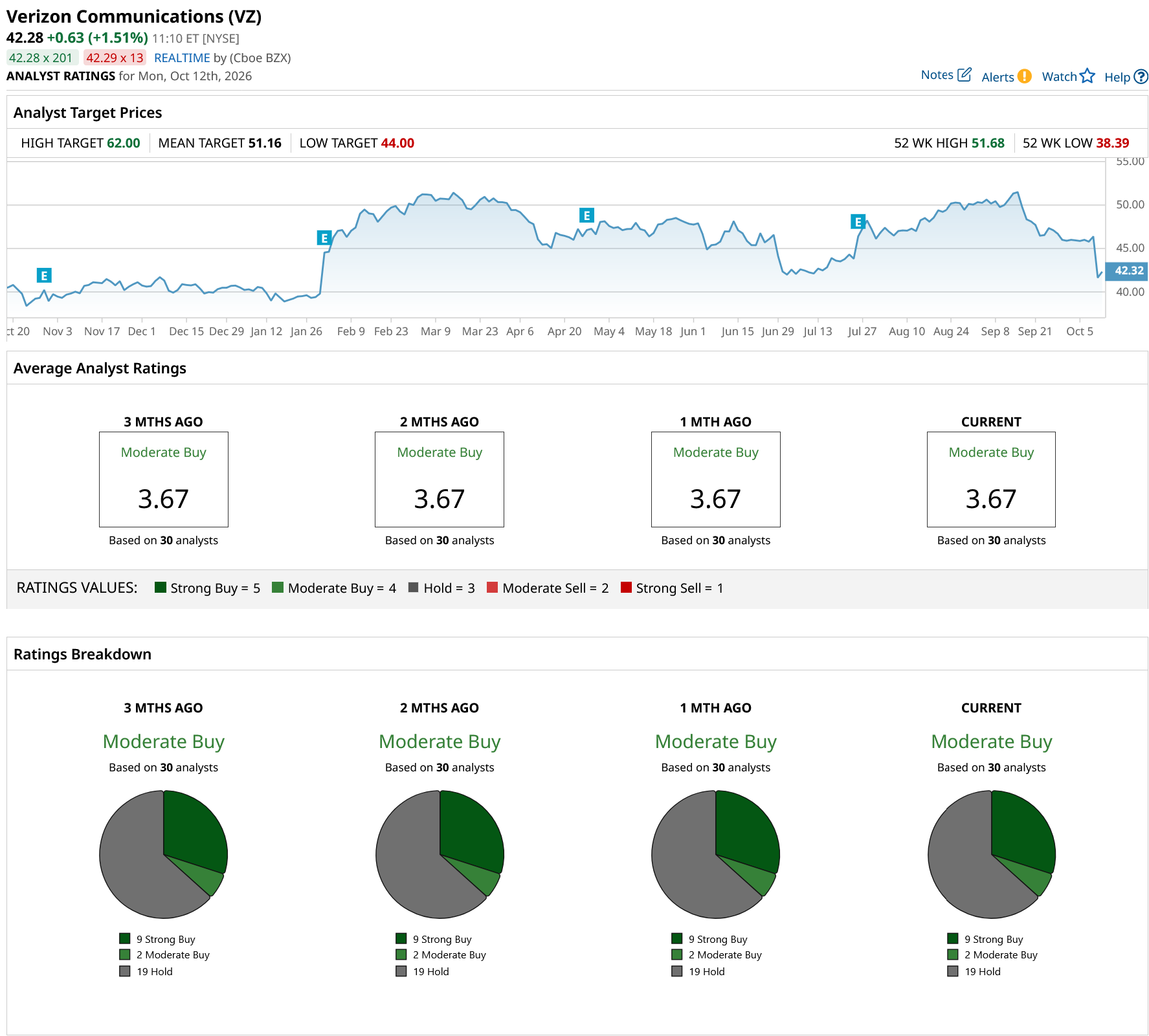
Beyond a tasty dividend, Verizon could also deliver gains through share price appreciation. Out of the 30 analysts covering VZ stock, nine recommend “Strong Buy,” two recommend “Moderate Buy,” and 19 recommend “Hold.” The average VZ price target is $51.16, 21% above the current price.
Including its dividend, cumulative returns could exceed 30% over the next 12 months.
Three things matter now. First, whether the FCC approves the SpaceX deal. Second, the Oct. 29 vote on more spectrum. Third, whether SpaceX actually builds the towers Farrar says it needs. Verizon's next earnings call will show whether its numbers hold up. For now, the market has priced in fear, and the fundamentals have not yet changed.
On the date of publication, Aditya Raghunath did not have (either directly or indirectly) positions in any of the securities mentioned in this article. All information and data in this article is solely for informational purposes. For more information please view the Barchart Disclosure Policy here.