
- PRICING
- LIVE QUOTES
- LEARN
- HELP


EN
3 Bangladesh Consumer Staples Stocks With Pricing Power As Inflation Stays High
Inflation in Bangladesh is squeezing shoppers while producer costs move more slowly, and that tension is reshaping who wins and who struggles on the stock market. Persistent CPI near 9% can pressure weaker consumer stocks and can also benefit businesses that manage higher prices without losing customers. This article explains that dynamic and highlights 3 stocks exposed to these inflation trends that may merit closer attention at this time.
The three stocks below are a sample pulled from a wider screen of Bangladeshi consumer staples and essential retailers. The full methodology surfaced 6 more companies with similarly interesting inflation stories that are not covered here. To size up that broader opportunity set, head straight to the Bangladesh Consumer Staples & Essential Retail Beneficiaries of Persistent Inflation screener to identify, filter, and analyze the highest-conviction ideas tailored to your own risk profile.
Olympic Industries (DSE:OLYMPIC)
Olympic Industries is a Dhaka based producer of everyday biscuits, snacks, candies, and batteries. It is a classic consumer staples play when inflation keeps grocery prices high. The food division generates about BDT28.9b in revenue, and the business carries a roughly BDT28.2b market cap.
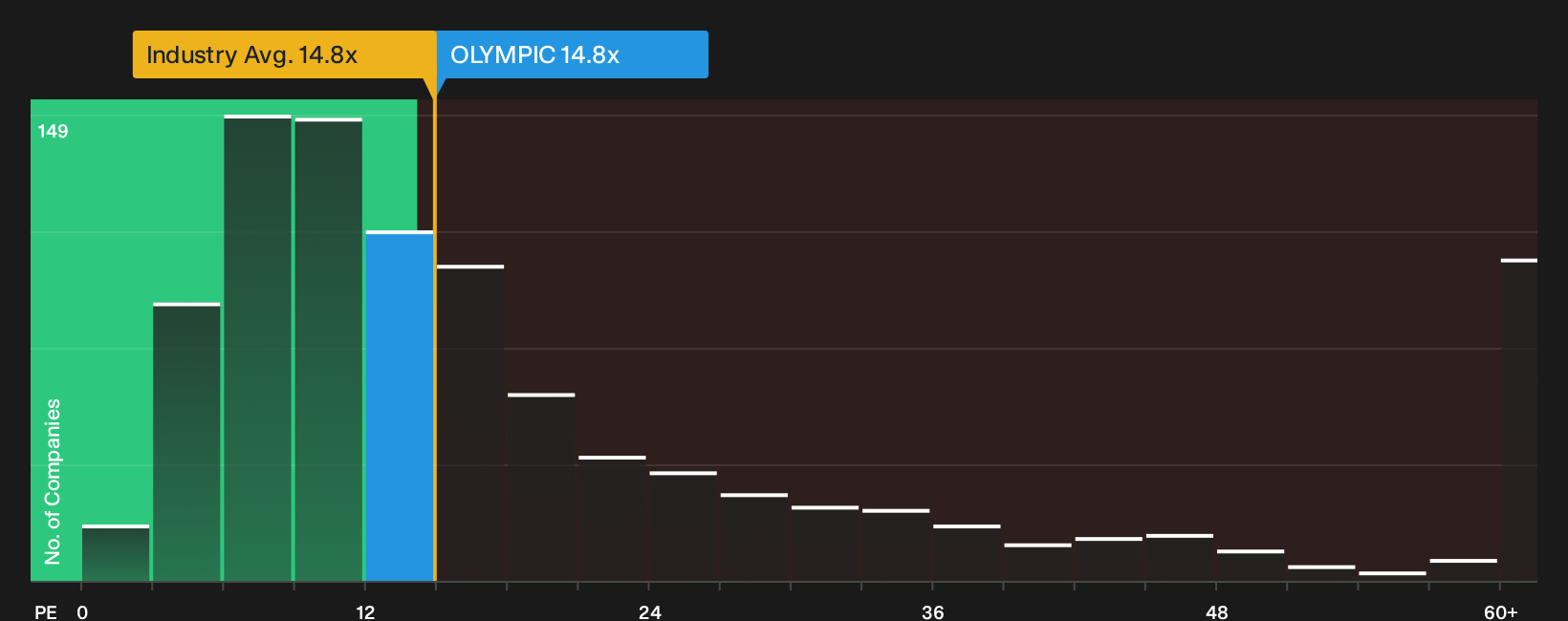
Olympic Industries gives direct exposure to Bangladesh’s mass biscuit and confectionery market, where small price moves on essential treats can matter when CPI stays near 9%. The stock trades on a P/E of 14.8x, below the wider market. Its pricing power story depends on how one unseen pressure plays out.
If that unseen pressure worries you, read the 2 key rewards and 2 important warning signs (1 is major!) to see what might be masking opportunity or signalling strain for Olympic Industries.
Agricultural Marketing (DSE:AMCL(PRAN))
Agricultural Marketing Company, better known for its packed food and drink lines, is a pure consumer staples play in Bangladesh’s inflation story, with BDT3.8b from food processing and a BDT1.8b market cap, giving investors focused exposure to everyday kitchen spending.
Agricultural Marketing Company leans into Bangladesh’s inflation theme through a broad range of everyday food products sold domestically. Shoppers keep buying staples even as prices stay high. The appeal is clear for anyone watching pricing power, although much depends on one unresolved pressure point around how much margin the market is really willing to allow.
That margin question is exactly what the 2 key rewards and 2 important warning signs (2 are major!) unpacks, so you can see where pricing power could accelerate or quietly stall.

Unilever Consumer Care (DSE:UNILEVERCL)
Unilever Consumer Care sells branded nutrition and healthcare drinks like Horlicks, Boost and GlucoMax D that often behave like grocery staples when inflation stays high. All BDT3.4b in revenue comes from consumer healthcare products, and the stock carries a roughly BDT38.4b market cap.
Unilever Consumer Care links directly to the screener theme through branded consumer healthcare drinks that many households treat as essential even when real incomes are squeezed. Strong pricing power, a 17.9% net margin and 37.5% ROE point to resilient economics, although everything rests on how far shoppers accept higher prices before trading down or cutting volumes.
That tipping point on pricing is exactly what the analysis report for Unilever Consumer Care unpacks so you can judge whether Unilever Consumer Care’s inflation story is stretching or just getting started.

Seeking Fresh Alternatives Before They Fly
Fresh ideas move first. Breakout stories build momentum while the data still matters and the crowd has not fully caught on. Scan these curated lists and get in early.
- Target steady income first and sift through 220 dividend fortresses to keep payouts front and center while many investors are still chasing short term price moves.
- Spot quality before the crowd and use the 618 high quality undiscovered gems to track under the radar businesses that could gain attention as fundamentals stay in focus.
- Ride structural demand shifts and review the 33 best rare earth metal stocks where miners and producers linked to future tech demand are grouped in one place for quick comparison.
This article by Simply Wall St is general in nature. We provide commentary based on historical data and analyst forecasts only using an unbiased methodology and our articles are not intended to be financial advice. It does not constitute a recommendation to buy or sell any stock, and does not take account of your objectives, or your financial situation. We aim to bring you long-term focused analysis driven by fundamental data. Note that our analysis may not factor in the latest price-sensitive company announcements or qualitative material. Simply Wall St has no position in any stocks mentioned.
Have feedback on this article? Concerned about the content? Get in touch with us directly. Alternatively, email editorial-team@simplywallst.com