
- PRICING
- LIVE QUOTES
- LEARN
- HELP


EN
Did Azure Growth Just Shift Microsoft (MSFT) Investment Narrative?
- Recent updates show Microsoft’s Azure business reaching more than US$100b in annual revenue with 43% Q4 FY26 growth, while Microsoft 365 Copilot surpassed 30 million paid seats and multiple partners launched new Copilot and Fabric integrations built on this infrastructure.
- Enterprise plugins from Resilinc, Wood Mackenzie, DrugBank and others suggest Microsoft’s AI stack is becoming an operating layer for sector specific workflows. This could influence how durable the firm’s cloud and AI demand proves against heavy data center spending and regulatory pressures.
- We will now look at how Microsoft’s accelerating Azure and Copilot adoption could reshape the existing investment narrative around AI spending.
Microsoft Investment Narrative Recap
Owning Microsoft today means believing its large AI and cloud build will stay busy enough to justify US$175b to US$190b of 2026 capex, while Copilot and Fabric keep deepening usage inside large customers. The short-term swing factor is whether Azure and Copilot consumption remain strong enough to offset mix-driven pressure on gross margins.
Recent Copilot plugin news across supply chain, energy and healthcare looks positive for usage intensity, but it does not fundamentally change that near-term catalyst. The biggest risk still sits in a potential mismatch between that sizable AI infrastructure build and any moderation in enterprise demand, or tighter regulatory and tax treatment around data center commitments.
The Resilinc Copilot plugin is especially relevant here. It turns Microsoft 365 and Copilot into a front end for live, organization-specific supply chain intelligence, connected through Model Context Protocol and governed by Resilinc’s own security controls. For you as an investor, that is an example of Microsoft’s platform functioning as an operating layer for sector workflows rather than solely as productivity software.
This matters for catalysts because it ties AI usage to mission-critical decisions such as compliance, supplier risk and operational continuity. If more vertical partners follow Resilinc’s pattern, Microsoft could experience denser Copilot and Azure usage per customer. The flip side is rising scrutiny. As these workflows intersect with regulations around sanctions, forced labor and data residency, missteps or policy shifts could add compliance cost and slow how aggressively enterprises adopt similar plugins.
Microsoft's current analyst narrative points to revenues of US$566.9b and earnings of US$213.1b by 2029. This is based on a projected 19.5% yearly revenue growth rate and a move from US$133.7b of earnings today to that US$213.1b figure, which represents roughly a US$79.4b increase in earnings over the period.
Uncover why Microsoft's fair value indicates an 8% potential upside to its current price that could narrow quickly.
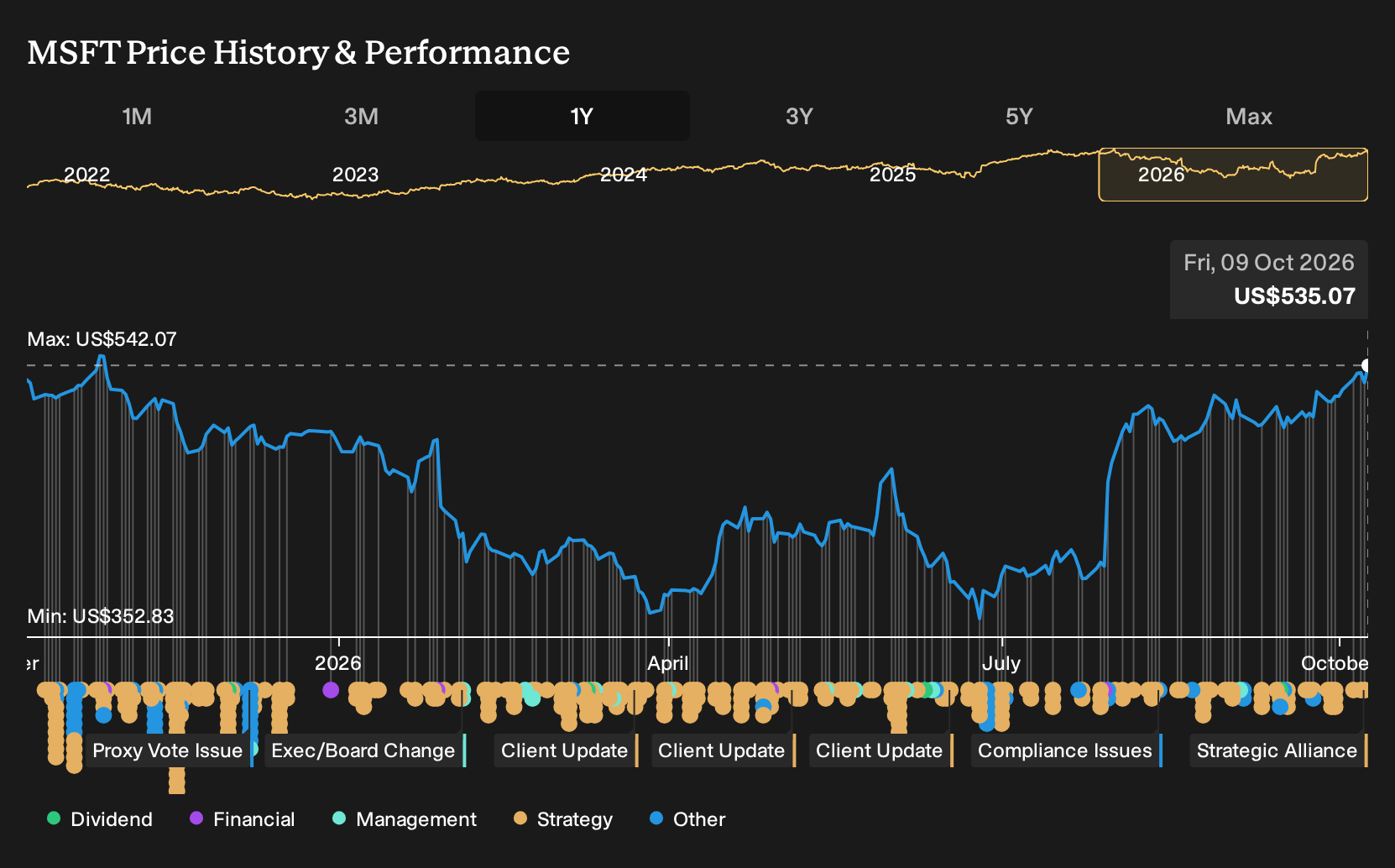
Exploring Other Perspectives
One alternate view highlights a different risk. Instead of focusing on demand strength from plugins like Resilinc’s, the most cautious Microsoft analysts worry about capital intensity and margins. They were only penciling in US$508.6b of revenue and US$204.6b of earnings by 2029. That is a far more restrained story. This serves as a reminder that reasonable views differ widely and may shift as this Copilot news filters into new forecasts.
Explore 60 other Microsoft fair value estimates, including one that suggests as much as 26% downside from the current price.
Form Your Own Verdict
Disagree with existing narratives? Extraordinary investment returns rarely come from following the herd, so consider trusting your own analysis.
- A great starting point for your Microsoft research is our analysis highlighting 3 key rewards and 1 important warning sign that could impact your investment decision.
- See our latest analysis for Microsoft. The report includes a comprehensive fundamental analysis summarized in a single visual, the Snowflake, making it easy to evaluate Microsoft's overall financial health at a glance.
Looking For More Investment Ideas Beyond Microsoft?
Once you have a view on Microsoft, it can help to widen the lens and compare it with other opportunities that fit different risk and return profiles. The Simply Wall St Screener is built for exactly that, letting you line up potential candidates against the kind of financial traits you care about most.
- If capital preservation sits high on your list, start with resilient companies that score well on stability by reviewing 31 resilient stocks with low risk scores.
- For investors who want financial strength at the core of their holdings, focus on businesses with robust balance sheets and steady fundamentals through our list of solid balance sheet and fundamentals (25 results).
- If you are hunting for underappreciated opportunities with strong underlying metrics, scan the 20 high quality undiscovered gems that may not yet be widely followed.
This article by Simply Wall St is general in nature. We provide commentary based on historical data and analyst forecasts only using an unbiased methodology and our articles are not intended to be financial advice. It does not constitute a recommendation to buy or sell any stock, and does not take account of your objectives, or your financial situation. We aim to bring you long-term focused analysis driven by fundamental data. Note that our analysis may not factor in the latest price-sensitive company announcements or qualitative material. Simply Wall St has no position in any stocks mentioned.
Have feedback on this article? Concerned about the content? Get in touch with us directly. Alternatively, email editorial-team@simplywallst.com