
- PRICING
- LIVE QUOTES
- LEARN
- HELP


EN
How Soft Construction Demand Will Impact Rockwool Stock Investors
- Rockwool has reported softer insulation demand in key European markets such as Germany and France, while also facing higher input costs across the region, which adds pressure to operations after a previously strong second quarter.
- Analyst commentary now frames Rockwool as operationally constrained by weak construction activity at the same time that it is investing in new capacity, raising questions about how effectively those assets will be used if sector conditions stay challenging.
- We will now assess how Rockwool's investment narrative could be reshaped by softer European construction demand that is weighing on its existing and new capacity.
Compare how Rockwool stacks up against other building materials players facing similar construction headwinds by scanning our hand picked 178 high quality undervalued stocks for potential mispriced opportunities in the sector.
Rockwool Investment Narrative Recap
To own Rockwool, you need to believe that demand for energy efficient, non combustible insulation and systems will remain structurally supported by regulation and retrofit needs, even when construction cycles turn soft. Right now the business is juggling subdued orders in Germany and France, higher input costs, and fresh capacity coming on stream. The key near term catalyst is utilisation of that new capacity once activity stabilises. The main risk is that weak construction persists long enough for underused plants and a higher fixed cost base to weigh on margins.
The recent pressure flagged for Q3 does not look like a thesis breaker on its own, but it does sharpen the focus on execution. Rockwool’s ability to preserve pricing where possible, flex costs, and prioritise healthier end markets such as North America will matter more than usual. If utilisation in Europe stays depressed, the risk grows that earnings recovery is slower than currently forecast while dividend coverage and return on invested capital remain under strain.
One of the most relevant recent data points is the combination of a sharply lower share price and external estimates that Rockwool trades at a discount of roughly 24% to analyst price targets. That gap exists alongside forecasts for revenue to grow about 4.7% a year and earnings to increase around 33.6% annually, although the past year included a very large one off loss that distorts reported profitability.
Putting that in context, the capacity build out in markets such as the U.S., Romania, India and France only really pays off if volumes and utilisation recover from the current construction softness signalled in Q3 comments. If demand stays weak or ramp ups are delayed, the combination of higher fixed costs, underused assets and already thin net margins at 0.05% could keep pressure on returns and on the valuation case that these external forecasts imply.
Rockwool's current analyst narrative points to €4.2b in revenue and €462.9m in earnings by 2029, based on forecast revenue growth of 3.1% per year and an earnings increase from €4.0m today to a level that is effectively more than 100 times higher by the time consensus estimates land in 2029.
Uncover how Rockwool's fair value indicates a 26% potential upside to its current price, which could narrow quickly if sentiment towards Rockwool shifts.
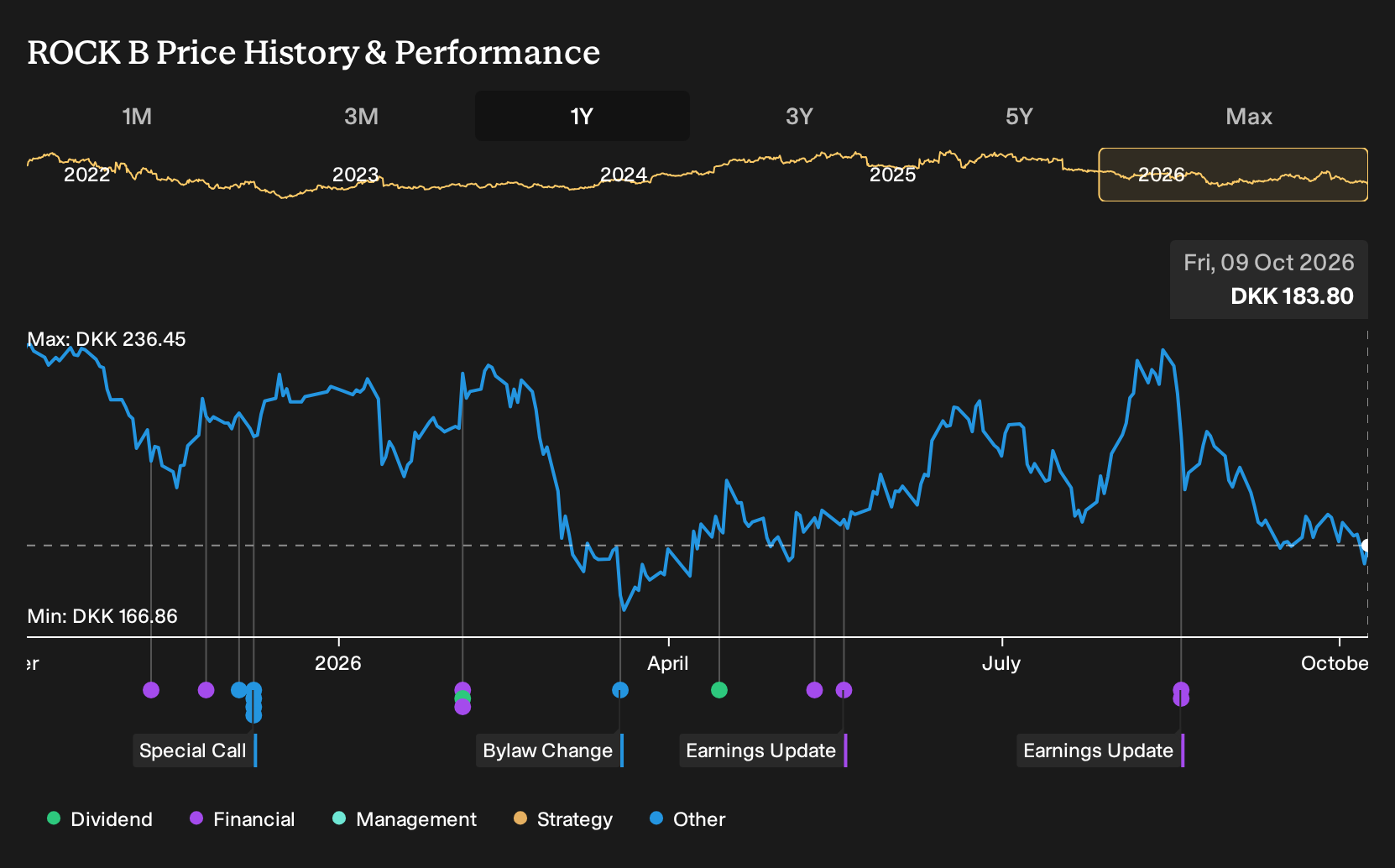
Exploring Other Perspectives
One alternate storyline for Rockwool puts the spotlight on capex risk rather than demand recovery. The lowest analysts were already working off slower 2.0% revenue growth and about €489.4 million of 2029 earnings before this Q3 softness. That is a far more cautious script. Use it as a reminder to compare several viewpoints before deciding how this latest news might reshape your own expectations.
Explore 4 other Rockwool fair value estimates, including one that suggests as much as 65% downside from the current price.
The Verdict Is Yours
Disagree with existing narratives? Extraordinary investment returns rarely come from following the herd, so go with your instincts.
- A great starting point for your Rockwool research is our analysis highlighting 2 key rewards and 3 important warning signs that could impact your investment decision.
- See our latest analysis for Rockwool. The report includes a comprehensive fundamental analysis summarized in a single visual, the Snowflake, making it easy to evaluate Rockwool's overall financial health at a glance.
Looking for more investment ideas beyond Rockwool?
If this Rockwool story has sharpened your thinking about risk, valuation and capacity cycles, use that same lens to scan a wider field. The Simply Wall St Screener lets you quickly sort through companies that match your own preferences on quality, balance sheet strength and return potential.
- If you want steadier profiles with an emphasis on resilience, filter for companies using our 223 resilient stocks with low risk scores that combine more conservative risk scores with disciplined fundamentals.
- For investors who care most about financial strength and staying power, start with the list of solid balance sheet and fundamentals (204 results) and focus on businesses that pair robust balance sheets with underlying fundamentals.
- If you are hunting for mispriced stories rather than familiar large caps, cast a wider net through the 618 high quality undiscovered gems and concentrate on under the radar companies backed by solid financials.
This article by Simply Wall St is general in nature. We provide commentary based on historical data and analyst forecasts only using an unbiased methodology and our articles are not intended to be financial advice. It does not constitute a recommendation to buy or sell any stock, and does not take account of your objectives, or your financial situation. We aim to bring you long-term focused analysis driven by fundamental data. Note that our analysis may not factor in the latest price-sensitive company announcements or qualitative material. Simply Wall St has no position in any stocks mentioned.
Have feedback on this article? Concerned about the content? Get in touch with us directly. Alternatively, email editorial-team@simplywallst.com