
- PRICING
- LIVE QUOTES
- LEARN
- HELP


EN
Direct To Device Venture Could Change The Case For Viasat Stock
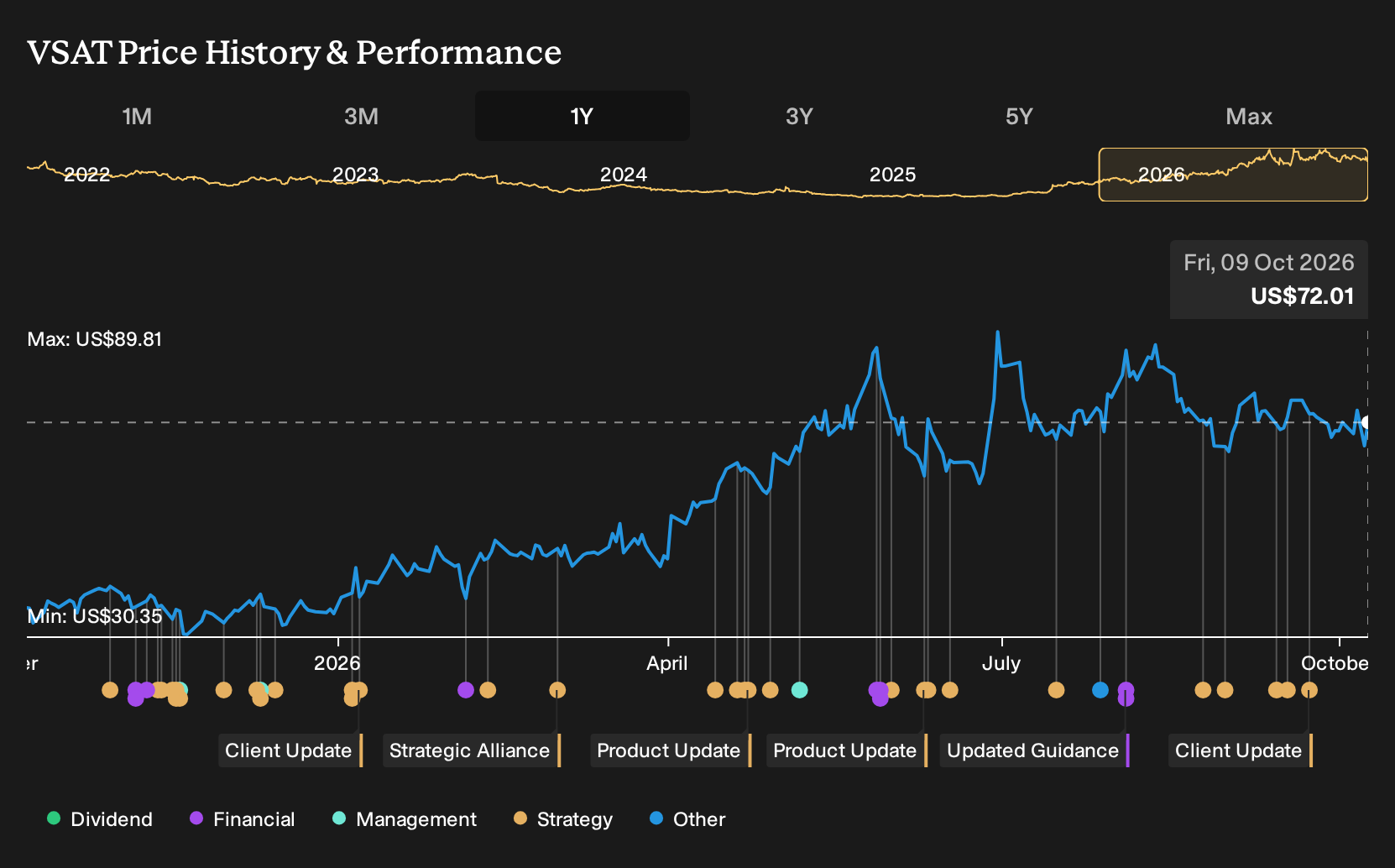
- Viasat recently signed a binding agreement with UAE based Space42 to form Equatys, a direct to device joint venture planning a constellation of up to 2,800 satellites.
- This push into direct to device services signals Viasat's intent to extend its satellite infrastructure beyond fixed and aviation connectivity into everyday handheld usage.
- We will now look at how Viasat's investment narrative could shift as Equatys targets large scale direct to device satellite coverage.
Track how Viasat’s satellite ambitions compare with peers by sizing up a curated list of 92 AI infrastructure stocks powering data heavy communication and space connectivity.
Viasat Investment Narrative Recap
To own Viasat, you need to believe its heavy investment in global satellites can translate into durable demand for secure connectivity across aviation, maritime, government, and now direct to device markets. The near term story still leans on executing the ViaSat 3 rollout, stabilising integration with Inmarsat, and keeping customer momentum as terrestrial options like fiber and 5G gain ground.
The biggest current risk sits in the mix of high capital spending, leverage, and ongoing losses. Recent sector wide share price strength and the short burst from the rating reiteration do not materially change that. The key short term catalyst remains evidence that new capacity and services can lift cash generation faster than costs climb.
The most relevant development for that thesis is the completion of the ViaSat 3 constellation referenced in the Raymond James commentary. A full fleet in orbit gives Viasat the raw capacity to support more in flight and maritime customers and potentially higher usage per user, which is where any improvement in earnings power will need to come from.
That same setup raises execution risk. Large satellites and a possible review of the Defense and Advanced Technologies unit focus attention on uptime, service quality, and contract wins, just as competition in non terrestrial networks intensifies. For you as an investor, the path from large infrastructure to consistent, less volatile cash flows is the real test to watch.
What The Current Analyst Model Implies For Viasat
Viasat's narrative projects US$5.5b revenue and US$626.3m earnings by 2029. This is based on analysts assuming 6.2% yearly revenue growth and an earnings increase of about US$655.7m from a current earnings loss of US$29.4m.
Uncover why Viasat's fair value indicates a 44% potential upside to its current price before that gap starts to close.
Exploring Other Perspectives
One alternate view says the bigger risk for Viasat is not execution but rising competition from Low Earth Orbit players pressuring prices and usage. Those more cautious analysts were working off slower revenue growth of 3.9% a year and about US$5.2b revenue by 2029, so your takeaway on Equatys may look very different.
Explore 6 other Viasat fair value estimates, including one that suggests as much as 23% downside from the current price.
The Verdict Is Yours
Don't just follow the ticker. Dig into the data and build a conviction that's truly your own.
- A great starting point for your Viasat research is our analysis highlighting 3 important warning signs that could impact your investment decision.
- See our latest analysis for Viasat. The report includes a comprehensive fundamental analysis summarized in a single visual, the Snowflake, making it easy to evaluate Viasat's overall financial health at a glance.
Looking For More Viasat Style Investment Ideas?
If the Viasat story has you thinking about where to allocate your next dollar, cast the net wider and use the Simply Wall St Screener to find other businesses that fit the kind of portfolio you want to build.
- If you want resilient balance sheets and fewer financial surprises, start with a list of solid balance sheet and fundamentals (25 results) that can handle tougher conditions.
- If cushioning portfolio swings matters to you, consider a 31 resilient stocks with low risk scores that scores well on stability and risk checks.
- If you prefer to back under followed opportunities with strong fundamentals, scan through a 20 high quality undiscovered gems that might not yet be widely tracked.
This article by Simply Wall St is general in nature. We provide commentary based on historical data and analyst forecasts only using an unbiased methodology and our articles are not intended to be financial advice. It does not constitute a recommendation to buy or sell any stock, and does not take account of your objectives, or your financial situation. We aim to bring you long-term focused analysis driven by fundamental data. Note that our analysis may not factor in the latest price-sensitive company announcements or qualitative material. Simply Wall St has no position in any stocks mentioned.
Have feedback on this article? Concerned about the content? Get in touch with us directly. Alternatively, email editorial-team@simplywallst.com