
- PRICING
- LIVE QUOTES
- LEARN
- HELP


EN
3 US Exporter Stocks Worth Watching As The Dollar Stays Strong
Higher US inflation expectations, rising Treasury yields and a stronger dollar are reshaping the playing field for multinational exporters, and suddenly foreign revenue exposure matters a lot more. This mix can pressure share prices, but it can also create pricing anomalies that patient investors may find interesting. This piece breaks down three large US stocks closely exposed to these macro forces and explains why each might deserve closer examination at this time.
The stocks below are only a starter set, and the full screen has surfaced 18 more large US exporters with equally compelling multinational stories that are not covered here. To go straight to the source and identify, analyze, and sort potential high-conviction ideas, head into the US Multinational Exporters with Large Foreign Revenue Exposure screener.
Eaton (ETN)
Eaton is a power management heavyweight in the screener, with a global footprint that ties its earnings closely to international infrastructure spending and currency shifts. This makes it a useful case study when inflation, rates, and a stronger US dollar are all in motion.
"The expansion of the power grid and the simultaneous capacity demands of renewable energy projects and data centers have completely locked down the global transformer supply chain. This material constraint and the shortage of 15,000 skilled labors required to hand-wind transformer coils has extended the lead times for large power transformers (LPTs) and generator-step-up transformers (GSUs) from 50 weeks before 2020 to 128-150 weeks today, and up to 4 years for specialized units."
What happens to Eaton’s future pricing power and profitability if a single supply constraint or demand spike shifts in either direction?
That supply squeeze is only the starting point. Read the full narrative for Eaton to see how Eaton’s pricing power, project backlog and currency exposure could be quietly decoupling.

Bunge Global (BG)
Bunge Global is a textbook fit for this multinational exporters screen, with a worldwide grain and oilseed network that links its earnings to global food demand, commodity prices and currency swings rather than just the US consumer cycle.
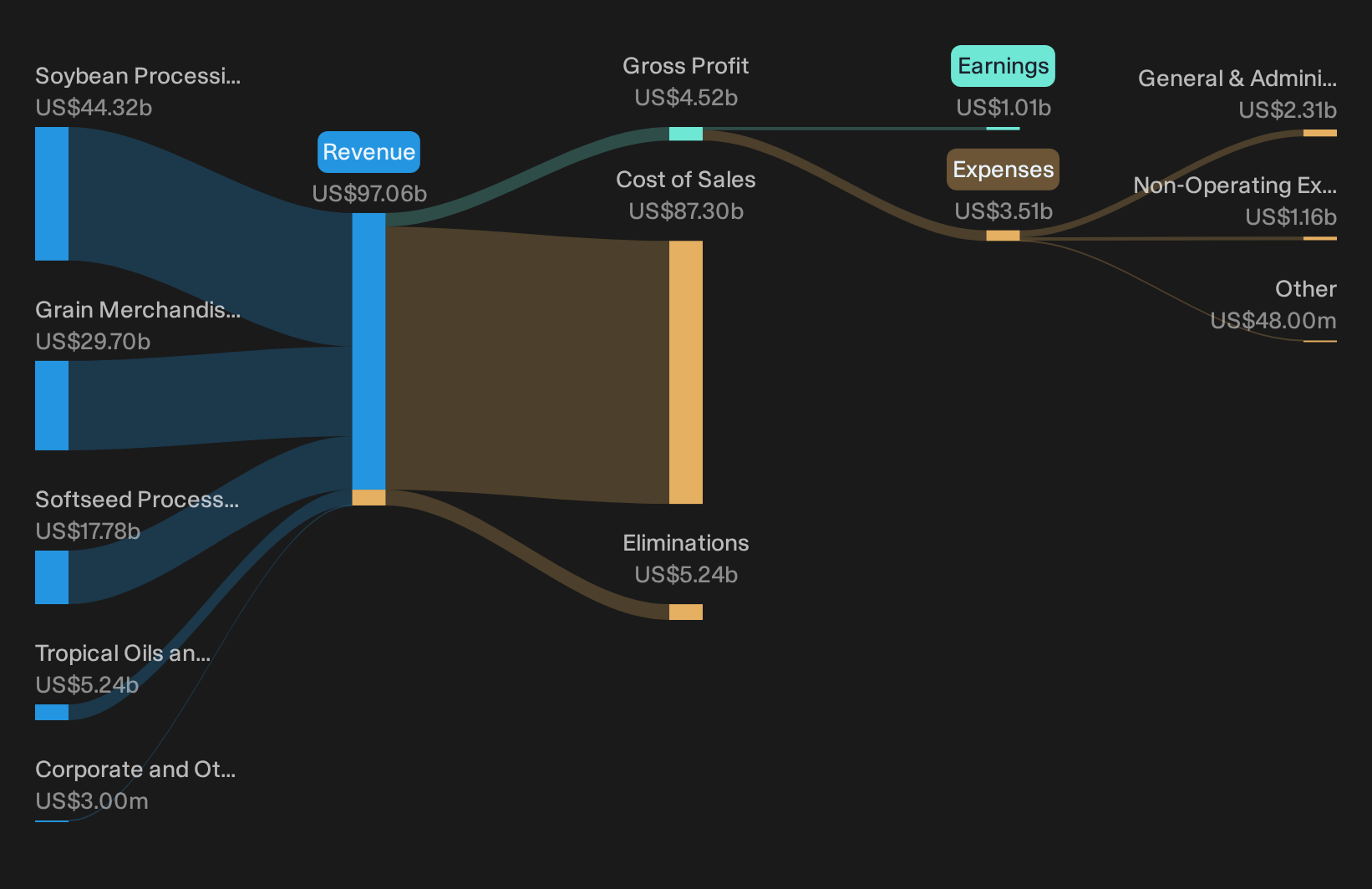
Global agribusiness and food player Bunge Global runs soybean, softseed and other oilseed processing, plus grain merchandising and milling, with Soybean Processing and Refining generating about US$44.3b revenue, Grain Merchandising and Milling US$29.7b, Softseed Processing and Refining US$17.8b and Tropical Oils and Specialty Ingredients US$5.2b, while the group carries a roughly US$20.7b market value.
"The completion and integration of the Viterra merger provides substantial cost and commercial synergies, expands Bunge Global's global origination, processing and distribution footprint, and positions the company to capture greater market share in higher growth regions, which can support higher revenue and operating margins over time."
What happens to Bunge Global’s earnings profile if one less visible pressure on its global grain and oilseed system shifts direction?
When that quieter pressure shifts, full narrative for Bunge Global shows how Bunge Global’s merged network could turn small pricing moves into outsized earnings swings.
Mettler-Toledo International (MTD)
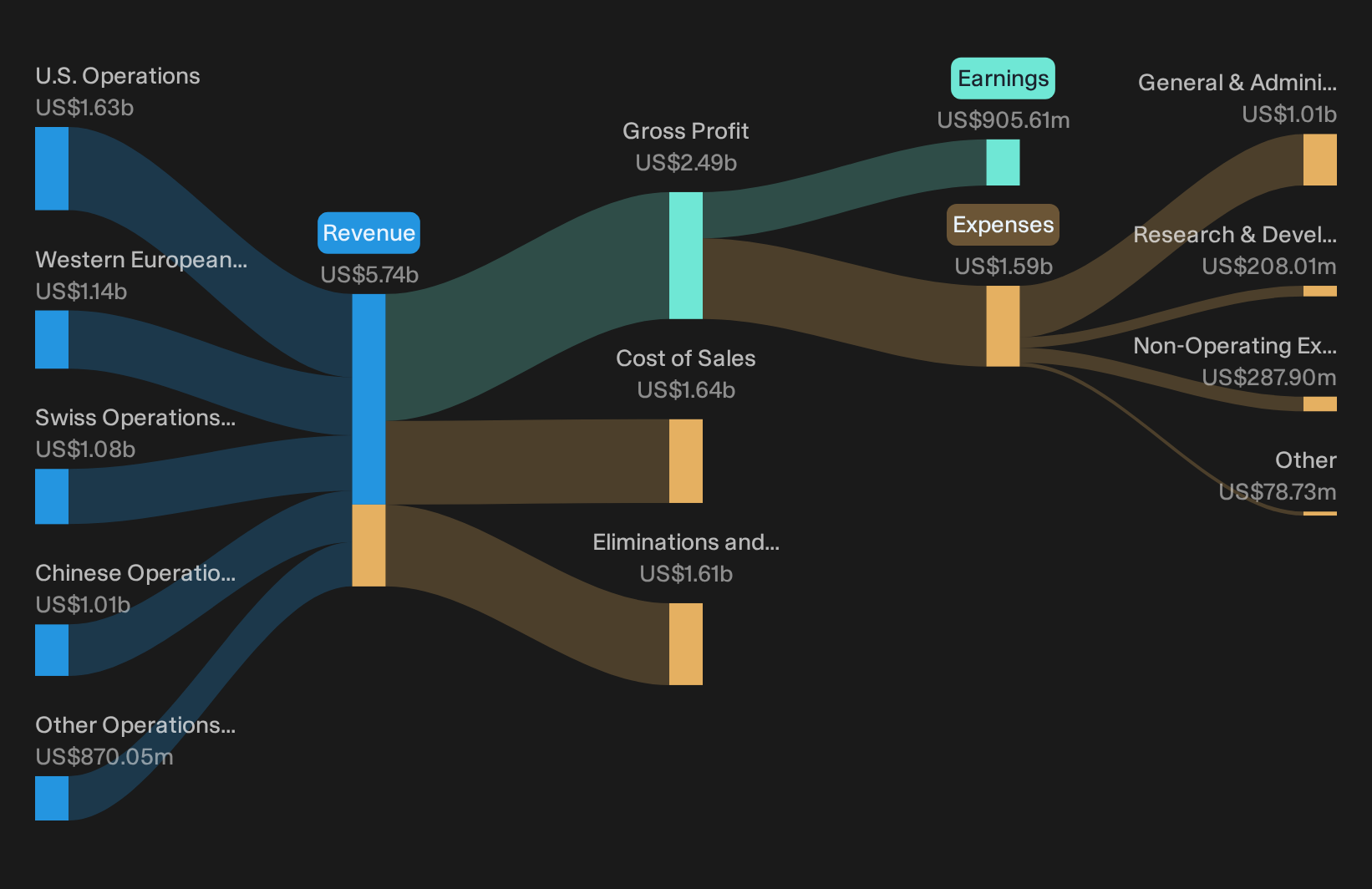
Mettler-Toledo International fits this exporters screen as a precision instruments specialist with revenue spread across U.S., Swiss, Western European, Chinese and other operations, giving it a broad foreign earnings base and a sizeable US$30.6b market value.
Mettler-Toledo International is not just selling lab gear; it is embedded in global measurement and automation projects where currency moves, industrial budgets and lab spending all feed directly into its order book.
"Ongoing automation and digitalization projects at pharmaceutical, semiconductor, clean energy and other industrial customers are expected to support continued uptake of Mettler-Toledo International’s industrial automation products and process analytics. Elevated and unpredictable global tariffs, which have already reduced operating margin and EPS in recent periods, could reaccelerate or broaden and outpace Mettler-Toledo International's pricing power and productivity programs."
The real swing factor for Mettler-Toledo International is what happens if a single external pressure quietly shifts the balance between its pricing power and cost base.
When that balance starts to quietly tilt, full narrative for Mettler-Toledo International examines how Mettler-Toledo International’s pricing power, tariffs and automation demand could be masking a far more interesting earnings story.
Seeking Fresh Alternatives Before They Fly
Fresh ideas often move first. Potential breakouts may gain momentum while they are still under the radar for now. Consider acting before opportunities move out of reach.
- Explore income opportunities that may keep working even when prices move by scanning a curated group of 8 dividend fortresses built to prioritize resilience and consistency.
- Identify early movers in machine intelligence by tracking 39 profitable AI stocks that aren't just burning cash that are already generating cash flow rather than relying solely on narratives and presentations.
- Review 43 power grid technology and infrastructure stocks that focus on grid technology, equipment suppliers and backbone assets to evaluate potential positions ahead of large infrastructure cycles.
This article by Simply Wall St is general in nature. We provide commentary based on historical data and analyst forecasts only using an unbiased methodology and our articles are not intended to be financial advice. It does not constitute a recommendation to buy or sell any stock, and does not take account of your objectives, or your financial situation. We aim to bring you long-term focused analysis driven by fundamental data. Note that our analysis may not factor in the latest price-sensitive company announcements or qualitative material. Simply Wall St has no position in any stocks mentioned.
Have feedback on this article? Concerned about the content? Get in touch with us directly. Alternatively, email editorial-team@simplywallst.com