
- PRICING
- LIVE QUOTES
- LEARN
- HELP


EN
FDA Filing Could Be A Big Moment For Bayer Stock (XTRA:BAYN)
- In early October 2026, Bayer reported that the FDA accepted its supplemental New Drug Application for Kerendia in adults with chronic kidney disease without diabetes, backed by Phase III FIND-CKD data showing a statistically significant slowing of eGFR decline and a lower composite kidney cardiovascular risk versus placebo.
- This filing builds on a broad existing Kerendia label in diabetic kidney disease and heart failure. A non-diabetic CKD indication would address a distinct patient pool while reusing established manufacturing, medical, and commercial infrastructure within Bayer’s pharmaceuticals unit.
- We will now look at how Bayer's broader investment narrative could be influenced by Kerendia’s potential expansion into non diabetic CKD.
Bayer Investment Narrative Recap
To own Bayer, you need to believe the pharmaceutical pipeline and new labels can offset patent erosion, litigation costs, and pressure in Crop Science and Consumer Health. Kerendia’s non diabetic CKD filing fits that thesis but does not remove the biggest short term overhang, which remains legacy legal and regulatory risk tied to crop products.
The key near term swing factor is whether new therapies like Kerendia and Lynkuet can translate trial success into steady prescription demand while older drugs face generic and pricing headwinds. Operationally, the Kerendia update looks additive rather than transformative to Bayer’s complex earnings and cash flow picture right now.
Among recent announcements, Bayer’s plan to invest US$2.2b in a new New Albany manufacturing site is most relevant to the Kerendia story. The facility is intended to support an expanding pharmaceuticals portfolio in oncology, cardiovascular, and renal care. This directly links to the kidney and heart franchise where Kerendia sits today.
For you as an investor, that Ohio build out highlights both an execution challenge and a potential catalyst. On one side, Bayer is committing significant capital and future fixed costs, with the first module targeted to be operational in 2031 and a second in 2034. On the other, it builds capacity that could support scaled production if drugs like Kerendia secure broader use across multiple indications.
Bayer Earnings And Valuation Checkpoint
Bayer's current analyst script links the Kerendia opportunity to a wider earnings rebuild. Consensus models point to revenues of €48.9b and earnings of €3.7b by 2029, based on an assumed 2.5% yearly increase in revenue and a move from a loss of €1.7b in earnings today to positive territory. That implies an earnings swing of €5.4b, with analysts seeing Bayer trading on a P/E of 18.3x in 2029 if those profit and revenue figures are reached.
Uncover why Bayer's fair value indicates a 33% potential upside to its current price that could narrow quickly.
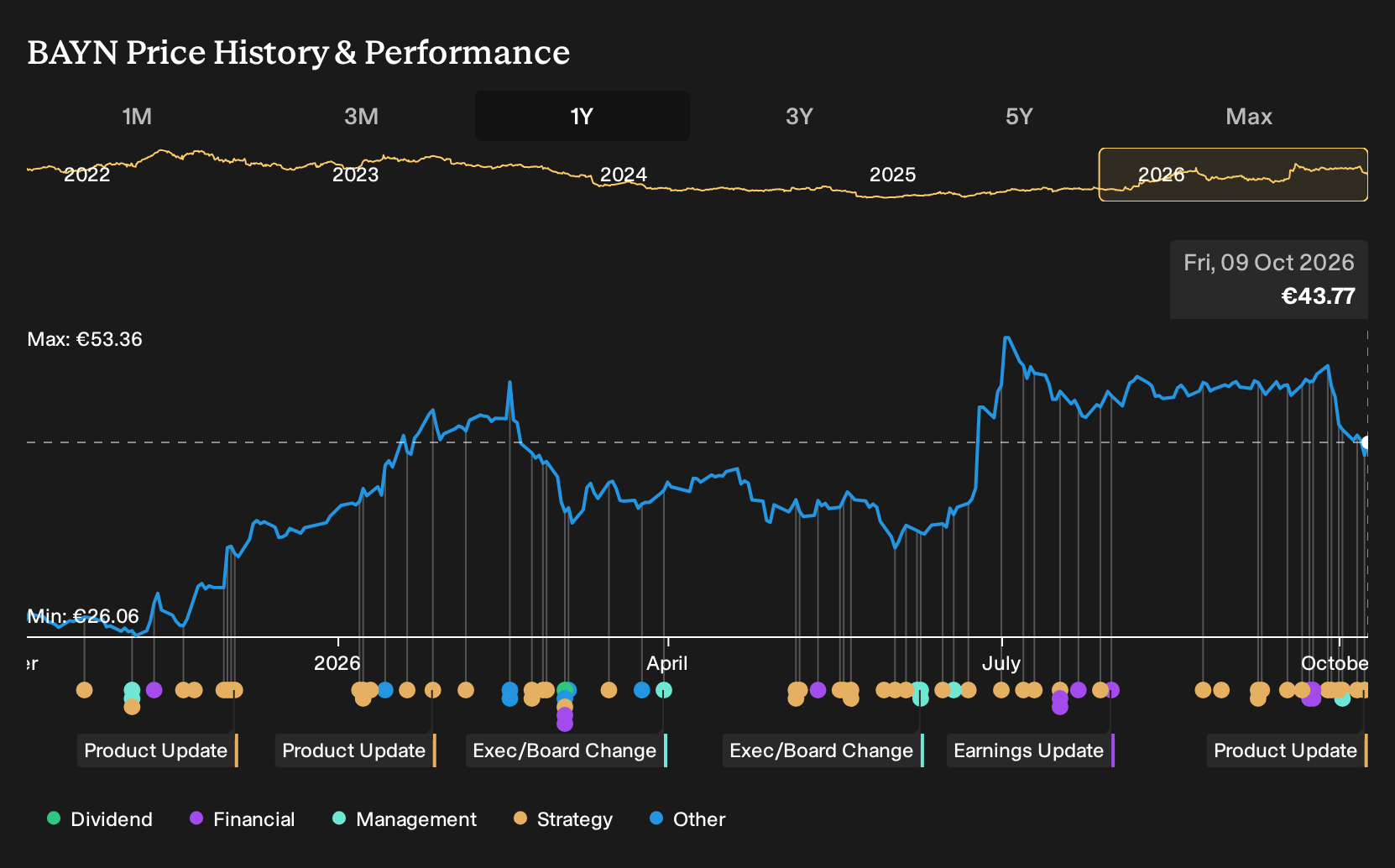
Exploring Other Perspectives
One alternative view focuses less on Kerendia and more on Bayer’s ability to repair its balance sheet. The most cautious analysts were working with only 1.4% annual revenue growth and earnings of about €3.5b by 2029, compared with €3.7b in the consensus case. That gap shows how widely opinions differ and why you might revisit both sets of assumptions after this Kerendia update.
Explore 6 other Bayer fair value estimates, including one that suggests it could be worth just €46.00.
Reach Your Own Conclusion
Disagree with existing narratives? Extraordinary investment returns rarely come from following the herd, so consider trusting your own analysis.
- A great starting point for your Bayer research is our analysis highlighting 4 key rewards that could impact your investment decision.
- See our latest analysis for Bayer. The report includes a comprehensive fundamental analysis summarized in a single visual, the Snowflake, making it easy to evaluate Bayer's overall financial health at a glance.
Looking For More Investment Ideas Beyond Bayer?
Once you have formed a view on Bayer, it can help to compare it with other companies that share some of the traits you want in a long term holding.
The Simply Wall St Screener lets you move from a single stock story to a broader watchlist that actually fits your preferences around quality, balance sheet strength, income or valuation.
- If you want lower volatility and steadier business profiles, start with a shortlist of 222 resilient stocks with low risk scores that may better match a capital preservation mindset.
- Income focused investors can zero in on companies with higher yields by scanning 223 dividend fortresses that combine meaningful payouts with supporting fundamentals.
- For those hunting for potential future leaders before they hit the mainstream, filter the market through 618 high quality undiscovered gems and see which businesses meet your quality hurdles.
This article by Simply Wall St is general in nature. We provide commentary based on historical data and analyst forecasts only using an unbiased methodology and our articles are not intended to be financial advice. It does not constitute a recommendation to buy or sell any stock, and does not take account of your objectives, or your financial situation. We aim to bring you long-term focused analysis driven by fundamental data. Note that our analysis may not factor in the latest price-sensitive company announcements or qualitative material. Simply Wall St has no position in any stocks mentioned.
Have feedback on this article? Concerned about the content? Get in touch with us directly. Alternatively, email editorial-team@simplywallst.com