
- PRICING
- LIVE QUOTES
- LEARN
- HELP


EN
USDA grain reports shock the market
Howdy market watchers! It's a warmer than usual start to October, but sure makes for a comfortable football tailgating Saturday!
Agricultural and energy markets finished the week with sharply different signals for producers. Corn faced renewed selling pressure following an increase in the U.S. production outlook, while soybeans demonstrated greater resilience. Wheat futures declined as domestic inventories increased, cattle futures strengthened on continued supply concerns, and crude oil prices moved higher amid energy supply disruptions and geopolitical uncertainty.
For producers, the week's developments reinforce the importance of separating market direction from individual farm profitability. A larger crop can pressure grain prices even when input costs remain elevated, while strong livestock prices do not automatically translate into improved margins for cattle operations.
Corn: Larger Production Outlook Pressures Prices
December 2026 corn futures settled near $4.80 per bushel Friday, down approximately 20½ cents for the session and roughly 18 cents for the week. The primary catalyst was the U.S. Department of Agriculture's October supply-and-demand update.
USDA raised its projected national corn yield to 181.2 bushels per acre, compared with 178.5 bushels in September. Projected production increased to approximately 16.034 billion bushels, and projected ending stocks rose to 1.849 billion bushels. USDA also lowered its projected season-average farm price to $4.70 per bushel.
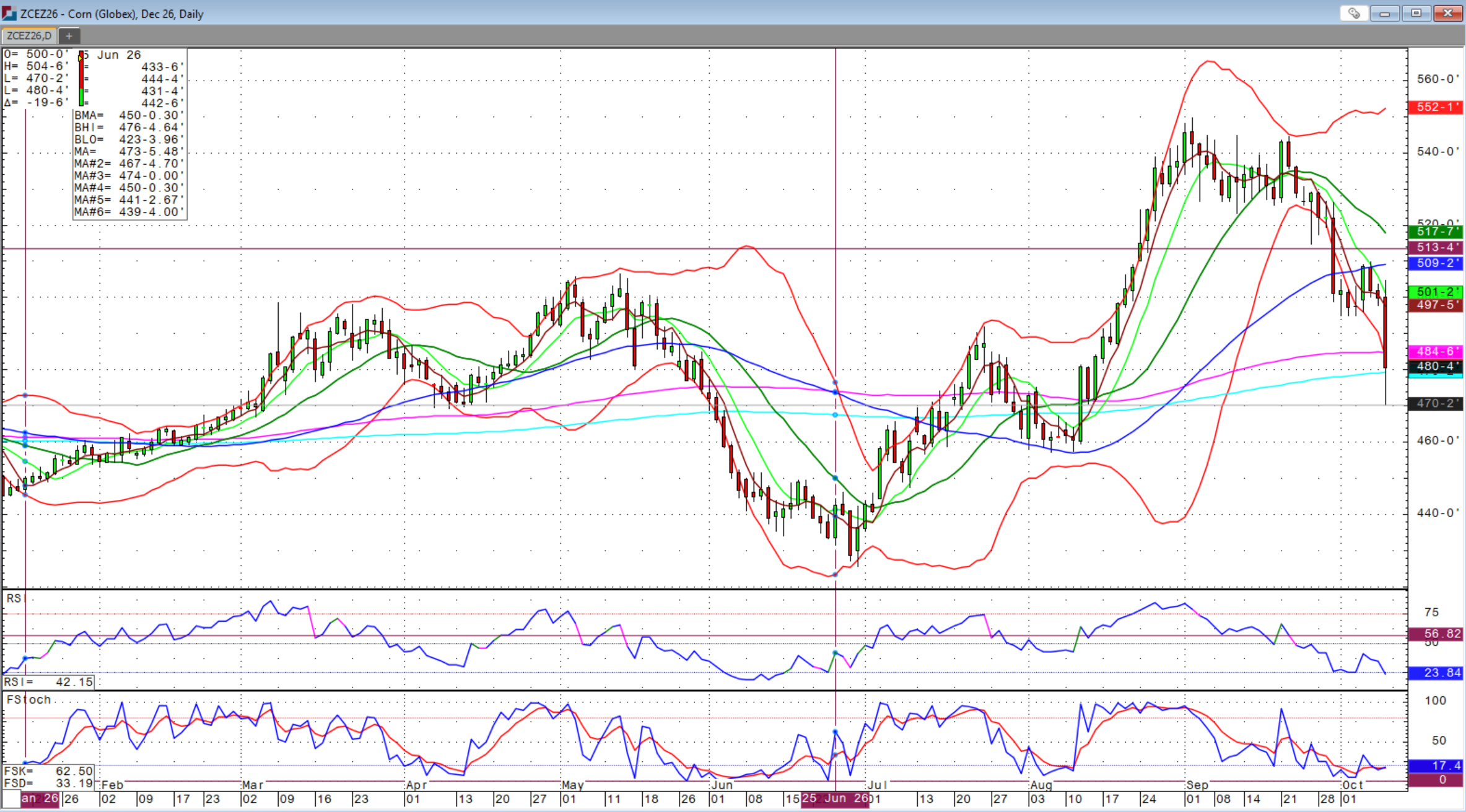
The revised estimates suggest that crop damage may have been less extensive than previously anticipated. As harvest advances, actual yields and the pace of grain movement will help determine whether the larger production outlook is confirmed.
Market implications: The increased supply outlook creates a challenge for producers who have not priced a significant portion of their crop. Harvest pressure, available storage, local basis, and transportation costs will be important considerations when deciding whether to sell immediately or retain grain.
For operations with storage capacity, the decision should be based on the expected return from holding grain after accounting for interest, handling, shrink, and the possibility of further price declines. Forward sales and futures or options strategies can help establish price protection without requiring every bushel to be sold at harvest.
Soybeans: Relative Resilience, but Supply Remains Important
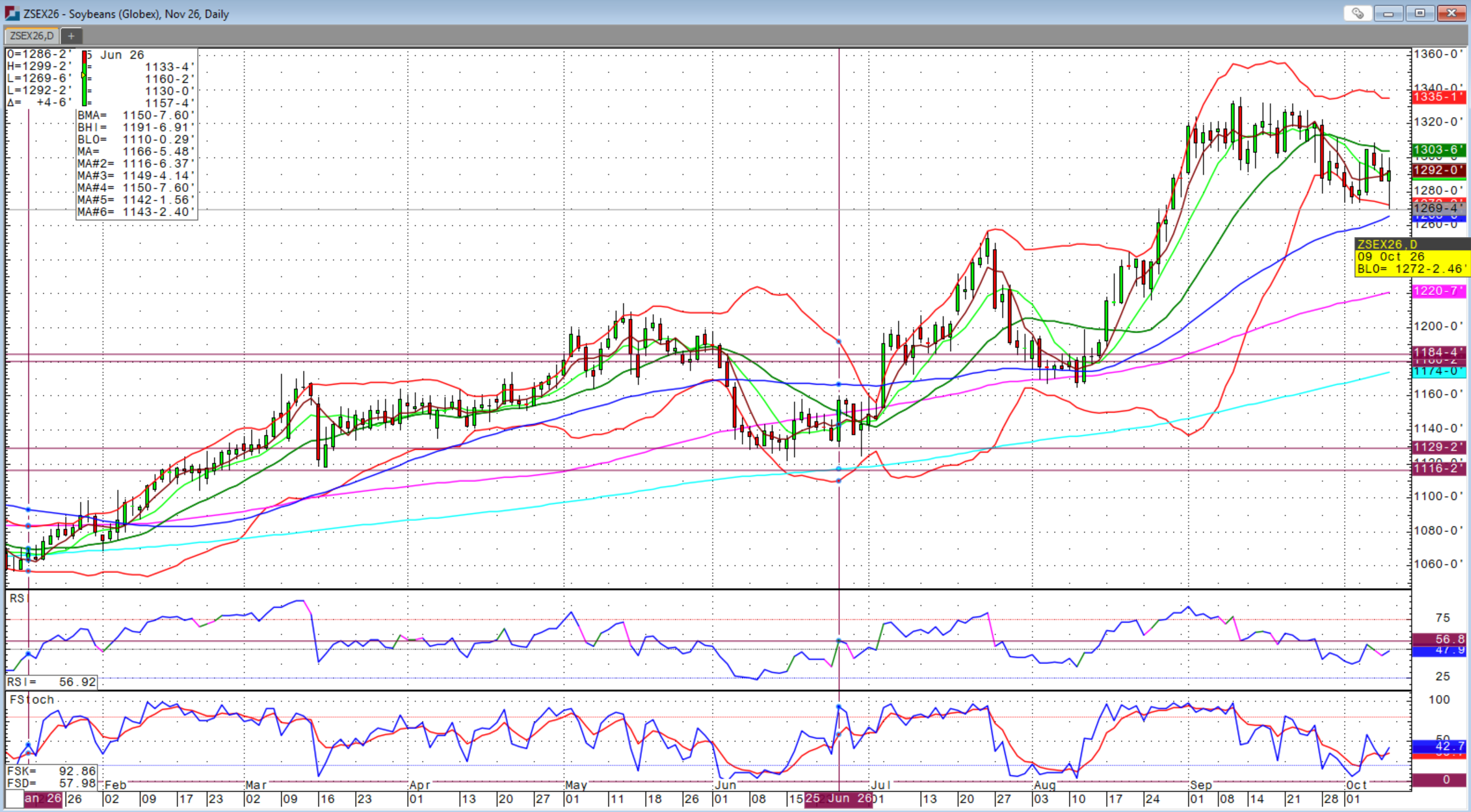
November soybean futures finished near $12.92 per bushel, gaining approximately 4½ cents Friday and about 13¾ cents over the week.
USDA increased its projected soybean yield to 53.1 bushels per acre from 52.8 bushels in September. Production was projected at approximately 4.562 billion bushels, with ending stocks increasing to 315 million bushels.
Soybeans held up better than corn following the report. However, the production outlook still points to substantial domestic supplies. Export demand will be especially important in determining whether the market can absorb the crop without a sustained increase in inventories.
The latest weekly export-sales figures also warrant attention. Soybean sales declined approximately 47% from the previous week to 549,400 metric tons, running 34% below the preceding four-week average.
Market implications: Soybean producers should monitor export commitments, shipments, South American production prospects, and domestic processing demand. Stronger demand could support prices, but a large crop combined with slower export sales could limit rallies.
Marketing plans should include target prices and predetermined decisions for both upside opportunities and downside protection. Producers should also evaluate soybean basis and storage economics separately from futures prices, because local market conditions can materially change the value received at delivery.
Wheat: Stocks and Export Demand in Focus
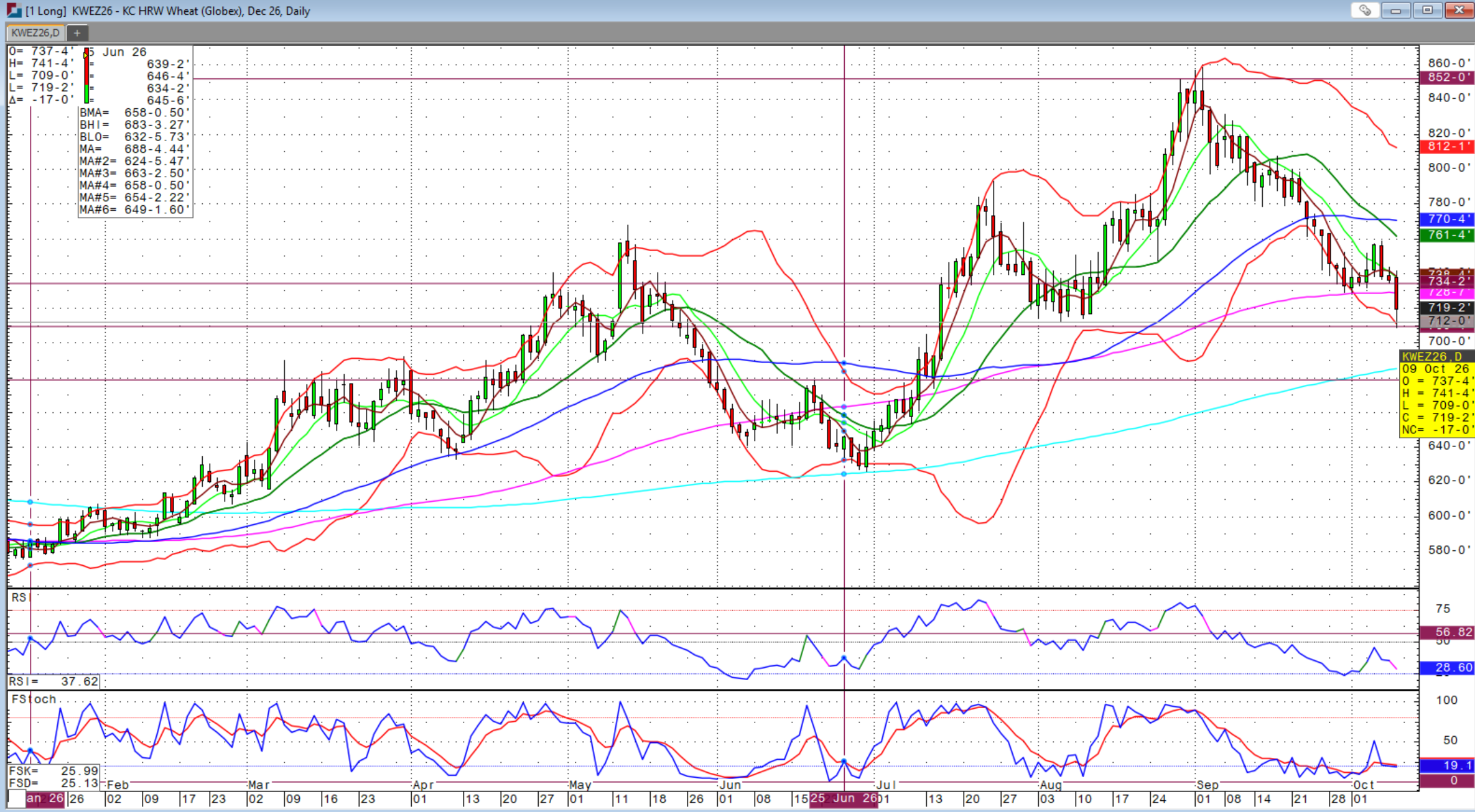
December Chicago wheat futures settled near $6.71 per bushel, down approximately 12¼ cents Friday. December Kansas City hard red winter wheat futures closed near $7.19¼ per bushel, falling approximately 17 cents.
USDA increased projected U.S. wheat ending stocks for the 2026–27 marketing year to 740 million bushels, up from 717 million in September. The agency also reduced its U.S. wheat export projection by 25 million bushels to 750 million bushels.
These figures point to a more comfortable domestic supply balance than previously anticipated. At the same time, wheat prices remain sensitive to international competition, weather conditions in major producing regions, export demand, and the condition of the developing winter wheat crop.
Weekly U.S. wheat export sales provided a more constructive signal, rising approximately 56% to 451,600 metric tons and running 68% above the preceding four-week average. This indicates that demand remains an important counterweight to the higher domestic stock outlook.
Market implications: Oklahoma and Southern Plains wheat producers should focus on the relationship between Kansas City futures, local basis, and production costs. New-crop marketing decisions should account for planting conditions, moisture availability, input expenses, and the potential for weather-driven volatility.
Rather than relying on a single price forecast, producers can consider staggered sales and use rallies to establish additional protection when prices reach levels that support their individual cost structures.
Cattle: Strong Futures Reflect Tight Supply Conditions
December 2026 live cattle futures finished near $227 per hundredweight, gaining approximately $3.50 Friday and roughly $5.57 over the week. November feeder cattle futures settled near $341.95 per hundredweight, also advancing strongly.
Cattle prices continue to receive support from constrained animal supplies. However, strong futures do not eliminate the risks associated with feed costs, replacement-animal prices, interest expenses, and changes in wholesale beef demand.
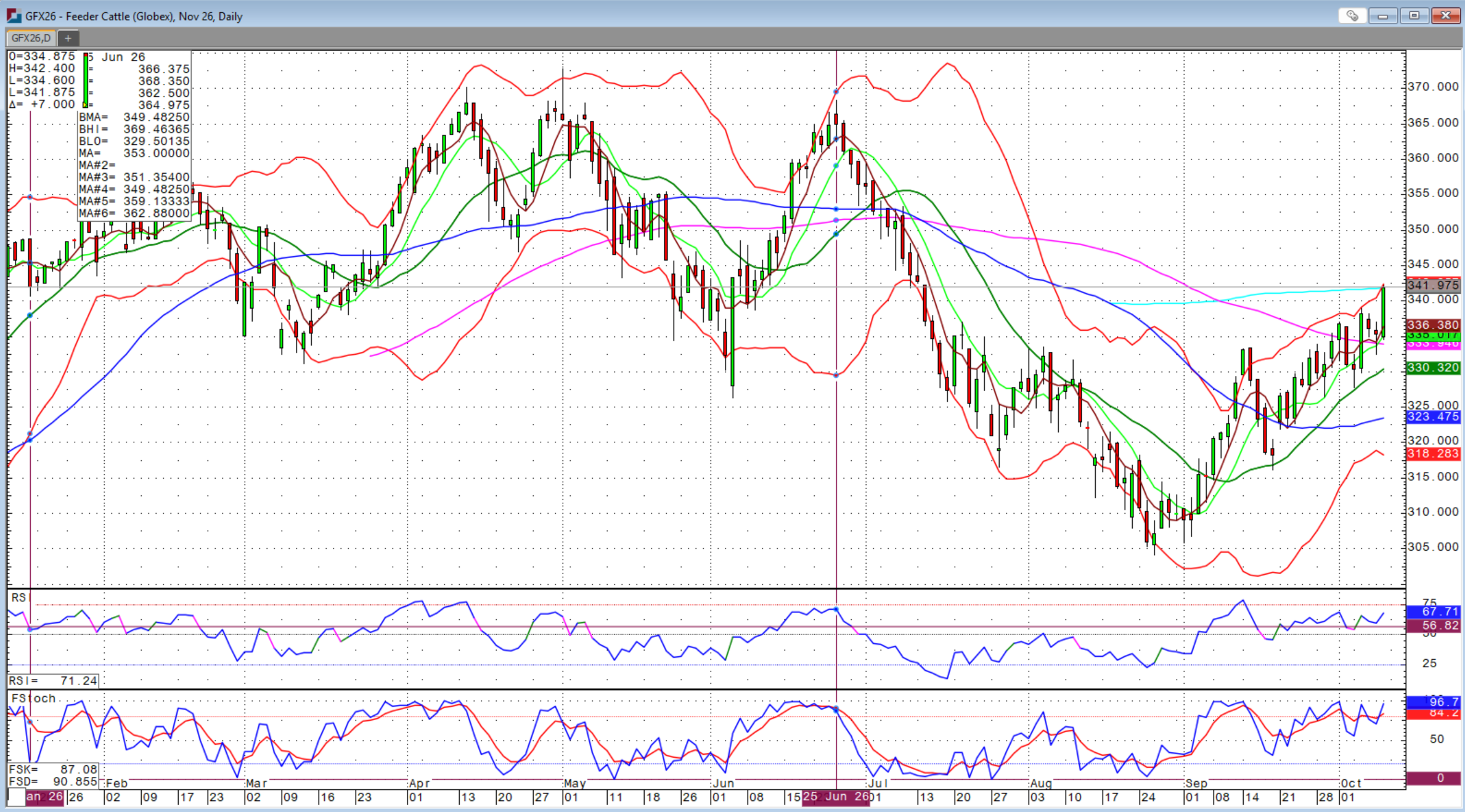
For cow-calf producers, higher feeder cattle values can improve expected revenue, but replacement costs and the expense of carrying cattle through additional weight gain must be considered. Stocker and feedlot operators face a different calculation: the value of the animal when purchased must be compared with projected sale value, expected gain, feed conversion, and total carrying costs.
Market implications: Producers should evaluate projected margins by production group rather than treating higher cattle prices as a guarantee of profitability. Feeder cattle buyers may benefit from stress-testing budgets against lower finished-cattle prices and higher feed costs.
For operations with market-ready cattle, forward pricing, futures, and options can help manage exposure to a reversal in prices. The appropriate approach depends on the marketing window, production certainty, and the cost of implementing protection.
Energy: Crude Oil Strengthens Amid Supply Risks
Crude oil prices moved higher for the week. West Texas Intermediate settled near $91.85 per barrel, up approximately 0.8%, while Brent crude finished near $104.72, up approximately 2.4%.
Supply uncertainty contributed to the advance. Hurricane-related production disruptions in the Gulf of Mexico reduced available U.S. offshore output, while geopolitical risks continued to affect expectations for international oil and refined-fuel flows.
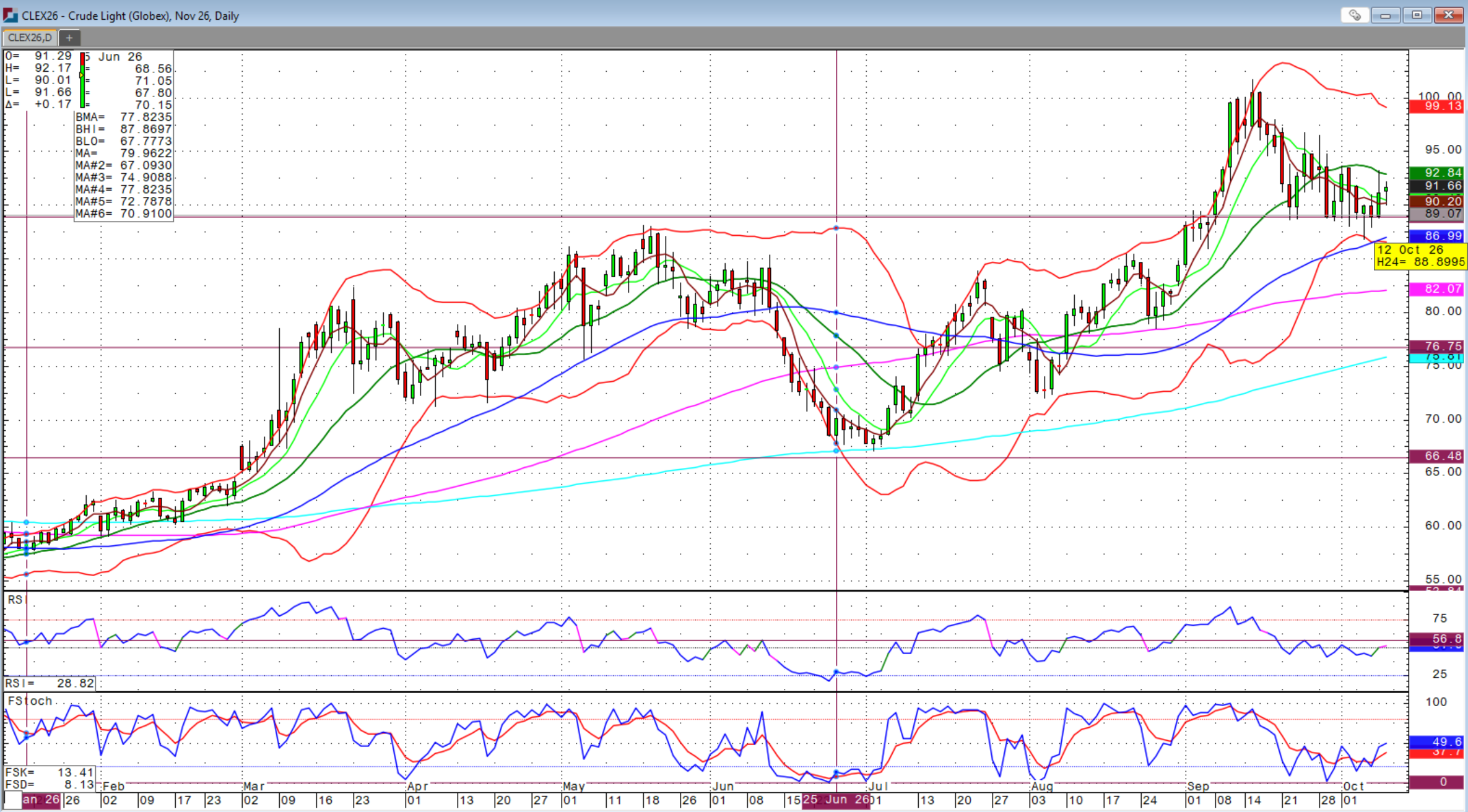
Energy markets remain vulnerable to rapid changes in both directions. Supply disruptions can lift prices quickly, while easing geopolitical tensions, increased production, or weaker demand can reverse those gains. For agricultural businesses, crude oil is only one part of the cost equation: diesel, fertilizer, propane, electricity, and freight can respond differently and with varying delays.
Market implications: Elevated energy costs can reduce farm margins during harvest and increase the expense of transporting grain, livestock, feed, and finished food products. Producers and agribusinesses should update operating budgets using actual local fuel quotes rather than assuming crude oil movements translate directly into equivalent changes in diesel prices.
Where practical, advance purchasing, fuel-use planning, freight coordination, and regular review of delivery costs can reduce exposure to sudden increases.
Strategic Outlook: Managing Margin Risk
The week's markets highlight five distinct considerations:
- Corn: Higher projected production and ending stocks increase downside risk.
- Soybeans: Relative price strength is encouraging, but export demand and crop size remain central.
- Wheat: Larger U.S. stocks create headwinds, while stronger weekly export sales offer some support.
- Cattle: Tight supplies support prices, but feed costs and replacement values remain critical to profitability.
- Energy: Supply disruptions and geopolitical uncertainty create potential cost volatility across the agricultural supply chain.
For producers, the central issue is not simply whether prices rise or fall. It is whether the prices available in the market provide an adequate return after accounting for production, financing, storage, transportation, and marketing expenses.
Sidwell Strategies' approach is to connect market analysis with practical business decisions. That means establishing realistic cost-of-production estimates, identifying profitable pricing opportunities, evaluating basis and carrying costs, and developing contingency plans for adverse market moves.
The key takeaway: A favorable commodity price is only valuable when it supports a profitable margin. In a market environment where crop estimates, export demand, livestock supplies, and energy costs can shift quickly, disciplined marketing and proactive risk management remain essential tools for protecting farm and agribusiness profitability.
Brady Sidwell is a Series 3 Licensed Commodity Futures Broker and Principal of Sidwell Strategies. Open your Trading Account with Sidwell Strategies at https://portal.stonex.com/prefill/index/BradySidwellU52F112P. Contact us at (580) 232-2272 or at trade@sidwellstrategies.com.
Futures and Options trading involves the risk of loss and may not be suitable for all investors. Review full disclaimer at https://www.sidwellstrategies.com/fccp-disclaimer-21951.