
- PRICING
- LIVE QUOTES
- LEARN
- HELP


EN
3 China Infrastructure Stocks Backed By New Public Spending
China has just put 550 billion yuan of unused government debt quotas into play, and that kind of fiscal firepower can reshape where capital flows next. Fresh money for infrastructure and local government funding can create winners, lift sentiment, or leave laggards behind. This article walks through three stocks from the China infrastructure and construction screener that appear closely tied to this policy shift, and explains why they may merit closer attention.
The three stocks highlighted below are only a small sample, while the full screen surfaced 58 more China infrastructure and construction companies with equally compelling stories that are not covered in this article. To go deeper, identify potential beneficiaries of higher public works spending, and analyze their fundamentals side by side, head straight into the China Infrastructure and Construction Equities screener.
SKSHU PaintLtd (SHSE:603737)
Overview: SKSHU PaintLtd produces architectural coatings, waterproofing, flooring and insulation materials that are directly used in building and infrastructure construction across China.
Operations: The business currently generates all reported revenue of about CN¥12.8b from customers in China.
Market Cap: CN¥20.2b
SKSHU PaintLtd is closely linked to China’s infrastructure push, since its coatings, waterproofing and insulation products go straight into public works and property projects. The stock reflects that exposure through a sizeable domestic revenue base and solid recent sales. However, the appeal of that infrastructure exposure depends on how one unseen pressure ultimately shapes margins.
That pressure on margins is exactly what investors should stress test through the 3 key rewards and 3 important warning signs before infrastructure optimism runs ahead of the underlying economics.

Guangzhou Baiyun Electric Equipment (SHSE:603861)
Overview: Guangzhou Baiyun Electric Equipment designs and supplies power equipment and smart grid solutions for substations, rail systems, data centers and industrial infrastructure.
Operations: The business reports CN¥4.9b in revenue from electrical machinery and equipment manufacturing, underscoring its focus on power distribution gear.
Market Cap: CN¥5.9b
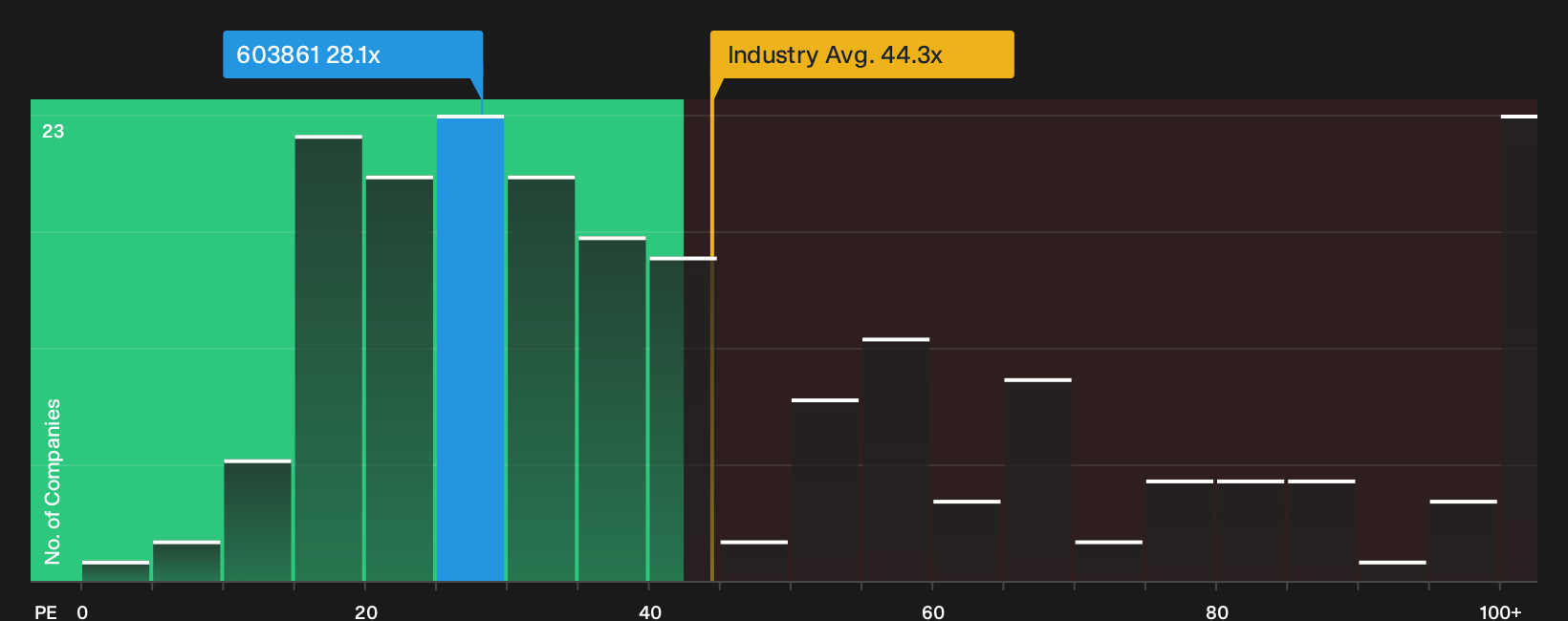
Guangzhou Baiyun Electric Equipment plugs directly into the China Infrastructure and Construction Equities theme through its role in grid and substation hardware. The company reports earnings forecasts that are expected to rise faster than the wider market, and a P/E below domestic electrical peers suggests investors are not fully pricing that exposure. This leaves everything hinging on how one pressure on future profitability ultimately resolves.
That turning point on profitability is exactly where investors should zero in through the 3 key rewards and 2 important warning signs (1 is major!) to see what might be accelerating or capping Guangzhou Baiyun Electric Equipment’s upside.
Sieyuan Electric (SZSE:002028)
Overview: Sieyuan Electric supplies power transmission and distribution equipment and turnkey EPC services that link directly into grid and energy infrastructure projects.
Operations: The business reports about CN¥23.8b in revenue from its Transmission and Distribution Equipment Industry segment, tying sales to power infrastructure investment cycles.
Market Cap: CN¥91.6b
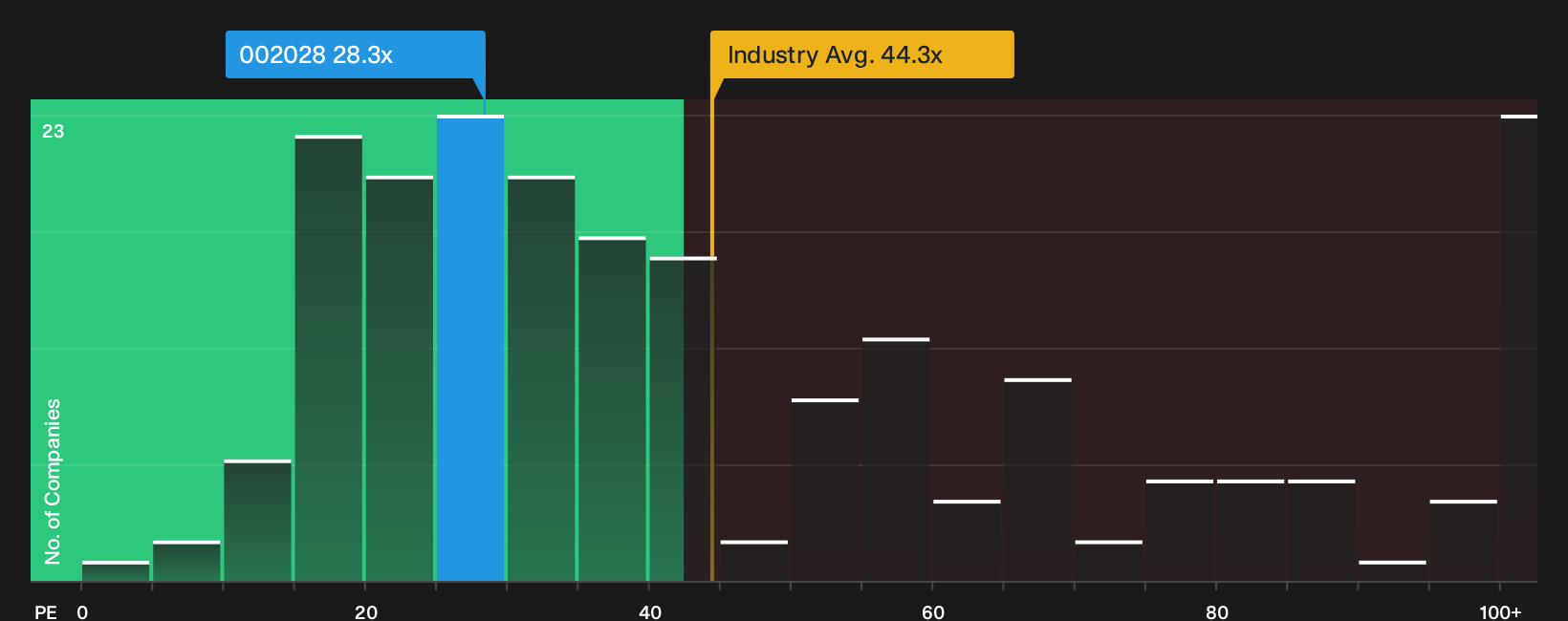
Sieyuan Electric is connected to the infrastructure theme through grid hardware and EPC contracts, supported by 35.3% earnings growth and a P/E of 28.3x that sits below both the wider China market and the domestic electrical industry averages. Investors get exposure to planned grid spending and overseas projects, with the key issue being how one funding dependent pressure ultimately shapes future returns.
That funding hinge is exactly where you can stress test Sieyuan Electric using the 3 key rewards and 1 important warning sign and see what might be amplifying or capping that earnings engine.
Seeking Alternatives Before The Crowd?
Fresh breakouts rarely stay under the radar for long, and momentum can fly once others get caught chasing late. Scan these ideas while it matters and get in early.
- Spot cash rich operators before they trend by running a focused list of solid balance sheet and fundamentals (205 results) that highlights financially resilient businesses before wider attention catches up.
- Ride structural tailwinds in automation by tracking the 91 robotics and automation stocks and see which industrial names could build momentum while valuations still look reasonable.
- Target high conviction dividend payers with the 225 dividend fortresses so potential high yield opportunities do not slip away as prices move and yields drop.
This article by Simply Wall St is general in nature. We provide commentary based on historical data and analyst forecasts only using an unbiased methodology and our articles are not intended to be financial advice. It does not constitute a recommendation to buy or sell any stock, and does not take account of your objectives, or your financial situation. We aim to bring you long-term focused analysis driven by fundamental data. Note that our analysis may not factor in the latest price-sensitive company announcements or qualitative material. Simply Wall St has no position in any stocks mentioned.
Have feedback on this article? Concerned about the content? Get in touch with us directly. Alternatively, email editorial-team@simplywallst.com