
- PRICING
- LIVE QUOTES
- LEARN
- HELP


EN
Tennant (TNC) Dropped, So What Is Drawing Attention Now?
Tennant (TNC) has slipped in recent trading, with the share price closing at $65.87 and declining over the past week, month, and past 3 months. This has put recent performance under closer investor scrutiny.
For context, Tennant shares are now trading at $65.87 after declining 22.76% on a 3 month share price basis and posting an 18.14% decline in 1 year total shareholder return. This suggests recent momentum has been fading even as longer term holders also face pressure.
Scan beyond Tennant's pullback and size up other hand-picked industrials with resilient balance sheets and fundamentals using our list of solid balance sheet and fundamentals (25 results).
The slide in Tennant to $65.87 sharpens a simple fork in the road. Do you step in after the pullback, or wait and hope the valuation resets further?
Most Popular Narrative: 25% Undervalued
On the narrative numbers, Tennant screens as undervalued, with a fair value estimate of $87.75 against the latest close at $65.87, which puts the recent share pullback in a different light.
Accelerated adoption of autonomous mobile robots and equipment-as-a-service programs is still expanding Tennant's potential recurring revenue base. The company now targets robotics revenue of about US$250 million in 2028, supported by 10 planned product launches and recent 56% year-over-year growth in first half 2026 robotics sales. This is likely to matter most for long-term revenue and earnings quality.
See why 13 investors see Tennant as 25% undervalued.
Result: Fair Value of $87.75 (UNDERVALUED)
Still, Tennant's ERP rollout issues, including lost sales and remediation costs, together with pricing pressure from lower cost competitors, could quickly challenge that view of the shares as undervalued.
Find out about the key risks to this Tennant narrative.
Another View: Tennant Looks Expensive On Earnings
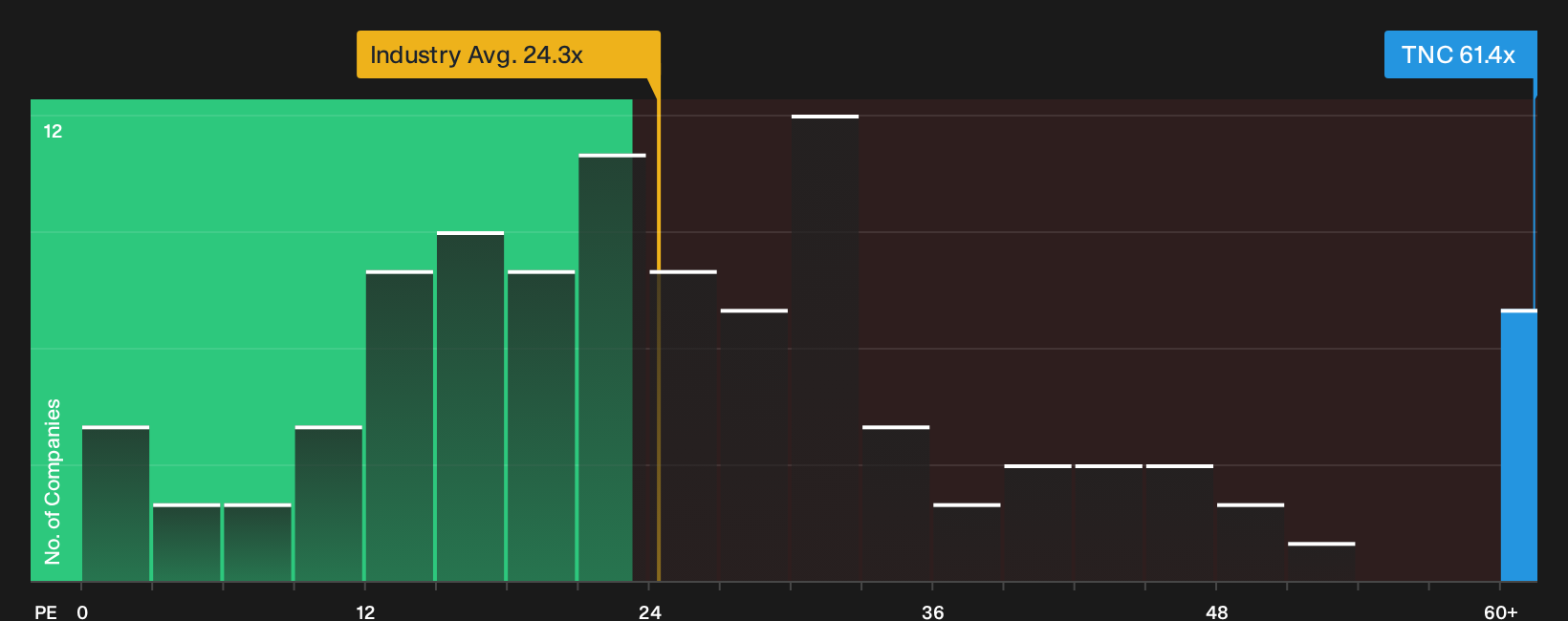
Step away from the fair value models for a moment and look at what people are actually paying for Tennant today. On a P/E of 61.4x, the stock trades well above both the US Machinery industry at 25x and peers at 40.1x, and even above a fair ratio of 54.3x. This lifts valuation risk if sentiment cools.
That gap means investors are already paying a premium for Tennant's future earnings story. If expectations reset closer to the industry, peers or even the fair ratio, how comfortable are you with the downside this could imply for the multiple you are relying on?
See what the numbers say about this price — find out in our valuation breakdown.
Next Steps
Mixed signals around Tennant's pullback and valuation premium are one thing; your own work is another. Pressure test the numbers, weigh the 1 or more risks against the 1 or more rewards, and anchor your view with the 3 key rewards and 4 important warning signs.
Looking for more Tennant investment ideas?
Do not stop your work with Tennant alone. Broaden your watchlist using focused stock lists that spotlight very different types of opportunities other investors may overlook.
- Target mispriced quality and scan for potential bargains using the 29 high quality undervalued stocks that filters for strong fundamentals and attractive valuations in one place.
- Strengthen your income stream and compare Tennant with companies in the 8 dividend fortresses that prioritise robust payouts and higher yields.
- Dial down portfolio stress and hunt for steadier performers through the 31 resilient stocks with low risk scores that focuses on resilience and lower overall risk scores.
This article by Simply Wall St is general in nature. We provide commentary based on historical data and analyst forecasts only using an unbiased methodology and our articles are not intended to be financial advice. It does not constitute a recommendation to buy or sell any stock, and does not take account of your objectives, or your financial situation. We aim to bring you long-term focused analysis driven by fundamental data. Note that our analysis may not factor in the latest price-sensitive company announcements or qualitative material. Simply Wall St has no position in any stocks mentioned.
Have feedback on this article? Concerned about the content? Get in touch with us directly. Alternatively, email editorial-team@simplywallst.com