
- PRICING
- LIVE QUOTES
- LEARN
- HELP


EN
Zscaler (ZS) Could Be 15% Undervalued Following Reaffirmed 2027 Guidance
Zscaler (ZS) reaffirmed its fiscal 2027 guidance at its 2026 Investor Day, keeping revenue and earnings expectations intact while laying out a detailed plan focused on AI security and broader product adoption.
The reaffirmed outlook and AI focus have coincided with a sharp rebound in Zscaler’s share price, with a 30-day share price return of 25.77% and a 90-day gain of 45.15%, even though the 1-year total shareholder return is still down 31.97%.
Scan how other cybersecurity and AI-focused companies are reacting to similar guidance and product roadmaps by reviewing the hand picked 37 AI small caps alongside Zscaler.
The rebound puts Zscaler in a very different spot than a few months ago. Does it make more sense to commit capital here after the run, or wait for a cheaper entry and risk missing further upside?
Most Popular Narrative: 14.6% Undervalued
On the numbers, the Simply Wall St narrative fair value for Zscaler comes in at $250 per share versus the last close at $213.55, so the story here is about whether the market is fully accounting for what AI security could mean for this business.
My thesis is that investors may be underestimating how much AI could expand Zscaler's addressable market.
The company already serves approximately 11,000 customers and operates one of the world's largest security clouds. Rather than relying solely on user growth, management is creating new monetization vectors tied directly to AI adoption.
See why 7 investors see Zscaler as 15% undervalued.
According to andrei9868, the most widely followed narrative frames Zscaler less as a traditional cybersecurity vendor and more as infrastructure for enterprise AI adoption. That view leans heavily on how Security for AI, non seat based products, and AI agent protection could reshape where future revenue comes from rather than just how many employees are on the platform.
The narrative also leans on concrete operating data. Zscaler generated approximately $3.4b in revenue with a reported free cash flow margin of 23% and a Rule of 40 score near 49%, while still reporting a net loss of $63.18m. That mix of strong cash generation alongside accounting losses, plus forecasts that earnings could grow 42.31% per year and move into profitability within 3 years, helps explain why the fair value estimate sits at $250 despite the current share price being $213.55.
There are clear offsets. Zscaler is still unprofitable, carries a negative return on equity of 2.43%, and uses higher risk funding sources with no customer deposits. Revenue is forecast to grow 13.3% per year, which is marginally slower than the wider US market at 13.9%, and the stock has lagged both the US Software industry and the broader US market over the past year with a 1 year total return decline of 31.97%.
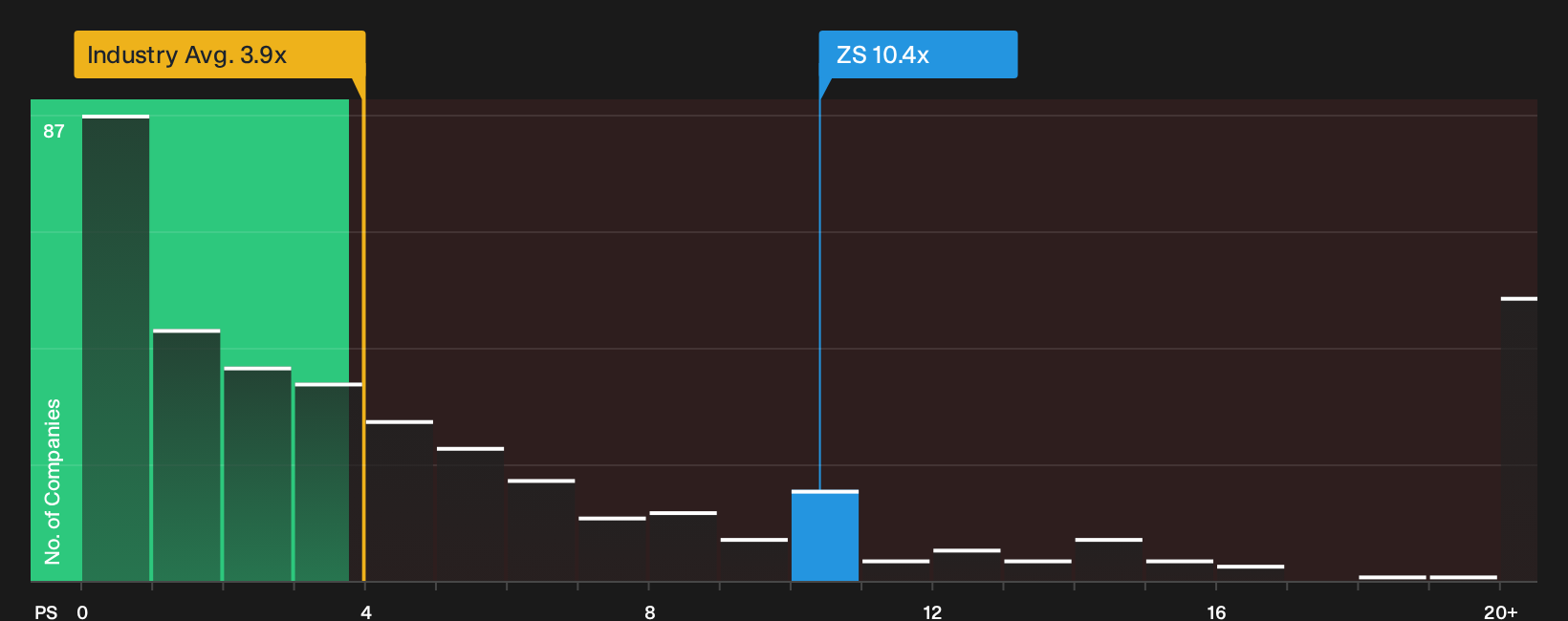
That tension between strong cash metrics and ongoing losses feeds directly into valuation debates. On one side, the SWS DCF model currently sees Zscaler as trading 22.1% below its estimate of future cash flow value, and the narrative fair value of $250 implies a 14.6% discount to that level. On the other side, the stock trades on a P/S ratio of 10.4x which is above the SWS fair P/S estimate of 9.3x and well above the broader US Software sector at 3.9x, even though it is lower than the 11.9x peer group average.
For investors weighing whether the recent 45.15% 90 day rebound leaves enough upside on the table, the key question is which side of that argument feels more compelling. Either the market is still treating Zscaler as a high multiple Zero Trust security vendor and leaving the AI security optionality underpriced, or the share price already reflects a lot of that promise while the business remains loss making and forecasts imply only modest top line growth relative to the wider market.
Result: Fair Value of $250 (UNDERVALUED)
Still, the Zscaler story could be challenged if adoption of AI security takes longer than hoped, or if ongoing accounting losses keep pressure on valuation multiples.
Find out about the key risks to this Zscaler narrative.
Another View: What The P/S Ratio Says About Zscaler
Zscaler’s story looks attractive on cash flow assumptions, yet the simple P/S yardstick sends a different signal. The stock trades at 10.4x sales, above the 9.3x fair ratio our model points to, and far ahead of the broader US Software group at 3.9x. Even with a discount to closer peers at 11.9x, that gap suggests less room for error if growth or AI monetization slow from here.
For readers who want to see how that valuation gap stacks up against detailed multiples work, including how the fair ratio might act as a magnet over time, See what the numbers say about this price — find out in our valuation breakdown.
Next Steps
Mixed messages in the data, with both bright spots and pressure points for Zscaler, mean you should move quickly, review the details yourself, and weigh both sides of the story using the 2 key rewards and 1 important warning sign.
Looking for more investment ideas beyond Zscaler?
If you stop your research with Zscaler, you miss chances to position your portfolio for different types of returns across quality, income, and risk profiles.
- Zero in on mispriced quality by scanning the 29 high quality undervalued stocks that pair strong fundamentals with attractive valuations.
- Build a steadier income stream by reviewing the 8 dividend fortresses that focus on higher yielding payers with resilient profiles.
- Protect your downside by assessing the 31 resilient stocks with low risk scores that highlight companies with more durable balance sheets and lower overall risk scores.
This article by Simply Wall St is general in nature. We provide commentary based on historical data and analyst forecasts only using an unbiased methodology and our articles are not intended to be financial advice. It does not constitute a recommendation to buy or sell any stock, and does not take account of your objectives, or your financial situation. We aim to bring you long-term focused analysis driven by fundamental data. Note that our analysis may not factor in the latest price-sensitive company announcements or qualitative material. Simply Wall St has no position in any stocks mentioned.
Have feedback on this article? Concerned about the content? Get in touch with us directly. Alternatively, email editorial-team@simplywallst.com