
- PRICING
- LIVE QUOTES
- LEARN
- HELP


EN
How Google Stock Investors Should View the Long-Awaited Gemini 4 Argon Launch
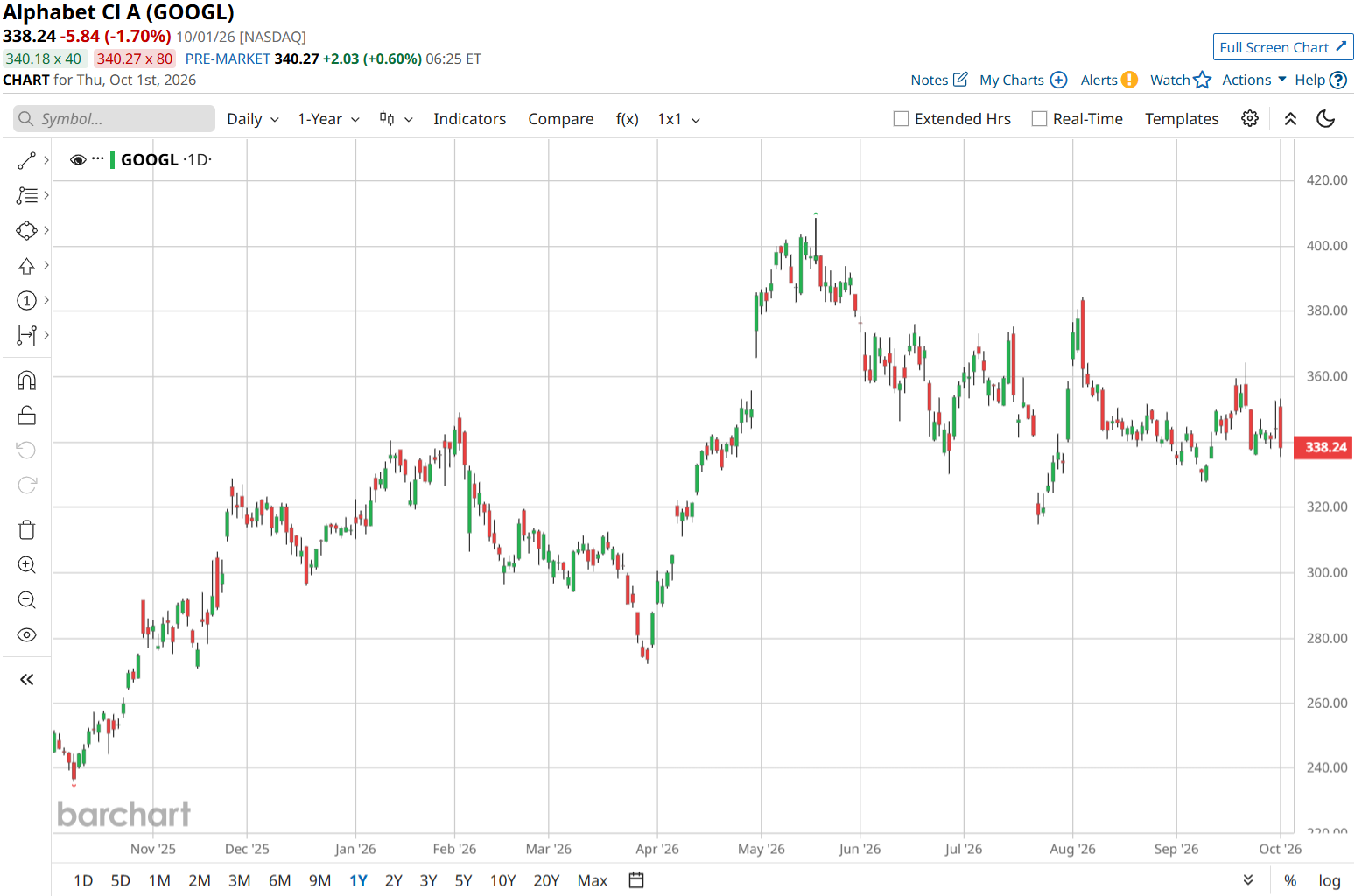
Alphabet (GOOGL) went into the Gemini 4 Argon launch with investors asking a simple question: Can its huge artificial intelligence (AI) spending lead to steady growth? On Sept. 23, GOOGL stock dropped 4% to $337.83 after cheaper models from OpenAI and Anthropic raised concerns that Google’s Gemini products and Google Cloud profits could face price pressure.
The release of Gemini 4 Argon helped Alphabet shares rise 1% on Sept. 30, even as the 10-year Treasury yield stayed near its highest level since 2002. Gemini already has a large user base. As of the end of the second quarter, the app had 950 million monthly active users while its models were handling 22 billion API tokens every minute.
Still, that growth is expensive. Alphabet is planning to spend $195 billion to $205 billion on capital expenditures in 2026, mainly to build AI infrastructure. Google Cloud CEO Thomas Kurian said Google’s AI servers pay for themselves in under two years, while its custom Tensor Processing Units (TPUs) recover their cost in about half that time. Investors are still weighing the cost against the return. GOOGL stock is up about 12% so far this year, below the S&P 500’s ($SPX) 14% gain over the same period.
With competitors cutting prices and Alphabet spending heavily, can Gemini 4 Argon bring in enough revenue to support a stronger move in shares? Let’s take a closer look.
Breaking Down Google’s Latest Model
Google unveiled Gemini 4 Argon on Sept. 30. The company said Argon beat rival models on several benchmarks, but it did not share the full scores, test methods, or a broad release schedule. Those details will matter before investors can tell how much of an edge Google really has.
The release comes after months of spending and buildup. Alphabet CEO Sundar Pichai had previously called Gemini 4 “ambitious” and said Google was putting major computing power behind it. At the same time, OpenAI and Anthropic have lowered prices for competing models, adding pressure on Google Cloud’s pricing and profit margins.
Investors liked the news, but the reaction was modest. Alphabet shares rose about 1% after the announcement, fell 1.7% the next day on Oct. 1, then gained nearly 2% in the following session. For now, Google is limiting access to selected cybersecurity partners, likely using those demanding customers to test Argon before offering it more widely.
Alphabet’s Financial Case for AI
Alphabet posted strong Q2 numbers, showing that its heavy AI spending is starting to support growth. Revenue rose 24% year-over-year (YOY) to $119.8 billion, its 12th-straight quarter of double-digit growth. Google Cloud revenue jumped 82% YOY to $24.8 billion, while Google Cloud operating income roughly tripled to $8.8 billion. That lifted Google Cloud’s operating margin to 35.5%. Google Cloud’s backlog also climbed by more than $50 billion sequentially to $514 billion. Still, the spending bill is steep; Alphabet expects 2026 capex of $195 billion to $205 billion as it adds more computing capacity.
Alphabet is also trying to put Gemini to work in specific industries. In August, Morningstar (MORN) and PitchBook joined Google Cloud as launch partners for Gemini Enterprise for Financial Services. The partnership brings public- and private-market data into workplace tools used by financial firms. That gives Google a more direct way to sell Gemini in a high-value, regulated market. If more customers sign up and turn Google Cloud’s backlog into steady revenue, the company will have a stronger case that its heavy spending can pay off.
Wall Street Weighs the Opportunity
Alphabet will report its next earnings on Nov. 4. Wall Street expects the company to earn $2.95 per share for the September quarter, up roughly 3% from $2.87 a year earlier. For full-year fiscal 2026, analysts expect EPS of $20.55, up 90% YOY from $10.81 per share.
Analysts see Gemini as one reason for the optimism. In May 2026, DBS analyst Sachin Mittal raised his price target to $460 from $400 and kept a “Buy” rating on GOOGL stock. Mizuho also lifted its target to $460 from $420 and maintained an “Outperform” rating. Both calls reflect the view that Alphabet can make Gemini useful across its products — including consumer devices, business software, and Google Cloud — instead of keeping it as a standalone chatbot.
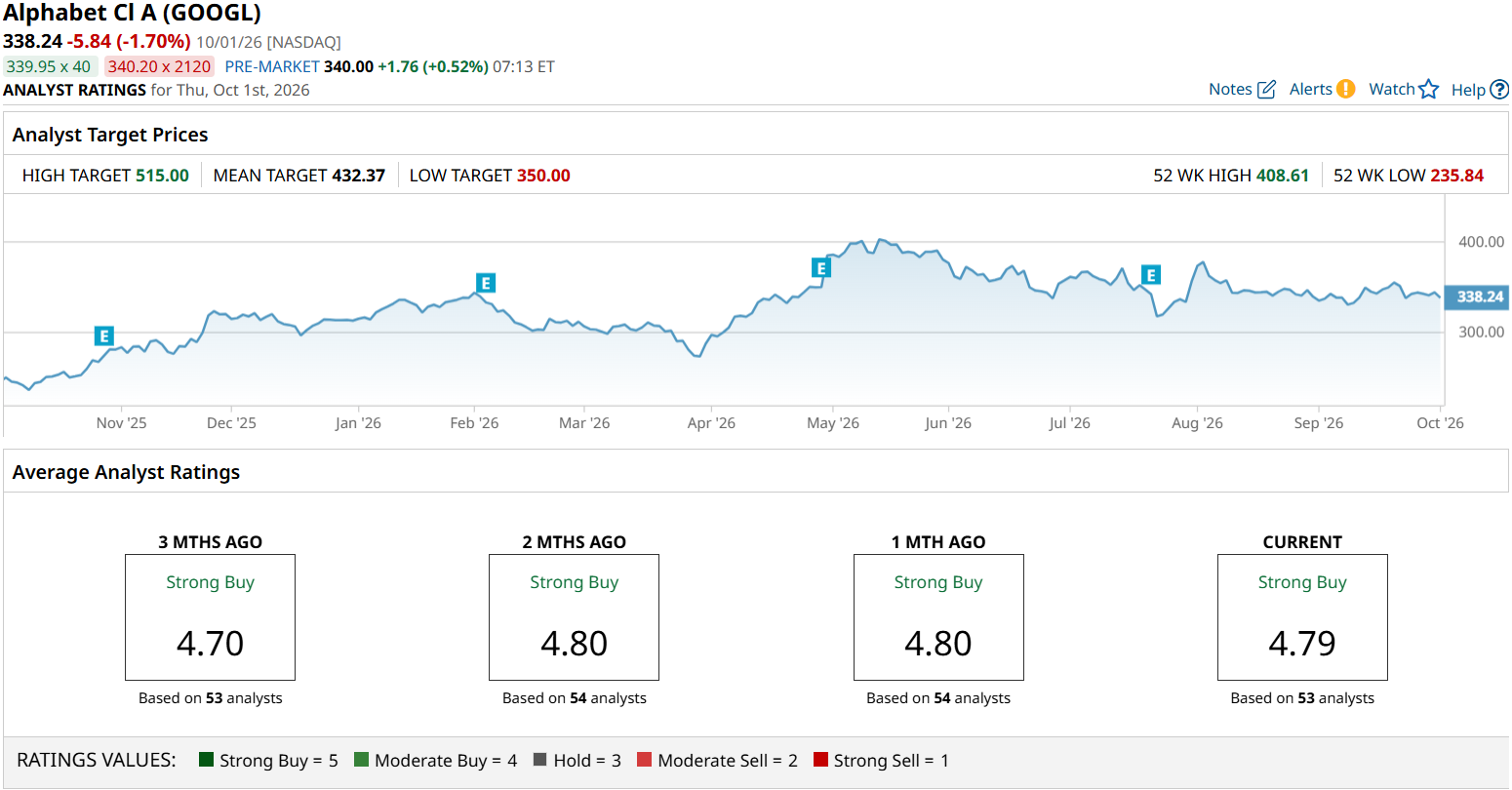
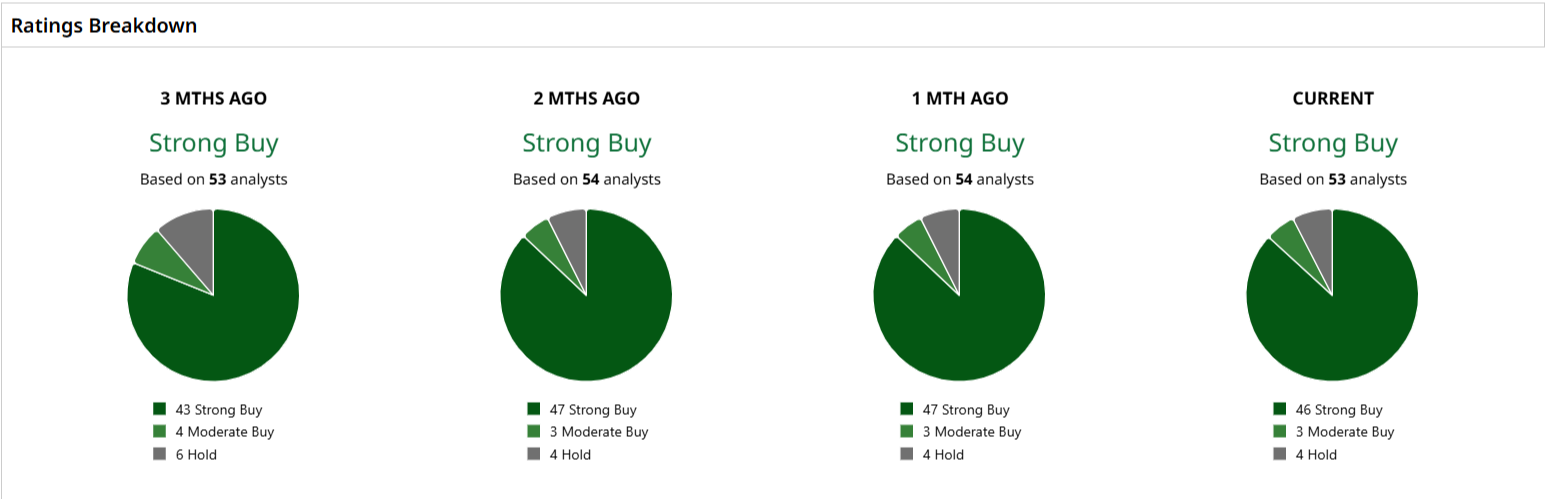
The broader analyst view is also positive. Based on 53 analysts with coverage, GOOGL stock has a consensus “Strong Buy” rating. The average target price of $432.49 suggests potential upside of 24% from recent levels.
Conclusion
Gemini 4 Argon is a positive development for Alphabet, but investors should view it as an execution catalyst rather than a finished investment case. The model strengthens Google’s position in the race for enterprise AI workloads and gives its Cloud business another product to monetize, yet the payoff must ultimately show up in revenue growth, margins, and cash flow. Given Alphabet’s expanding Gemini distribution, fast-growing Cloud operations, and bullish analyst outlook, GOOGL stock appears more likely to trend higher over the medium term. Still, near-term gains may be uneven as investors weigh AI spending against evidence of tangible returns.
On the date of publication, Ebube Jones did not have (either directly or indirectly) positions in any of the securities mentioned in this article. All information and data in this article is solely for informational purposes. For more information please view the Barchart Disclosure Policy here.