
- PRICING
- LIVE QUOTES
- LEARN
- HELP


EN
Is Sugar Free Labeling Lawsuit Altering The Investment Case For Starbucks Stock?
- Starbucks is facing a class-action lawsuit filed on October 2, 2026, alleging eight "Sugar-Free" protein beverages contained 13 to 21 grams of sugar, potentially conflicting with federal labeling rules and consumer protection laws.
- The case focuses on whether Starbucks’ sugar-free branding, protein positioning, and nutrition transparency claims align with regulatory standards. This could influence marketing practices and related compliance costs.
- We will look at how Starbucks’ investment narrative intersects with this sugar free labeling lawsuit and potential shifts in compliance risk.
Starbucks Investment Narrative Recap
To own Starbucks, you need to believe the Back to Starbucks reset can lift store economics, rebuild operating margin from today’s weaker 5.2% level and turn forecast earnings growth into cash that supports debt, dividends and reinvestment. The sugar free lawsuit sits in a broader pattern of compliance and brand scrutiny but, on its own, does not look like the main driver of the business story.
The more immediate swing factor is whether remodels, cost savings and tech investments actually show up in cleaner profitability while wage inflation, unionisation and other legal issues keep pressure on expenses. The biggest near term risk is that elevated costs and restructuring noise blunt that margin recovery and leave the current valuation harder to justify.
Among the recent developments, the decision to close roughly 1% of more than 18,000 North America coffeehouses is most relevant to the lawsuit backdrop. Both elements speak to how Starbucks manages underperforming assets and operational or compliance issues that can drain cash and management attention if they drag on.
Those closures come with about US$300m of restructuring charges in fiscal 2026, including US$200m of cash costs, while management continues to roll out low capex remodels to 8,000 to 9,000 locations. For you as an investor, the key question is whether this portfolio clean up and store upgrade effort offsets higher legal, labor and compliance risks enough to support the earnings path analysts currently model.
Starbucks' narrative projects US$42.8b revenue and US$4.7b earnings by 2029. This implies 3.7% yearly revenue growth and an earnings increase of about US$2.7b from the current US$2.0b base.
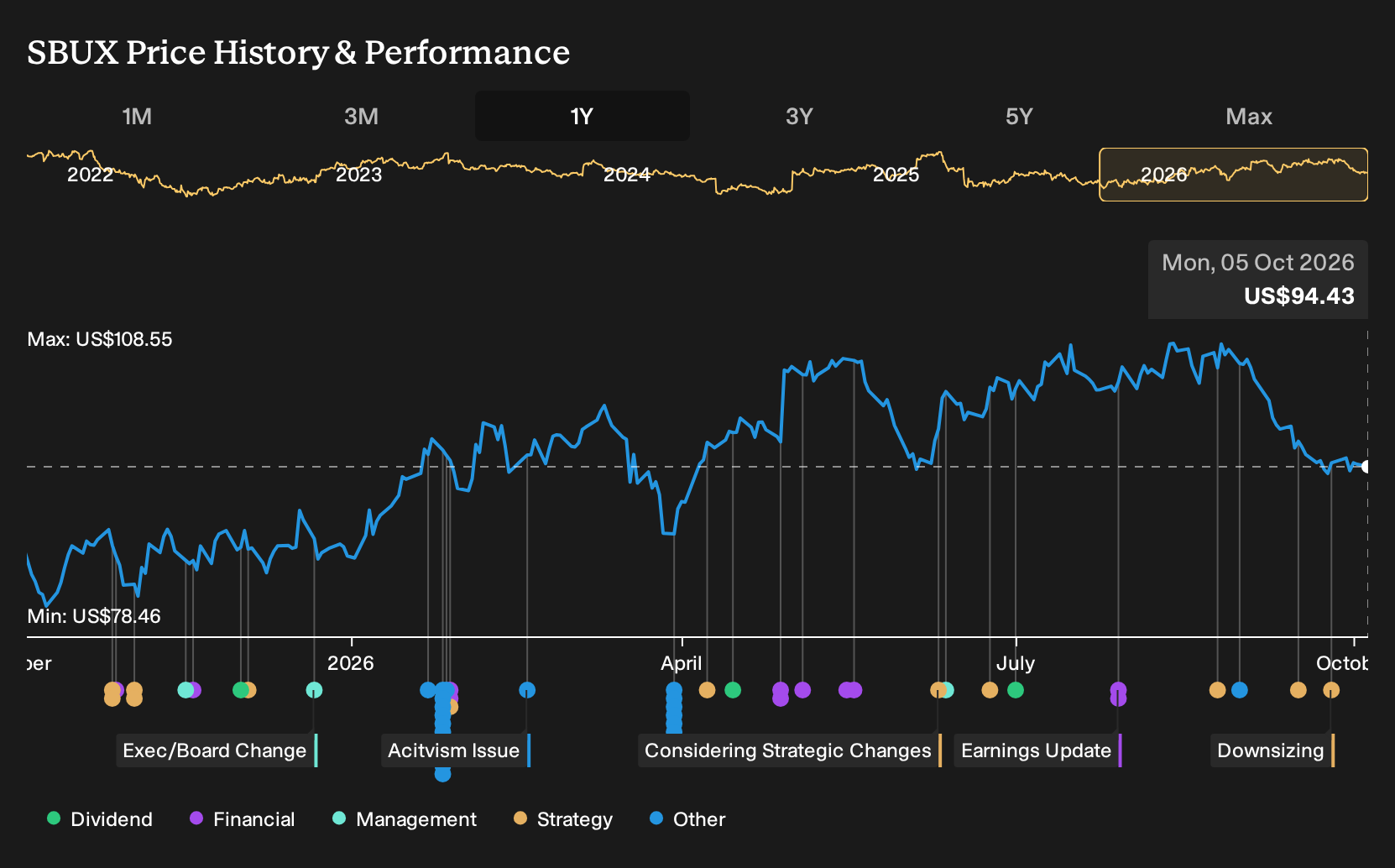
Uncover how Starbucks' fair value indicates a 19% potential upside to its current price that may not last much longer.
Exploring Other Perspectives
Some of the lowest Starbucks analysts focus less on store remodel payoffs and more on legal and compliance drag. Before this sugar free lawsuit, they were already working with slower revenue expectations of around US$42.5b by 2029 and earnings of about US$4.9b. You can treat this as one cautious storyline that may shift as new information lands.
Explore 5 other Starbucks fair value estimates, including one that suggests up to 8% downside from the current price.
Reach Your Own Conclusion
Disagree with existing narratives? Extraordinary investment returns rarely come from following the herd, so go with your instincts.
- A great starting point for your Starbucks research is our analysis highlighting 1 key reward and 3 important warning signs that could impact your investment decision.
- See our latest analysis for Starbucks. The report includes a comprehensive fundamental analysis summarized in a single visual, the Snowflake, making it easy to evaluate Starbucks' overall financial health at a glance.
Looking for more investment ideas beyond Starbucks?
Once the Starbucks story feels clear enough, it can help to scan a wider field of opportunities where balance sheets, income streams and risk profiles line up better with your own comfort level.
- If you want potential value with financial resilience, start with a 27 high quality undervalued stocks that screens for quality businesses trading below their assessed worth.
- If steady cash returns matter to you, focus on a 7 dividend fortresses that concentrates on companies offering higher yield with an emphasis on payout strength.
- If capital preservation sits near the top of your checklist, turn to a list of solid balance sheet and fundamentals (25 results) that highlights businesses with stronger financial footing and cleaner obligations.
This article by Simply Wall St is general in nature. We provide commentary based on historical data and analyst forecasts only using an unbiased methodology and our articles are not intended to be financial advice. It does not constitute a recommendation to buy or sell any stock, and does not take account of your objectives, or your financial situation. We aim to bring you long-term focused analysis driven by fundamental data. Note that our analysis may not factor in the latest price-sensitive company announcements or qualitative material. Simply Wall St has no position in any stocks mentioned.
Have feedback on this article? Concerned about the content? Get in touch with us directly. Alternatively, email editorial-team@simplywallst.com