
- PRICING
- LIVE QUOTES
- LEARN
- HELP


EN
3 US Rate Sensitive Growth Stocks for Data Center Spending
Cooler jobs data, firmer factory surveys and rising input costs are tugging markets in different directions, and rate sensitive quality growth stocks are right in the middle of that tug of war. Investors watching the mix of softer hiring and stickier prices sense that selective exposure could matter more than broad index bets. This article outlines the backdrop and then walks through three stocks from our screener that appear positioned in relation to this news flow.
The three stocks below are a sample set from this rate sensitive quality growth idea, and the full screen surfaced 16 more companies with equally compelling narratives that are not covered here.
If you want to identify and analyze those additional candidates with the same filters and metrics, head straight to the US Rate-Sensitive Quality Growth Stocks screener.
Modine Manufacturing (MOD)
Modine Manufacturing fits this rate sensitive quality growth theme as an industrial thermal solutions specialist tied to building, HVAC and data center investment. In these areas, interest costs influence customers’ capital spending and, in turn, the company’s growth profile.
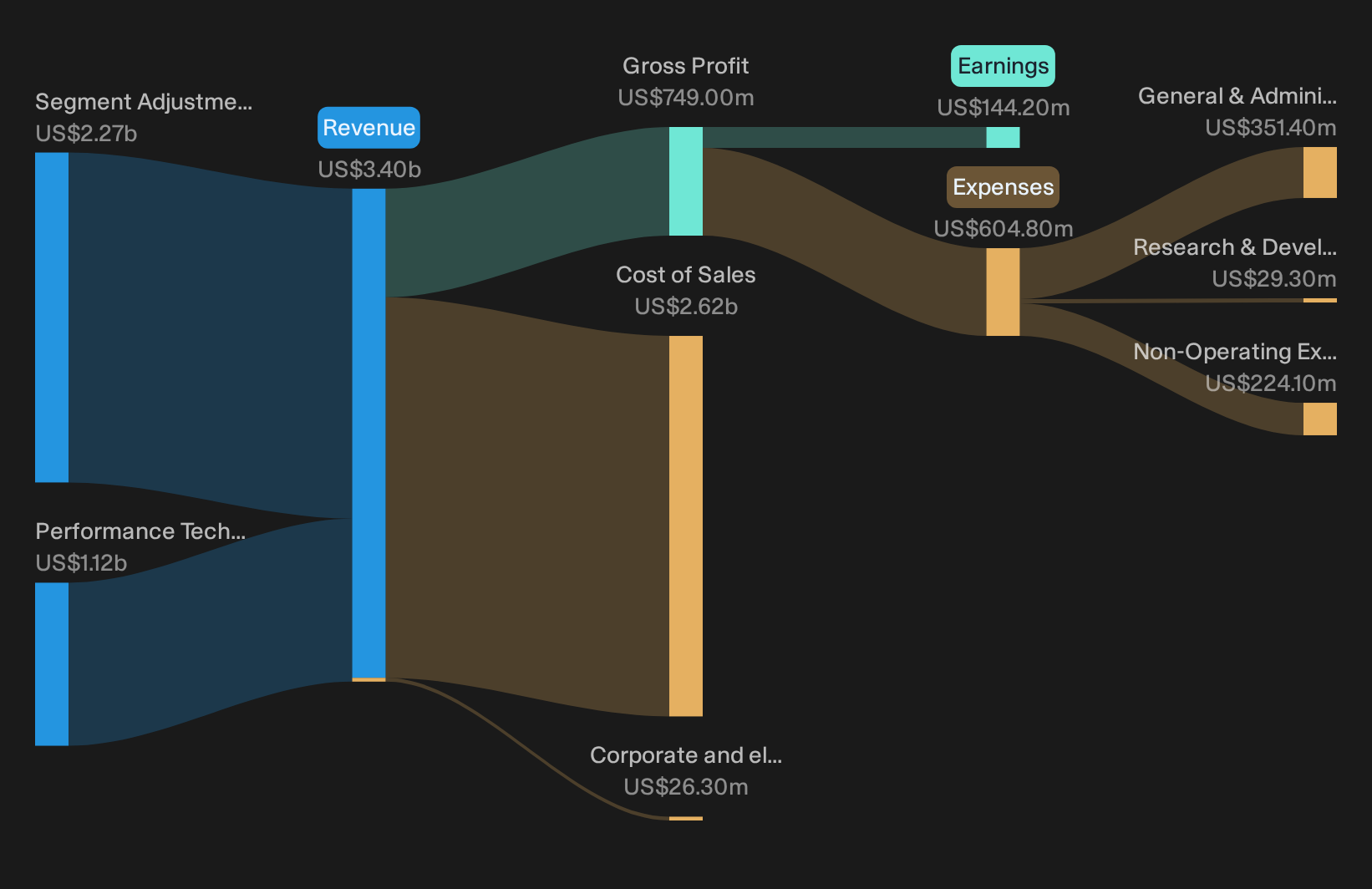
Modine Manufacturing designs thermal systems for buildings, vehicles and data centers, with Performance Technologies generating about US$1.1b of its roughly US$2.3b in adjusted revenue, and the stock valued at around US$9.5b.
The accelerating build-out of data centers and the need for next-generation cooling solutions are driving demand for Modine's products, with management forecasting the potential to double data center revenues from approximately $1 billion in fiscal 2026 to $2 billion by fiscal 2028.
What happens to Modine Manufacturing’s margins will depend heavily on how one unseen cost pressure behaves over the next few years.
That cost pressure is exactly where the story gets interesting, and the full narrative for Modine Manufacturing shows how Modine Manufacturing could still accelerate if that drag starts to ease.
Generac Holdings (GNRC)
Generac Holdings brings the rate sensitive growth theme into the world of backup power, smart home energy and data center infrastructure, where project financing costs and discount rates can heavily influence how quickly customers commit to long term equipment purchases.
Generac Holdings, an energy technology group spanning home backup generators, smart home energy devices and large commercial power systems, fits this rate sensitive quality growth screen because many of its residential and industrial customers lean on financing to fund equipment and installation projects. The business draws most of its roughly US$4.4b in annual revenue from the United States, with about US$870 million coming from international markets, and it carries a market value of about US$12.8b.
Accelerating AI driven build outs of hyperscale and colocated data centers are now supported by Generac Holdings having about US$450m of expected 2026 data center revenue, a US$1.6b dedicated backlog, and multiple multiyear hyperscale agreements including an Amazon deal projected at about US$2.4b of deliveries in 2027 to 2028.
What happens to Generac Holdings’ longer term earnings power now largely turns on how efficiently that new large scale capacity is filled and run.
That earnings power question is exactly where things get interesting, and the full narrative for Generac Holdings shows how Generac Holdings could turn today’s build out into tomorrow’s overlooked compounding story.

CareTrust REIT (CTRE)
CareTrust REIT brings the rate sensitive quality growth theme into healthcare real estate by tying income from senior care properties directly to funding costs and property values as interest expectations shift. This makes the next phase of its growth story especially important.
CareTrust REIT owns and grows a portfolio of net leased skilled nursing and seniors housing properties, generating about US$571 million from healthcare real estate assets in the United States, and the stock is valued at roughly US$8.6b.
CareTrust REIT fits this rate focused screen because its rental income stream and acquisition program sit on top of a balance sheet that is built for disciplined growth rather than maximum leverage.
"The multi engine growth model across U.S. skilled nursing, U.K. care homes and SHOP is now backed by roughly US$1.5b of investments year to date in 2026 and about US$1.9b deployed in 2026 overall."
What happens to CareTrust REIT’s growth and income profile now largely depends on how one key cost of funding evolves from here.
That funding cost wildcard is exactly where things start to accelerate, and the full narrative for CareTrust REIT explains how CareTrust REIT’s growth engines and risk levers interact.

Curious About The Next Big Alternatives?
Fresh ideas do not stay quiet for long. Breakout themes gain momentum while they are still under the radar for now. Scan these curated shortlists and get in early.
- Target durable income streams and reduce guesswork by scanning a curated set of higher yield opportunities using the 7 dividend fortresses.
- Spot early movers in automation and factory efficiency by running through the hand picked universe inside the 89 robotics and automation stocks.
- Explore long term electrification themes by reviewing the carefully filtered universe in the 16 top copper producer stocks.
This article by Simply Wall St is general in nature. We provide commentary based on historical data and analyst forecasts only using an unbiased methodology and our articles are not intended to be financial advice. It does not constitute a recommendation to buy or sell any stock, and does not take account of your objectives, or your financial situation. We aim to bring you long-term focused analysis driven by fundamental data. Note that our analysis may not factor in the latest price-sensitive company announcements or qualitative material. Simply Wall St has no position in any stocks mentioned.
Have feedback on this article? Concerned about the content? Get in touch with us directly. Alternatively, email editorial-team@simplywallst.com