
- PRICING
- LIVE QUOTES
- LEARN
- HELP


EN
Google, Amazon, and Microsoft Face a $4.2 Trillion AI Problem — and the Math Is Getting Dangerous
Artificial intelligence can become indispensable and still disappoint investors. The distinction comes down to timing: companies must pay for computing capacity today, while the revenue needed to justify it may take years to arrive.
PwC’s Global Data Centre Outlook projects $31.6 trillion in worldwide investment through 2050, with the U.S. capturing $15.1 trillion. That spending creates opportunities but also a demanding test for shareholders. A useful technology does not automatically make every investment profitable. The key is whether customers generate enough business to cover the infrastructure bill before another round of equipment upgrades comes due.
The $4.2 Trillion Revenue Test
For Google parent Alphabet (GOOG) (GOOGL), Amazon (AMZN), and Microsoft (MSFT), that timing problem deserves investors’ due diligence.
Bain & Company’s September Global Technology Report estimates AI needs $6 trillion in annual revenue by 2031 to support its infrastructure investment. Existing consumer and enterprise applications could contribute $1.2 trillion to $1.8 trillion, leaving at least $4.2 trillion to come from new sources.
That is an industry-wide annual revenue requirement, not a combined debt balance belonging to these three companies. Using Bain’s upper estimate, 70% of the required revenue depends on opportunities beyond the existing applications it modeled. Ultimately, better chatbots and faster office work alone will not pay the bill. Bain points to robotics, autonomous vehicles, and new products as potential contributors. In the meantime, investors are underwriting businesses that still need to develop.
Financing Buys Time
Amazon’s proposed financing illustrates the pressure. The Financial Times reported Amazon was seeking to transfer roughly $8 billion of Nvidia (NVDA) chips into a special-purpose vehicle backed by outside investors, then lease them back. That could release capital, but Amazon would still owe lease payments. Moving the purchase cost does not eliminate the economic burden and hides the obligation from the investor's view.
Broadcom (AVGO) is taking a different route. Anthropic’s IPO prospectus showed that Broadcom agreed to provide up to $42 billion in financing, potentially through a financing partner. That could cover roughly one-third of Anthropic’s $125.2 billion, five-year computing-capacity lease commitment.
Google has also used lease guarantees to help finance its AI chip expansion, adding another layer of financial exposure for Alphabet shareholders.
Amazon would become a renter; Broadcom would help finance a customer. Both arrangements buy time. Neither proves that underlying customer demand will deliver adequate returns.
The Bill Keeps Coming
PwC identifies another complication: equipment’s share of annual investment rises from 70% today to 93% by 2050 as hardware requires repeated upgrades.
Shareholders, therefore, should resist treating today’s spending as a one-time hurdle. The investment thesis needs room for recurring replacement costs.
Granted, financing can support profitable expansion. The danger emerges when investors count supplier-funded purchases as evidence of self-sustaining demand without examining who ultimately pays.
What Analysts Think About AMZN, GOOG, and MSFT
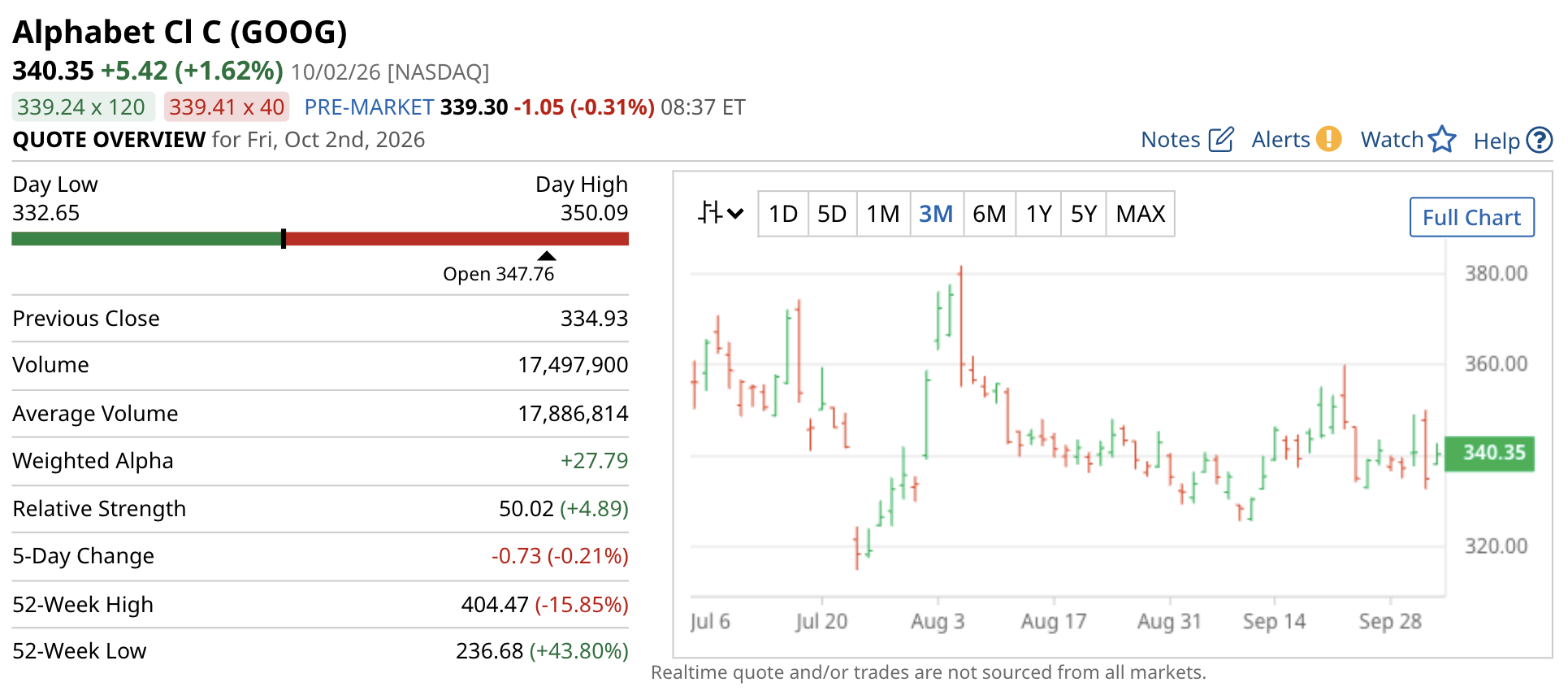
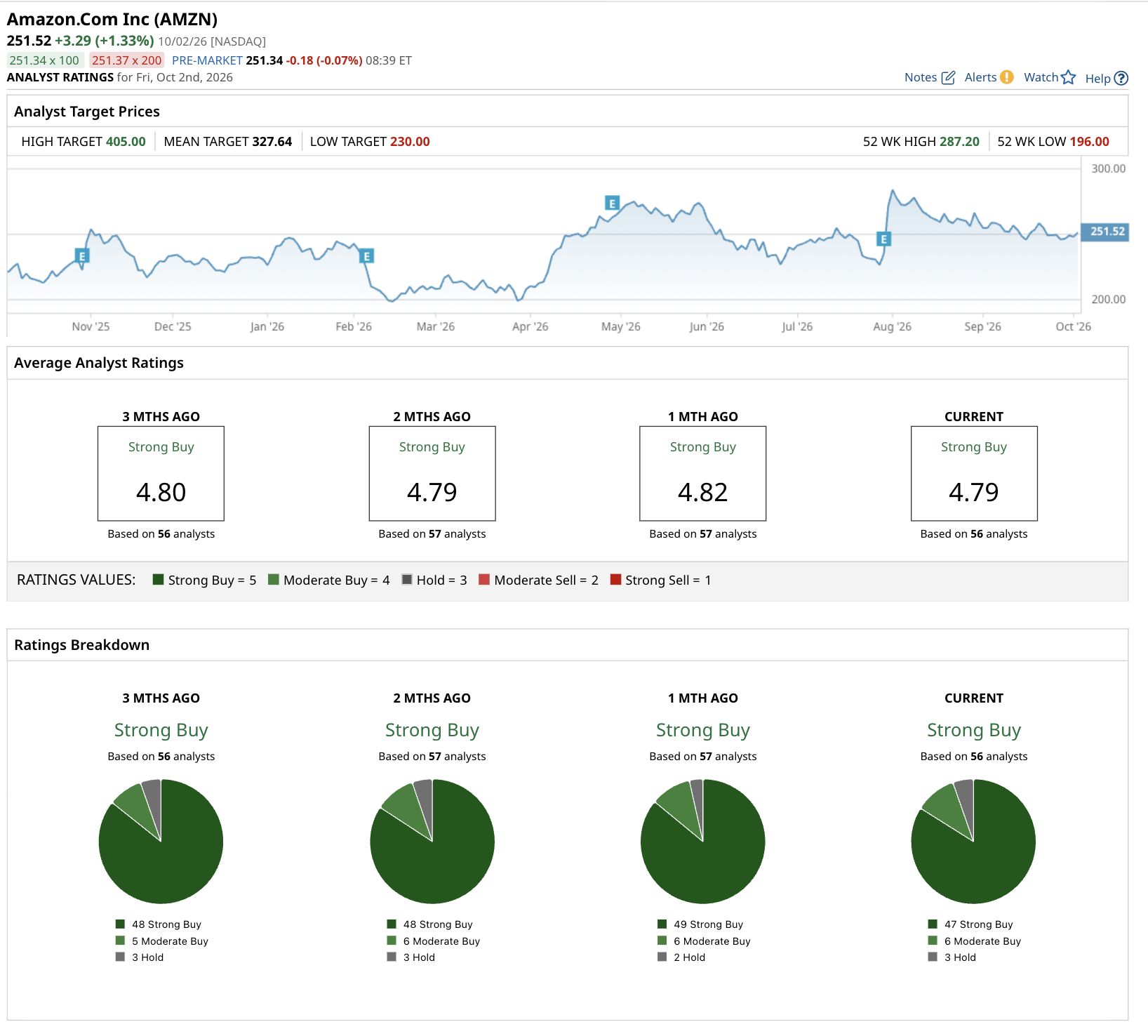
Barchart’s analyst ratings show Wall Street remains bullish on all three companies despite the financing concerns. Amazon and Alphabet each score 4.79 out of 5, ahead of Microsoft’s 4.67.
Stock |
Analysts Covering |
Consensus |
Mean Price Target |
Implied Upside |
| Amazon | 56 |
Strong Buy |
$327.64 |
30.3% |
| Alphabet | 53 |
Strong Buy |
$433.80 |
27.5% |
| Microsoft | 51 |
Strong Buy |
$566.00 |
9.4% |
The bullish consensus, though, is strong: Amazon has 47 “Strong Buy” recommendations, Alphabet has 46, and Microsoft has 41. Microsoft also carries one “Strong Sell.”
Here’s what the numbers tell investors: Amazon and Alphabet offer more potential upside to consensus targets, while Microsoft has less room between its share price and Wall Street’s expectations. Those targets are forecasts, however. Treat them as a starting point for comparing opportunities, then demand evidence that AI spending is translating into cash flow.
Key Takeaway
Keep Alphabet, Amazon, and Microsoft on your watch list, and only make new purchases when they show improving cash generation after infrastructure spending. Investors need to compare cloud profit growth, capital expenditures, and lease commitments across all three at each earnings release to see if progress is being made.
A $4.2 trillion revenue gap calls for price discipline. Buy their stocks when they show evidence of profitable adoption, and don't pay upfront for every projected breakthrough that may not come through.
On the date of publication, Rich Duprey did not have (either directly or indirectly) positions in any of the securities mentioned in this article. All information and data in this article is solely for informational purposes. For more information please view the Barchart Disclosure Policy here.