
- PRICING
- LIVE QUOTES
- LEARN
- HELP


EN
3 AI Hardware Stocks Riding Resilient Global Trade Growth
Global trade in goods is proving more resilient than many expected, and AI hardware is quietly doing a lot of the heavy lifting. With 72% of cross border commerce still running on WTO rules and AI related products responsible for a large share of recent trade growth, investors face a rare mix of stability and concentration risk. This article unpacks that backdrop and profiles 3 stocks from our Global Semiconductor and AI Hardware Leaders screener that appear positively exposed to this news-driven setup.
The three examples below are just a small sample of the opportunities in this space, with the full screen surfacing another 60 large, liquid semiconductor and AI hardware companies with equally compelling narratives that are not covered here. To identify your own highest conviction ideas quickly, head straight to the Global Semiconductor and AI Hardware Leaders screener
Lam Research (LRCX)
Overview: Lam Research builds the etch, deposition, and cleaning tools chipmakers rely on to manufacture advanced AI chips and memory at scale.
Operations: Lam generates about US$23.23b from wafer processing equipment and services, with multi billion dollar contributions from China, Taiwan, Korea, and Japan.
Market Cap: US$434.86b
Lam Research matters for this screener because it sells the critical fabrication gear that AI chip and memory producers need before any data center can be built.
"NAND revenue more than doubled sequentially. Memory rose to 46% of systems revenue from 39%, with non-volatile memory alone jumping to 23% from 12% in a single quarter."
What happens to Lam Research's margins and growth if a single key assumption about future memory spending suddenly shifts?
If that kind of swing in memory assumptions matters to you, read the full narrative for Lam Research to see how Lam Research’s cycle exposure and AI demand could be decoupling.
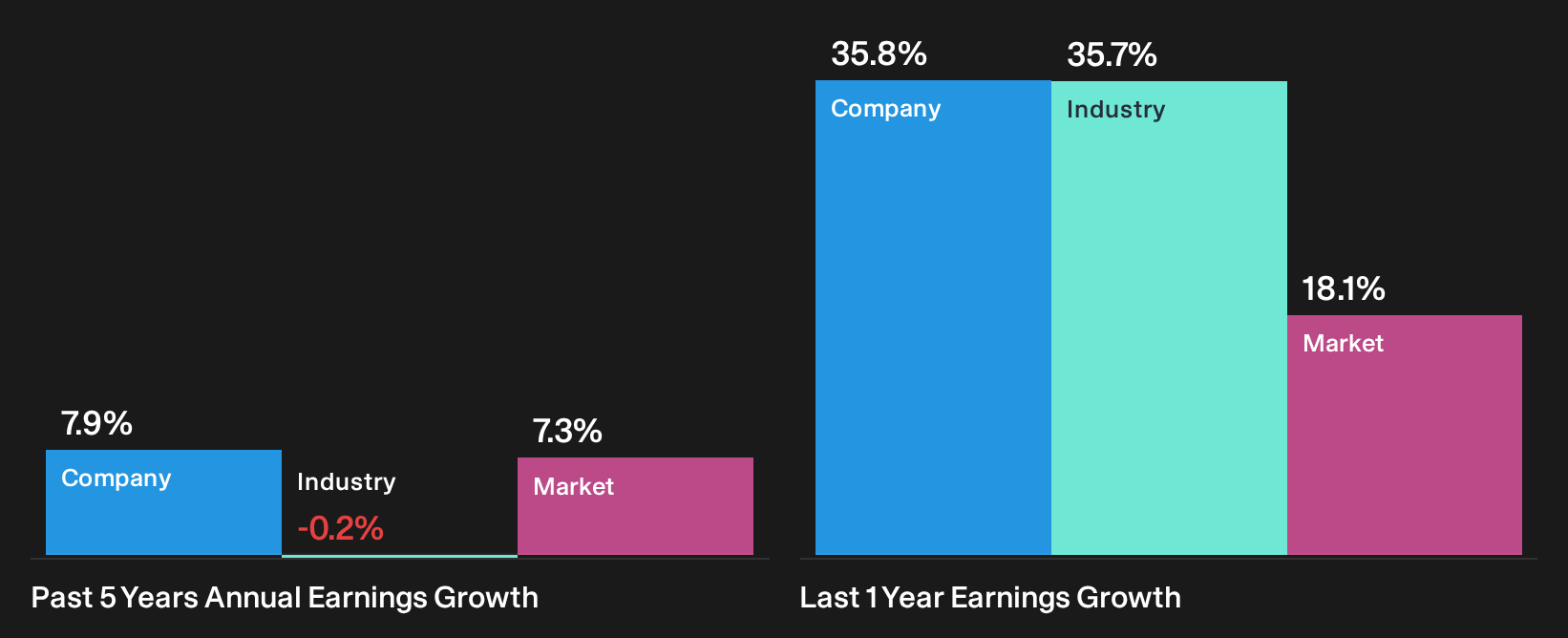
SCREEN Holdings (TSE:7735)
Overview: SCREEN Holdings supplies semiconductor manufacturers worldwide with wafer cleaning, lithography, inspection, and display production equipment that underpins advanced AI chip fabrication.
Operations: SCREEN Holdings generates about ¥469.6b from Semiconductor Production Equipment, far outweighing Graphic Arts at ¥58.4b, Display Equipment at ¥45.6b, and PCB-related gear at ¥14.6b.
Market Cap: ¥2.92t
SCREEN Holdings matters for this Global Semiconductor and AI Hardware Leaders theme because its tools directly support the wafer and packaging capacity AI chips depend on, and management is already framing the next wave of orders through that lens.
"SCREEN Holdings is positioned to benefit from imminent investment cycles in AI-related semiconductor applications, with management highlighting robust demand for leading-edge nodes in foundry and memory (notably DRAM for AI servers). Heavy reliance on China for sales (mid-30% range, with potential for further growth) exposes SCREEN Holdings to significant geopolitical and trade risk, particularly as U.S. restrictions and future protectionist policies could rapidly curtail market access."
What happens to SCREEN Holdings' earnings profile if a single regional policy shift reshapes where those next AI-tool orders actually land?
If that policy risk is front of mind for you, the full narrative for SCREEN Holdings shows how SCREEN Holdings could still lean into accelerating AI demand and shifting tool orders.

Alchip Technologies (TWSE:3661)
Overview: Alchip Technologies designs custom high performance ASIC and SoC chips for AI and data center computing across major global tech markets.
Operations: Alchip Technologies generates NT$23.12b from semiconductors, with key end markets spanning the United States, China, Japan, Europe, and other regions.
Market Cap: NT$328.44b
Alchip Technologies is where the Global Semiconductor and AI Hardware Leaders theme crystallizes into custom silicon for hyperscale data centers and AI workloads, which turns broad trade growth in AI hardware into very specific chip projects tied to real customer roadmaps.
"Alchip's leading position in advanced package and chiplet design, together with early activity in 2nm and GAA technology, places it at the forefront of an industry-wide shift to custom, domain-specific ASICs. This anticipates multi-year design cycles and secular growth opportunities as silicon content per AI server and data center device surges."
The real test for Alchip Technologies now is what happens to that AI design pipeline if even one large hyperscaler changes course.
That kind of shift in buyer intent is exactly what the full narrative for Alchip Technologies unpacks, including where Alchip Technologies could still see accelerating demand even if plans change.

Seeking Fresh Alternatives Before They Fly
Markets move fast and today's quiet outlier can become tomorrow's breakout. Scan fresh ideas with real momentum while they are still under the radar, and consider acting while they remain less widely followed.
- Identify cash generative compounders early by running your filters through the 31 high quality undervalued stocks before the market pays closer attention to them.
- Gain exposure to structural demand in electrification and infrastructure by exploring the curated 16 top copper producer stocks before capital concentrates in a narrow group of producers.
- Monitor potential opportunities ahead of future grid upgrade cycles by tracking businesses in the hand picked 40 power grid technology and infrastructure stocks while valuations still reflect earlier demand assumptions.
This article by Simply Wall St is general in nature. We provide commentary based on historical data and analyst forecasts only using an unbiased methodology and our articles are not intended to be financial advice. It does not constitute a recommendation to buy or sell any stock, and does not take account of your objectives, or your financial situation. We aim to bring you long-term focused analysis driven by fundamental data. Note that our analysis may not factor in the latest price-sensitive company announcements or qualitative material. Simply Wall St has no position in any stocks mentioned.
Have feedback on this article? Concerned about the content? Get in touch with us directly. Alternatively, email editorial-team@simplywallst.com