
- PRICING
- LIVE QUOTES
- LEARN
- HELP


EN
What Olin (OLN) Still Had To Prove After A 36% Slide
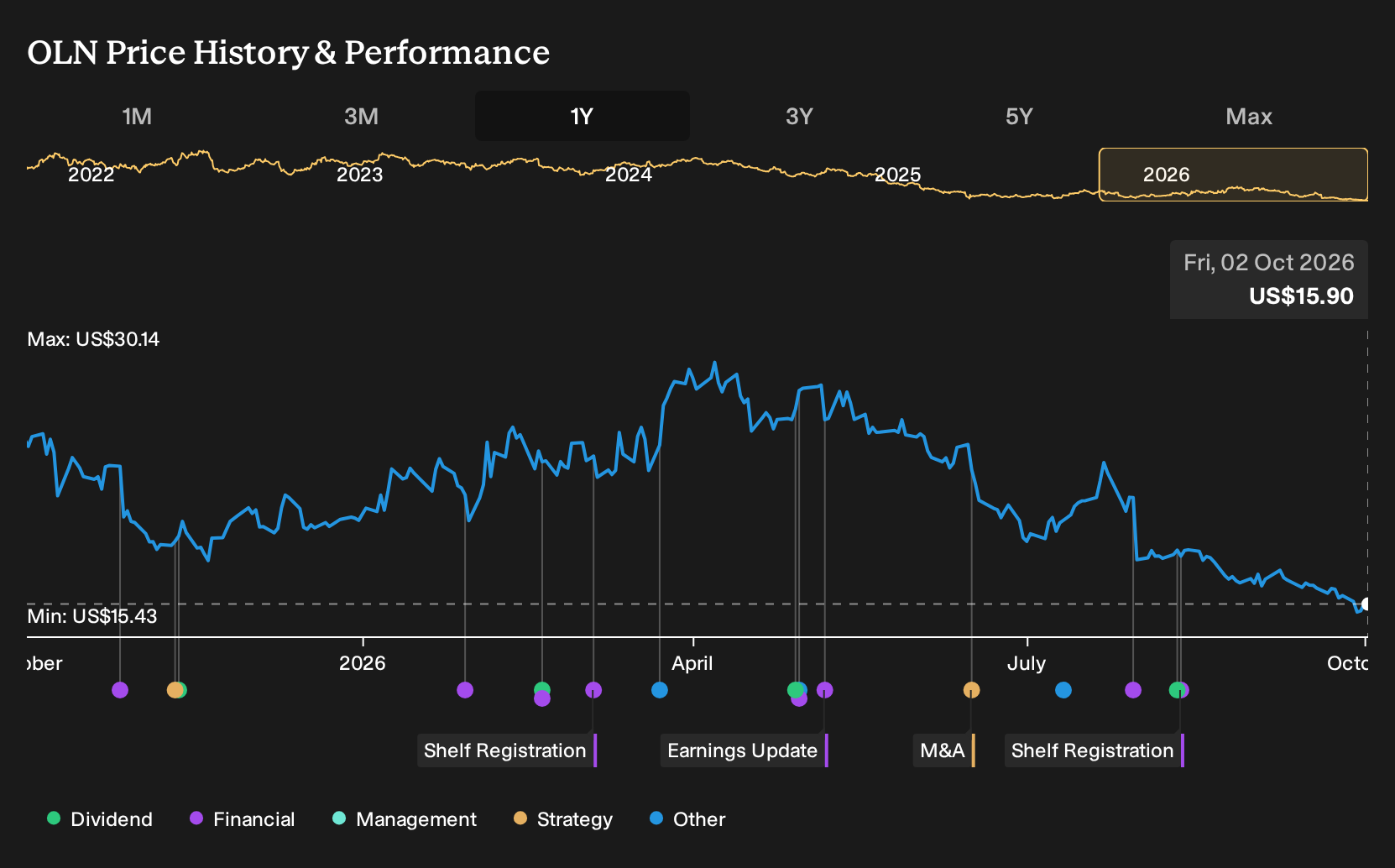
If you followed Olin this year, the story probably crystallized on the day it unveiled its all stock plan to merge with Huntsman and create a US$12.5b specialty chemicals group. That sort of headline can feel like the whole explanation for a painful ride. Holding Olin over the past year would have meant a 36.4% loss, including dividends. If you had bought on 2 October 2025, how much of that outcome was already hinted at in what was on record then?
The easy part of this move is behind Olin. Zero in on 31 high quality undervalued stocks for companies trading below our estimates.
What Olin Investors Were Actually Arguing About
The shares cost US$25.19 at the start of the period, and anyone looking at Olin then was really choosing between two clean stories about what came next.
The bullish narrative pointed to a Fair Value of US$31, a rough target price implied by its assumptions, built on global urbanization and electrification lifting PVC and specialty epoxy demand while Winchester ammunition earnings stayed strong.
The bearish view anchored on a Fair Value of US$23.47 and focused on persistent global overcapacity, especially in epoxy, and rising raw material and energy costs pressuring margins and cash generation.
What The Evidence Did To The Olin Debate
The big swing factor for Olin was the all stock Huntsman merger, which backed the bullish story about building a larger specialty platform but also raised integration and housing exposure worries that fit the cautious case. At the same time, Q2 2026 results showed revenue slipping to US$1.74b and the net margin moving further into loss, which left the profitability upgrade in both narratives unproven. Overall, the evidence cut both ways.
The clear hinge here was the profitability assumption. When you see any chemicals group promising a margin lift, track the reported net margin and segment earnings through at least a couple of quarters before trusting the story.
What You Would Be Paying For In Olin Today
Olin trades at US$15.9, and the selected Narrative’s Fair Value sits above that level, which reflects its own view rather than a settled fact. The core pitch is that structural cost cuts and a tilt toward higher margin specialties could make earnings less volatile over time.
Any buyer at today’s price would be leaning on the idea that these cost programs and mix shifts meaningfully improve margins and cash generation despite industry headwinds.
"Structural cost reduction initiatives (Beyond250 and Epoxy cost optimization) are expected to deliver significant operational savings, yielding an estimated $70 to $90 million run-rate benefit by the end of 2025 and additional structural cost reductions from the Stade, Germany facility in 2026; this should improve net margins and boost earnings quality."
That disagreement has a full argument behind it. → Uncover the higher Fair Value this Narrative argues for
Before The Next Story Makes Headlines
The next headline does not have to be where your research begins. Go straight to the companies and see whether a contrarian opportunity could be taking shape.
- Company 1 - 46% below our estimate - turns complex regulation, safety reviews, and disputes into recurring technical consulting work.
- Company 2 - 37% below our estimate - converts brownfield tiebacks into bundled subsea hardware sales and multi-year service contracts.
- Company 3 - 23% below our estimate - supplies high-performance GPU systems and tools that AI data centers standardize on.
Those are three of them. See the full list of 25 financially solid companies →
This article by Simply Wall St is general in nature. We provide commentary based on historical data and analyst forecasts only using an unbiased methodology and our articles are not intended to be financial advice. It does not constitute a recommendation to buy or sell any stock, and does not take account of your objectives, or your financial situation. We aim to bring you long-term focused analysis driven by fundamental data. Note that our analysis may not factor in the latest price-sensitive company announcements or qualitative material. Simply Wall St has no position in any stocks mentioned.
Have feedback on this article? Concerned about the content? Get in touch with us directly. Alternatively, email editorial-team@simplywallst.com