
- PRICING
- LIVE QUOTES
- LEARN
- HELP


EN
Visa (V) Stock Could Be 18% Undervalued Despite Stablecoin Settlement News
Visa has delivered strong long term gains, yet with the stock up 64.8% over the past 5 years the real question is whether that price still lines up with the returns the business earns on its capital. Recent swings in the share price and a stream of product news put fresh attention on how efficiently Visa turns each dollar it invests back into profits for shareholders.
- A 64.8% return over 5 years puts meaningful expectations on Visa, so the key issue is whether the company’s underlying returns on capital are strong enough to support that track record.
- Visa’s push into stablecoin settlement, AI driven payment flows and real time payout services can influence how much capital it needs to commit and the level of profitability it can achieve on that investment over time.
- If you'd rather focus on earnings, this one's for you. See why Visa's 29.4x P/E tells a different valuation story.
The stock’s next move may depend on whether the returns Visa earns on its capital are robust enough to justify where the shares trade today.
If you want a wider benchmark for what you are seeing with Visa’s returns on capital, a focused screen of 31 high quality undervalued stocks is a useful next stop in your research.
Is Visa Still Cheap on Excess Returns?
The Excess Returns model looks at how efficiently Visa turns shareholder equity into earnings above its own funding cost. On the latest inputs, book value sits at $18.87 per share and stable EPS is pegged at $16.70 per share, with a cost of equity of $1.64 per share. That leaves an excess return of $15.06 per share, built on an average return on equity of 74.62%, which is high for a large listed business. The framework also leans on a stable book value estimate of $22.38 per share as a long run anchor for those profits.
With the current share price at $359.33, the Excess Returns projections put Visa's estimated intrinsic value meaningfully above the current share price. Mastercard’s move to buy BVNK, and Visa’s hunt for a new stablecoin partner, help explain why the market is paying attention to how much value these newer payment rails can add on top of already strong excess profits. For readers who want to see the full set of assumptions and how that gap is calculated, the detailed Excess Returns model is here. Find out what Visa could be worth using our Excess Returns estimate.
The Visa Narrative: What Would Justify Today's Price?
Visa Narratives on Simply Wall St pick up where the excess returns puzzle leaves off, by spelling out which paths for growth, margins and earnings would need to hold for the stock to be worth materially more or meaningfully less than today’s price. Each scenario ties its number to a specific view on how Visa's growth profile, profitability and risk mix could shift over time, giving you a reference point you can revisit as new information comes through.
Community views on Visa split between those who see the network as underappreciated and those who think the quality is already fully priced in.
Bull case: 13% undervalued
"Rapidly accelerating adoption of value-added services (VAS), with VAS revenue up 26% year-over-year and expanding into areas such as AI, risk solutions, and open banking, is increasing Visa's mix of higher-margin business lines..."
Discover why this Narrative puts Visa at 13% undervalued.
Bear case: 28% overvalued
"While it appears too expensive for my tastes at present, it is a business I would be very comfortable owning at a more attractive entry point..."
Explore why this Narrative puts Visa at 28% overvalued.
One more Visa check that belongs next to the valuation work
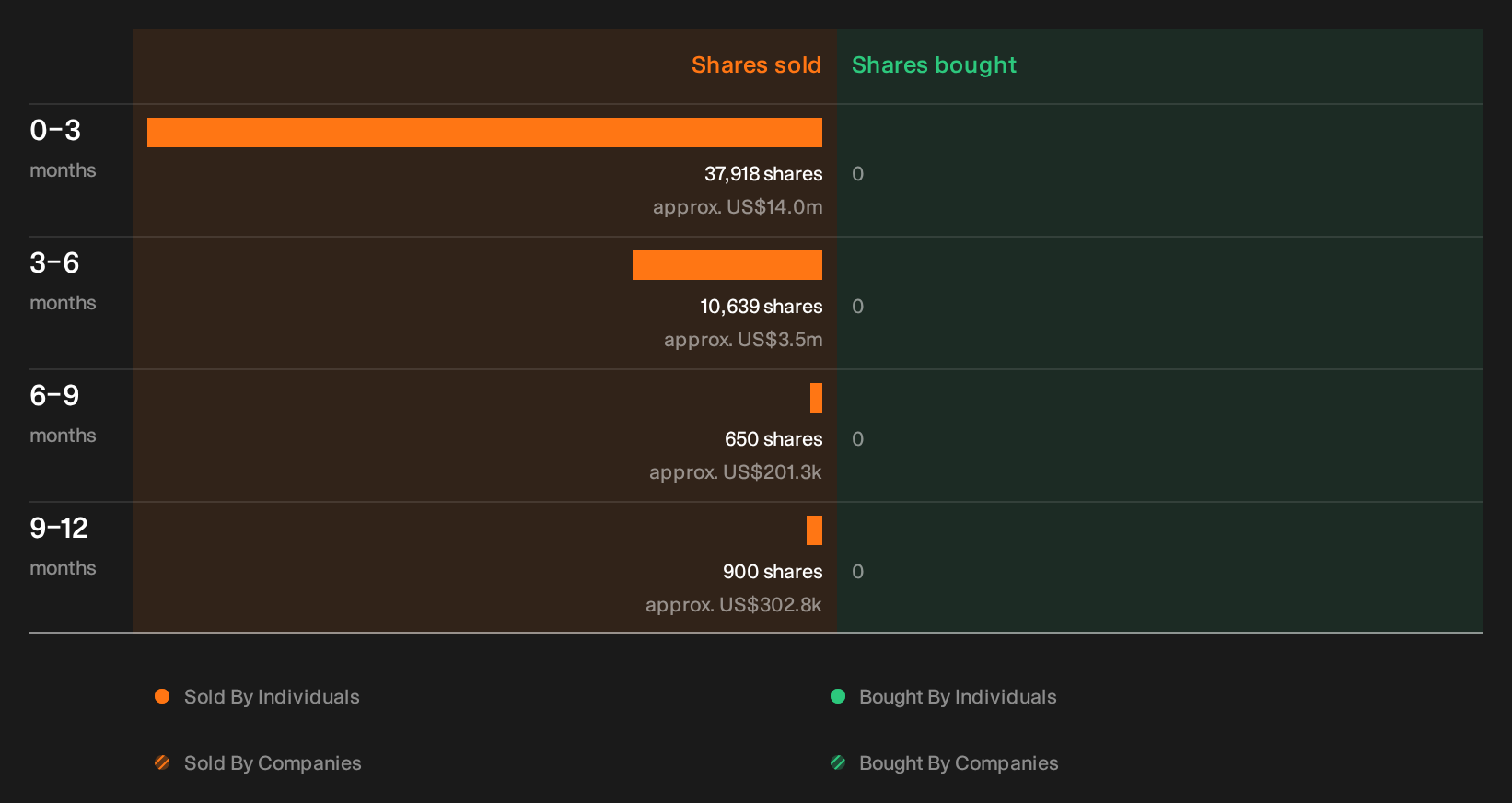
Price, profits and narratives paint a useful picture for Visa, but recent transactions by people inside the business add another layer that is worth reading closely. See the recent insider selling flagged for Visa.
This article by Simply Wall St is general in nature. We provide commentary based on historical data and analyst forecasts only using an unbiased methodology and our articles are not intended to be financial advice. It does not constitute a recommendation to buy or sell any stock, and does not take account of your objectives, or your financial situation. We aim to bring you long-term focused analysis driven by fundamental data. Note that our analysis may not factor in the latest price-sensitive company announcements or qualitative material. Simply Wall St has no position in any stocks mentioned.
Have feedback on this article? Concerned about the content? Get in touch with us directly. Alternatively, email editorial-team@simplywallst.com