
- PRICING
- LIVE QUOTES
- LEARN
- HELP


EN
C3.ai (AI) Fell 40% And The Hard Part Still Has To Hold
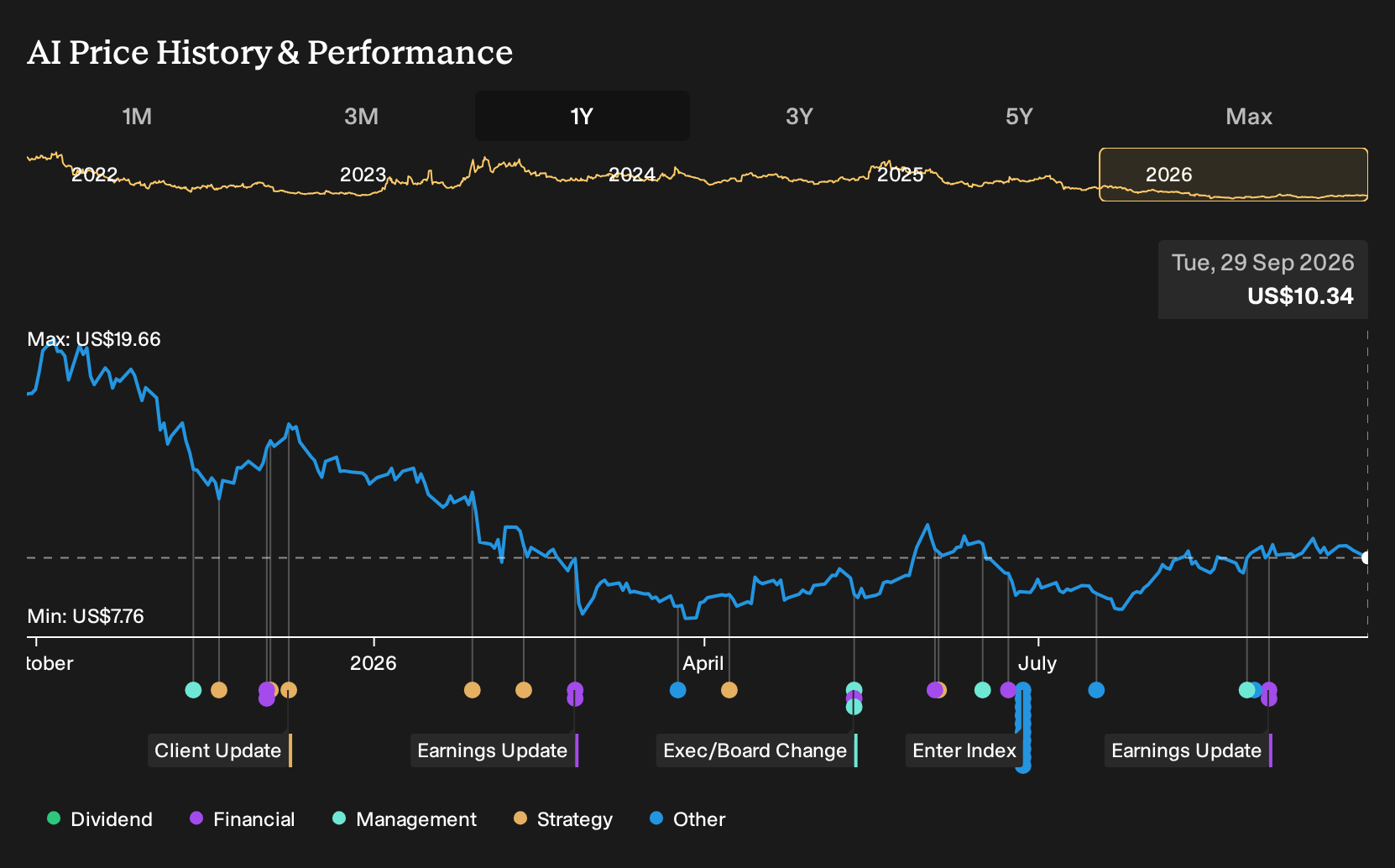
If you had backed C3.ai at the end of September 2025, you were buying into a sharp split between bullish hopes around hyperscaler partnerships and bearish worries about shrinking revenue and heavy losses. For C3.ai shareholders, the loss over the past year was 40.4%, including dividends. With that result now on the table, did the original case for 21.7% annual revenue growth, a 12.7% profit margin and a 62.4x future P/E leave out something crucial?
This theme extends beyond C3.ai. See which of 38 AI small caps may still merit a closer look.
The Two Competing Stories Around C3.ai
The shares cost US$17.32 at the start of the period, and anyone looking at C3.ai had to choose between two very different futures that still sounded reasonable at the time.
On the bullish side, one narrative pointed to a Fair Value of US$25, effectively the price implied if hyperscaler partnerships drove 21.7% annual revenue growth and margins moved toward 12.7% over roughly three years.
The more cautious view put Fair Value at US$14.67, reflecting concerns that revenue could decline 2.7% a year even if profitability eventually reached 12.4% and the business ended up relying heavily on partner led sales.
What The Evidence Did To The C3.ai Argument
C3.ai’s later updates pointed to steep revenue pressure, with Q1 2026 top line of US$70.261m followed by US$52.375m in Q1 2027, while net losses narrowed from US$116.769m to US$92.812m. Net margin moved the wrong way, slipping from -166.2% to -177.2%. That mix of falling sales and still deep losses challenged the bullish case built on 21.7% growth and future 12.7% profitability, and lent more weight to the cautious view.
The episode turned on one assumption investors could actually check. The optimistic story rested on rapid scaling through hyperscaler partnerships. Future readers can test a similar claim elsewhere by tracking reported revenue and net margin together, and seeing whether partner led sales show up as rising top line and a margin trend that moves steadily toward the target level, not away from it.
What You Would Be Paying For In C3.ai Today
C3.ai now trades at US$10.34, with this Narrative’s Fair Value sitting above that level based on its own set of assumptions rather than a settled verdict on the shares.
The argument focuses on hyperscaler partnerships, stronger bookings and cost cuts. A buyer today would need to believe subscription growth from joint sales can support a path toward materially better profitability.
"Key Takeaways: Expanding partnerships with hyperscalers and a unified sales approach are expected to contribute to subscription growth and improved profitability. New platform programs and high customer success rates are presented as factors supporting durable, high-margin growth as AI adoption increases across key industries."
That disagreement has a full argument behind it. → Uncover the higher Fair Value this Narrative argues for
Find Your Own Contrarian Opportunity
Passing on this one could have spared you a loss. Where might you find the opposite surprise? Start looking for companies whose prices leave room for a better outcome than investors expect. These three trade below our estimated value.
- Company 1 - 27% below our estimate - serves a large user base through a low cost, efficient digital banking platform.
- Company 2 - 40% below our estimate - scales a device trade in and refurbishment network as subsidies and eco policies support recommerce.
- Company 3 - 28% below our estimate - expands power equipment capacity and flexible multi fuel engines for rising data center and energy needs.
Three companies from the same screener. Open the full list of 32 companies trading below our estimate →
This article by Simply Wall St is general in nature. We provide commentary based on historical data and analyst forecasts only using an unbiased methodology and our articles are not intended to be financial advice. It does not constitute a recommendation to buy or sell any stock, and does not take account of your objectives, or your financial situation. We aim to bring you long-term focused analysis driven by fundamental data. Note that our analysis may not factor in the latest price-sensitive company announcements or qualitative material. Simply Wall St has no position in any stocks mentioned.
Have feedback on this article? Concerned about the content? Get in touch with us directly. Alternatively, email editorial-team@simplywallst.com