
- PRICING
- LIVE QUOTES
- LEARN
- HELP


EN
Japan Consumer Stocks Poised For A Food Inflation Reset
Japan is quietly shifting into a new inflation regime, with consumer prices, tax cuts on food and beverages, and future wage trends all pulling household budgets in new directions. That mix can punish some areas of the market while opening fresh avenues for others. This article examines what the latest CPI and tax signals might mean for domestic consumer stocks and highlights 3 Japanese companies most exposed to this story.
The three stocks covered next are just a starting sample from this theme. The full screen surfaced 25 more Japanese-listed consumer companies with equally compelling stories that are not covered below. To see the broader opportunity set and identify which ideas best fit your own criteria, head straight to the interactive Japan Domestic Consumer Stocks screener.
Kobe Bussan (TSE:3038)
Overview: Kobe Bussan runs Japan-focused Gyomu Super discount supermarkets and related food retail formats, supplying low-priced groceries and prepared foods.
Operations: Around ¥558.4b of revenue comes from the Gyomu Super business, with almost all of the ¥573.1b total generated in Japan.
Market Cap: ¥653.6b
Kobe Bussan provides focused exposure to Japanese household food spending through its discount Gyomu Super chain and related restaurants, at a time when domestic tax changes are directed at grocery baskets. The stock brings together earnings growth, high recurring food demand and an early indication of how shoppers respond if a single unseen pressure on margins changes direction.
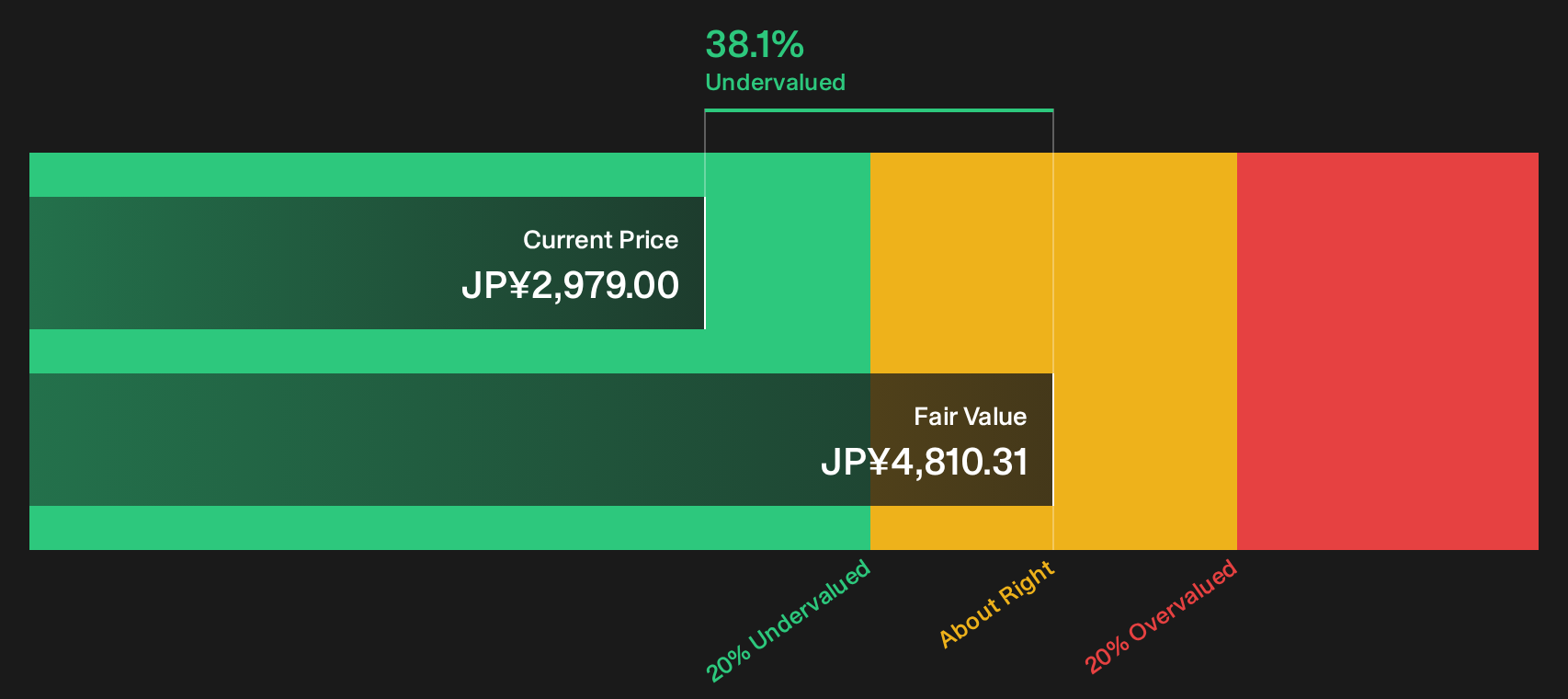
If that margin pressure is starting to flip, the DCF valuation analysis for Kobe Bussan shows where the current price could be out of sync with the cash flow story.
United Super Markets Holdings (TSE:3222)
Overview: United Super Markets Holdings runs Japanese supermarkets focused on everyday food and beverage baskets, closely aligned with the Japan Domestic Consumer Stocks theme.
Operations: United Super Markets Holdings generates about ¥1,003.1b from its supermarket business, with all revenue coming from shoppers in Japan.
Market Cap: ¥168.6b
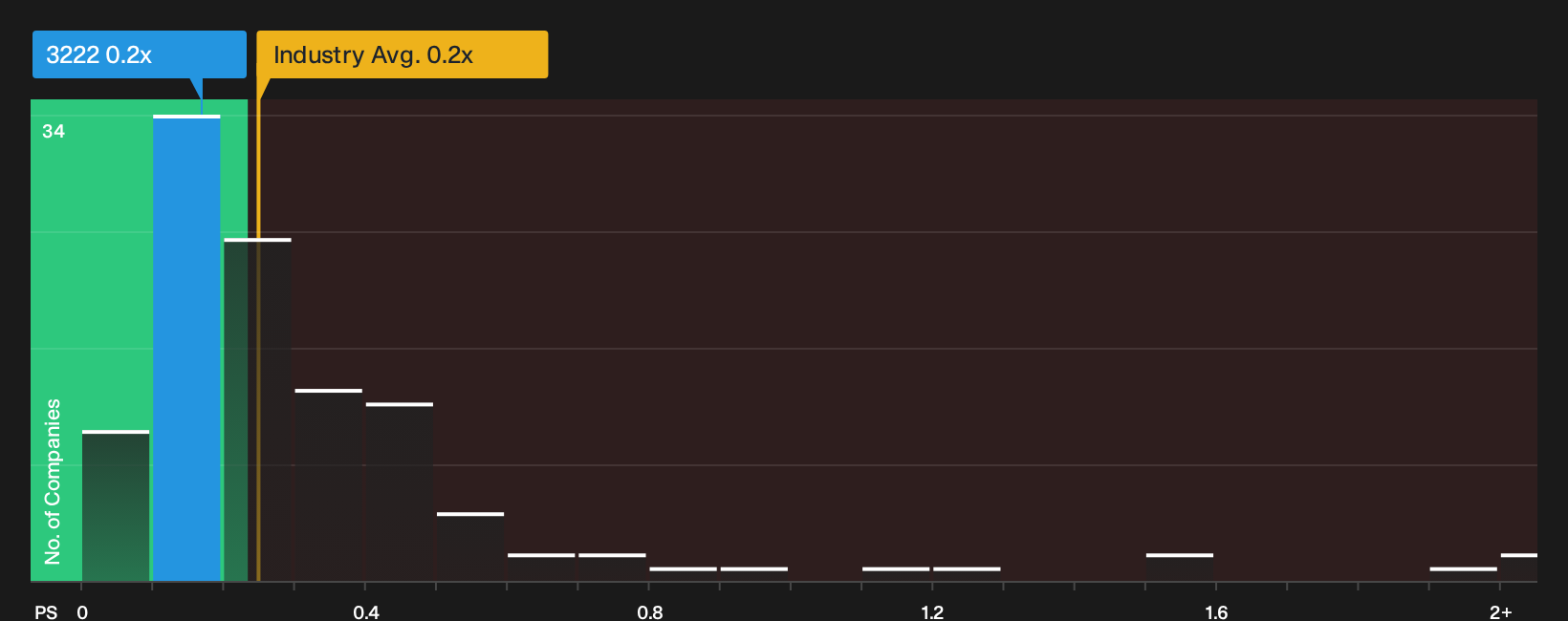
United Super Markets Holdings offers pure exposure to Japanese grocery spending, with a low 0.2x P/S ratio and food heavy sales that tie directly into the planned consumption tax cut and a more stable 2% inflation backdrop. However, the outcome hinges on what happens when a loss making balance sheet meets that potential uplift in household demand.
That balance sheet question is exactly what the analysis report for United Super Markets Holdings unpacks, so you can see where United Super Markets Holdings might be mispriced relative to its grocery footprint.
Blue Zones HoldingsLtd (TSE:417A)
Overview: Blue Zones Holdings Co.,Ltd. runs Japan-based supermarkets focused on fresh and packaged food, household staples, and related retail services.
Operations: The supermarket business generates ¥842.4b in revenue, all from customers in Japan. This provides fully domestic exposure to consumer spending.
Market Cap: ¥380.4b
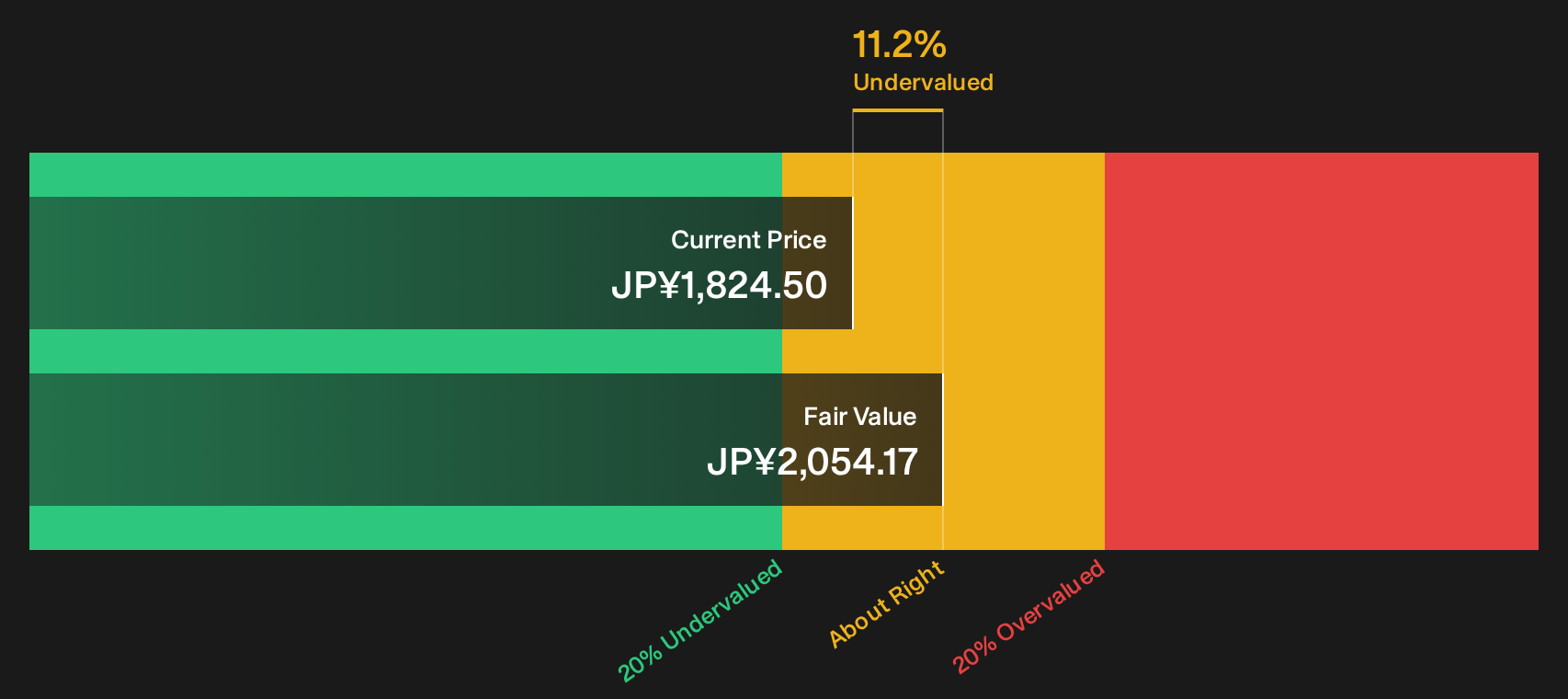
Blue Zones Holdings offers pure-play exposure to Japanese grocery baskets at a time when food tax cuts and a more predictable inflation path are relevant for how households spend. Earnings momentum, an 11.2% discount to estimated fair value and a domestic footprint tuned to everyday essentials put attention on how changes in cost pressures may affect supermarket margins.
Those shifting cost pressures are exactly what the DCF valuation analysis for Blue Zones HoldingsLtd helps you unpack so you can see where Blue Zones Holdings might be quietly decoupling from its fundamentals.
Seeking Fresh Alternatives Before They Fly
New ideas move first, prices move next. Spot breakouts and fresh momentum while they are still under the radar for now and act now.
- Target sturdier cash generators with resilient balance sheets before others catch on by scanning the curated list of solid balance sheet and fundamentals (22 results).
- Explore fast-moving growth stories in cutting edge automation by running through the focused 92 robotics and automation stocks.
- Consider potential yield and price momentum together by combing through a curated pool of income ideas in the 20 dividend fortresses.
This article by Simply Wall St is general in nature. We provide commentary based on historical data and analyst forecasts only using an unbiased methodology and our articles are not intended to be financial advice. It does not constitute a recommendation to buy or sell any stock, and does not take account of your objectives, or your financial situation. We aim to bring you long-term focused analysis driven by fundamental data. Note that our analysis may not factor in the latest price-sensitive company announcements or qualitative material. Simply Wall St has no position in any stocks mentioned.
Have feedback on this article? Concerned about the content? Get in touch with us directly. Alternatively, email editorial-team@simplywallst.com