
- PRICING
- LIVE QUOTES
- LEARN
- HELP


EN
The “eyes” and “brains” of physical AI are here! Huanchuang Technology (06802) full-stack self-developed sensing solution from consumer robots to industrial intelligent manufacturing
BYD's layout in the field of intelligent manufacturing is putting together a critical piece of the puzzle.
From investing in Pasini to complement tactile perception, to investing in Zhiyuan Robotics's collaborative machine capabilities, BYD's industrial landscape around embodying intelligence is becoming increasingly clear. And in the closed loop of “core components - complete machine - application scenario”, spatial perception - the robot recognizes the environment and the “visual base” for autonomous movement - is always a link that cannot be circumvented.
Now, this link is expected to be covered by a company that is about to land on the Hong Kong Stock Exchange.
The Zhitong Finance App learned that on September 30, Huanchuang Technology (06802) will be listed on the main board of the Hong Kong Stock Exchange. According to reports, Golden Link, a wholly-owned subsidiary of BYD, subscribed for its cornerstone share of about HK$110 million, with industrial capital sitting exclusively, clearly pointing at more than financial returns.
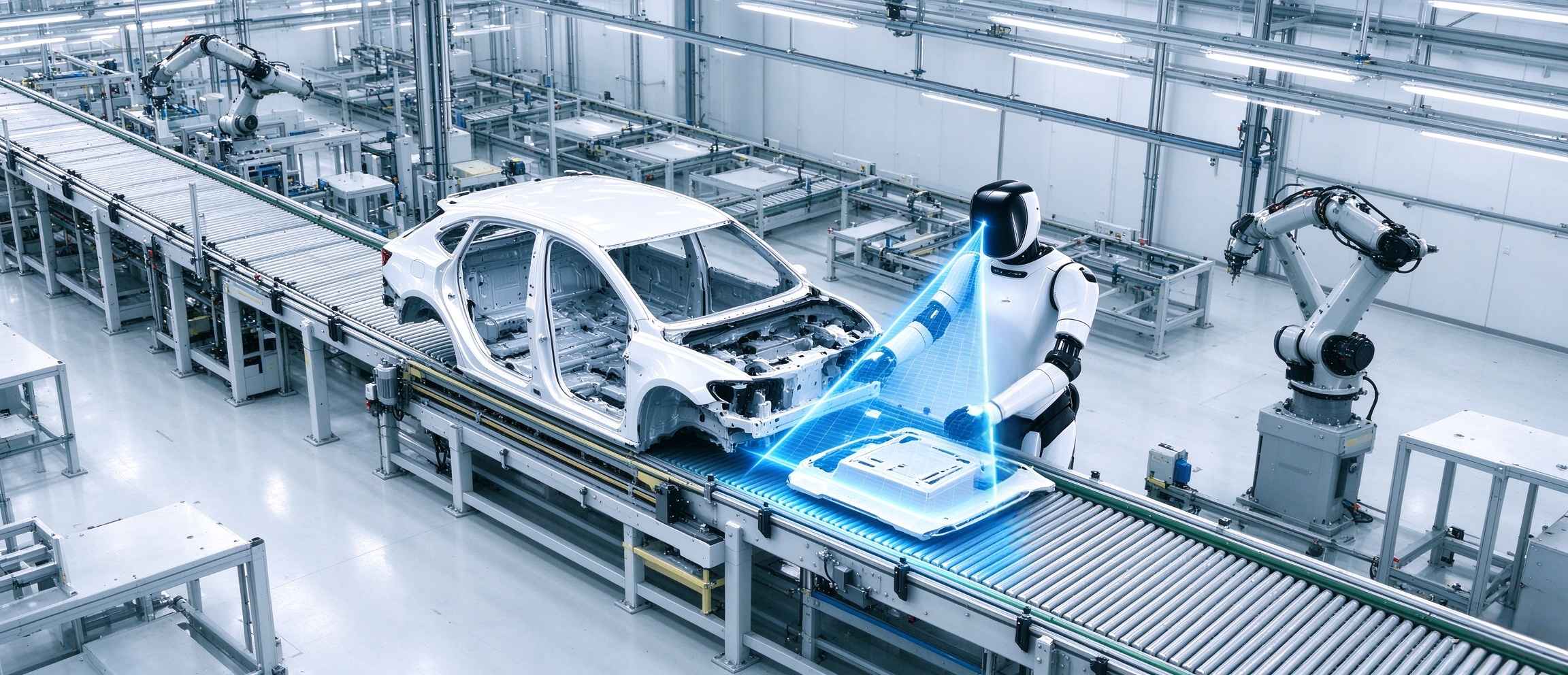
one. The “first kilometer” of physical AI: why is spatial perception critical?
In an intelligent technology stack, the big model is responsible for “thinking,” motion control is responsible for “moving,” and spatial perception is responsible for “seeing.” Robots must first understand where they are, what is around them, and how to reach the target before they can complete any meaningful physical task. This set of capabilities is the first gateway for physical AI to move from virtual to reality.
Huanchuang Technology has been deeply involved in this field for more than ten years. The company was founded in 2013. According to revenue in 2025, Huanchuang Technology is the world's number one intelligent robot spatial sensing solution, the world's largest lidar shipment volume, and the global market share has exceeded 50%. As of the last practical date, the cumulative shipment volume exceeded 39 million units, and the total number of lidar and linear laser sensors shipped in 2025 exceeded 10 million units and 5 million units, respectively. The two founders also have decades of technical experience and R&D background. They have backgrounds in mechanical manufacturing and semiconductor industries at Xi'an Jiaotong University, as well as research and development experience at Tsinghua University's precision instruments department and Chicago Bell Labs, respectively.
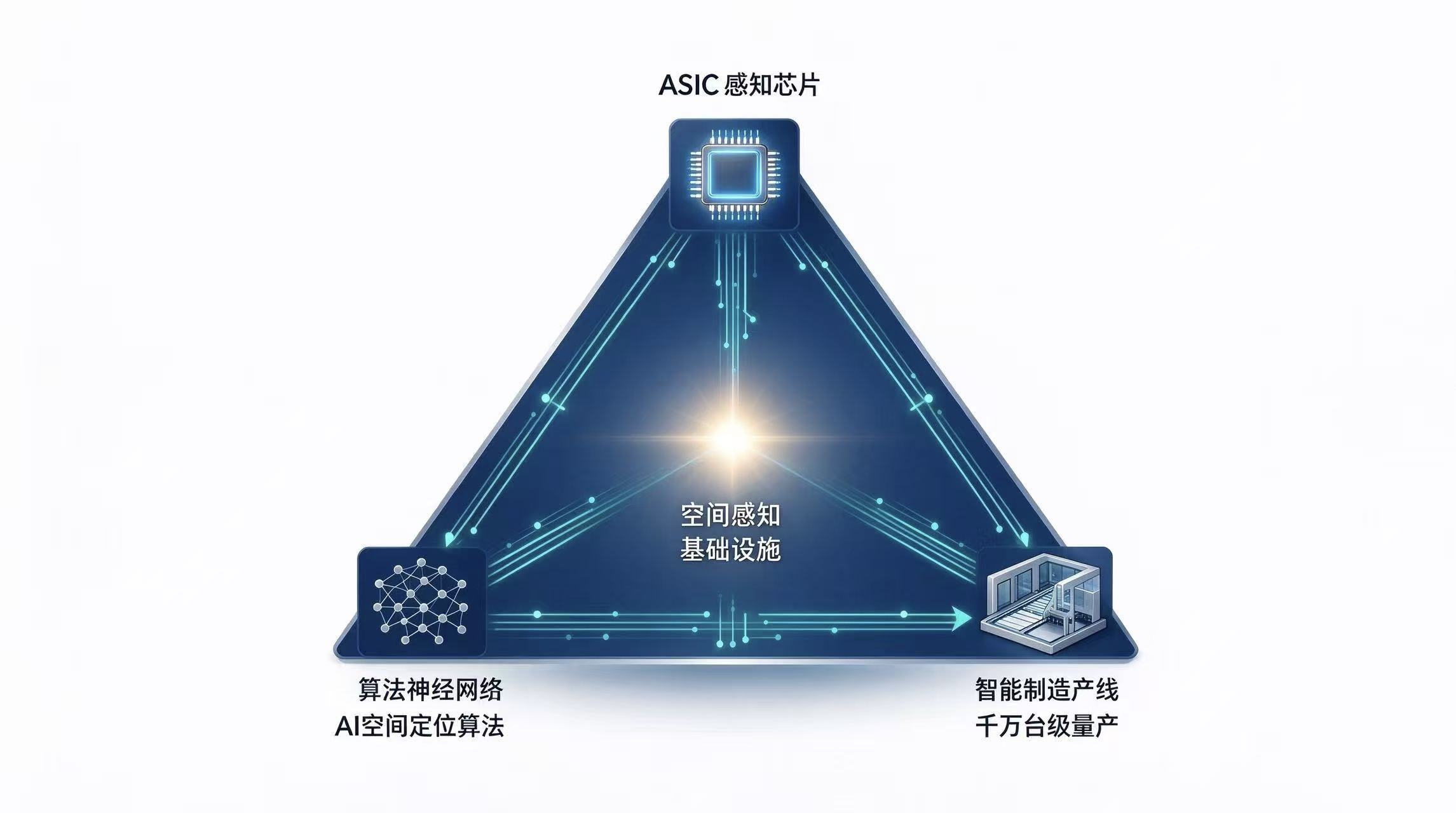
However, the real goal of the industrial capital side is the integrity of its technology chain — the company has broken through a complete self-development and closed loop of “ASIC chip - AI spatial positioning algorithm - high-precision optical design - mass production and manufacturing of tens of millions of units”. Huanchuang Technology is one of the few companies in the world that also has the ability to self-develop space-sensing AI algorithms and ASIC chips. Its self-developed sub-millimeter AI spatial data processing chip is equipped with more than 25 million terminal devices. It is the first company in China to achieve sub-millimeter positioning accuracy in a monocular large space, and the first company in the world to develop its own spatial positioning algorithm chip.
Algorithms determine the “IQ” of perception, chips determine the “efficiency” of perception, and mass production of tens of millions of units determines the “reliability” and “cost” of perception. The three are superimposed to form the core elements of spatial perception infrastructure in the physical AI era.
II. How can tens of millions of mass production capabilities be transferred to intelligent automobile manufacturing?
Consumer robots and industrial production line robots may seem to have very different scenarios, but the underlying requirements for spatial perception are in the same vein: high accuracy, high reliability, and large-scale delivery.
Robots require real-time mapping, dynamic obstacle avoidance, and autonomous recharging in the home environment, and face unstructured complex spaces. However, robots on automotive assembly lines need to complete positioning and grasping coordination in high-speed motion, which places higher demands on sensor consistency, anti-interference ability, and chip-side computing power. Huanchuang Technology's proven sub-millimeter positioning accuracy in consumer scenarios, the end-side processing efficiency of self-developed ASICs, and the refined quality control system of tens of millions of units are the scarce combination of capabilities in the industrial scene.
BYD's industrial layout provides room for imagination for this migration: embedded intelligent robots are highly homologous to the NEV industry chain, and technology, components and production line capabilities can be migrated and reused. At present, BYD has deployed more than 2,000 AI visual inspection nodes in core processes such as welding, painting, and assembly. AI collaborative robots undertake precise tasks such as car door installation and wiring, reducing cycle time by 15%. The prospectus also pointed out that the cooperation between BYD and Huanchuang points to the incremental market for industrial robots. Huanchuang's lidar and depth sensing technology are expected to expand into spatial sensing scenarios for industrial robots.
III. From home to industry: higher dimensional multiplexing of the same sensing base
The global robotic 3D vision sensing market is expected to reach RMB 11.7 billion by 2030 and rise further to RMB 152 billion by 2035. The number of AI+3D vision-guided general-purpose intelligent robot components installed is expected to increase from 301,000 units in 2025 to 239,900 units in 2030, and the penetration rate will increase from about 5.1% to 10.6%. As automobile manufacturing evolves to flexibility and intelligence, spatial sensing solutions with high accuracy, high reliability, and large-scale delivery are expected to become a key infrastructure in intelligent manufacturing systems.
Huanchuang Technology's technical reach has quietly expanded. According to the prospectus, the company will start investing in new technology and preliminary research of new business scenarios in 2024, and will officially come into contact with lawnmower robots, swimming pool robots and some fleet customers in 2025. According to market information, the company has sent samples and tests to a number of pool cleaning, grass cutting, and humanoid robot manufacturers, and has received non-binding order requests from 2 pool cleaning robot brands and 1 lawn mower robot customer, which is expected to bring in sales revenue in the future.
The expansion of these new scenarios is essentially the reuse of the same set of spatial perception capabilities in different dimensions. From household cleaning to outdoor mowing, from pool cleaning to industrial production lines, the robot's “visual base” needs to cope with increasing the complexity of the environment, but the underlying technical logic remains the same. Huanchuang Technology's fund-raising uses also clearly include optimizing 3D spatial perception AI algorithms and next-generation multi-sensor integrated physical robot sensing solutions.
Judging from the financial pace, Huanchuang Technology is at the point where scale effects are beginning to be unleashed. From 2023 to 2025, the company's revenue increased from 332 million yuan to 614 million yuan, with a compound growth rate of 35.9%, and achieved annual profit for the first time in 2025. In the first quarter of 2026, revenue increased 48.7% year-on-year to 196 million yuan, and net profit of 7.757 million yuan, 3.5 times that of the whole year of 2025. With the accelerated release of new categories such as dToF lidars and linear laser sensors, the physical AI product structure is moving from single to diversified.
BYD's cornerstone investment is probably just the beginning of this migration. In the process of physical AI moving from virtual to reality, spatial perception is the first gateway for robots to perceive the physical world. It took more than ten years for Huanchuang Technology to make a sub-millimeter chip the standard for more than half of the world's intelligent robots, and broader scenarios such as industrial intelligent manufacturing, physical robots, and XR are waiting to be empowered by the same technical base.
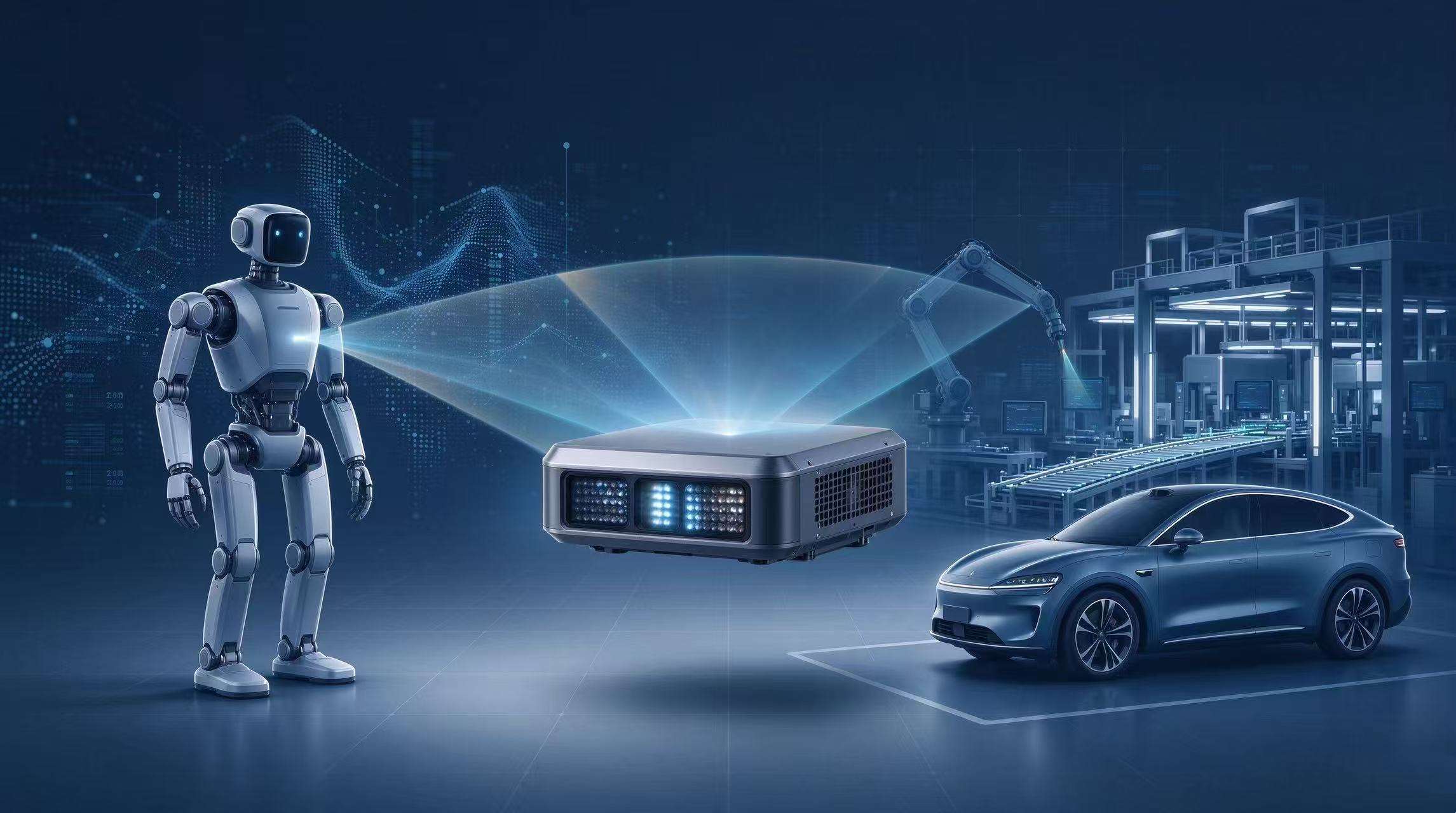
With the support of industry capital from leading car companies, Huanchuang Technology is expected to break out of the consumer robot circuit with a technical base of tens of millions of mass production and verification, open up a second growth curve in the field of intelligent automobile manufacturing, and become a perception infrastructure that cannot be ignored in the physical AI era.