
- PRICING
- LIVE QUOTES
- LEARN
- HELP


EN
Did FDA Approvals And Medicare Expansion Just Shift Eli Lilly's (LLY) Stock Narrative?
- Eli Lilly secured recent FDA approvals for Olumiant in adolescents with severe alopecia areata and once-weekly insulin Onswik for adults with type 2 diabetes, adding new indications across immunology and diabetes care.
- Medicare’s broader coverage of GLP-1 therapies, combined with uptake of Lilly’s obesity and diabetes medicines such as Mounjaro, Zepbound and Foundayo, reflects rising demand as the company expands manufacturing and partnerships.
- The focus now is on how Eli Lilly's investment narrative is influenced by Medicare-backed GLP-1 demand and recent U.S. FDA approvals.
Eli Lilly Investment Narrative Recap
To own Eli Lilly, you have to believe its GLP 1 and broader cardiometabolic portfolio can keep driving volume while management gradually reduces dependence on a few blockbuster products. The most important near term swing factor is still execution in obesity and diabetes as manufacturing ramps and payer coverage, including Medicare, evolves.
The recent approvals for Olumiant in adolescents with severe alopecia areata and once weekly insulin Onswik do not change that central catalyst but they do modestly broaden the product mix across immunology and diabetes care. The largest near term risk remains pricing and reimbursement pressure on GLP 1s as payers reassess costs.
The Onswik approval is the clearest recent event that ties back to the existing GLP 1 obesity and diabetes story. A once weekly basal insulin option gives Eli Lilly another tool in the same clinic visit where physicians already prescribe Mounjaro or other incretin therapies. This can help reinforce the firm’s overall diabetes footprint.
Operationally, Onswik adds a fresh product in a mature insulin category where convenience and adherence matter. The risk side is familiar. Any pressure on insulin pricing, competition from other weekly insulins or slow adoption from physicians could limit its impact, which would keep even more weight on GLP 1 performance as the key catalyst.
Eli Lilly's current analyst narrative points to forecast revenues of US$118.6b and earnings of US$49.8b by 2029, built on assumed yearly top line growth of 14.2% and an earnings increase of about US$23.1b from US$26.7b today.
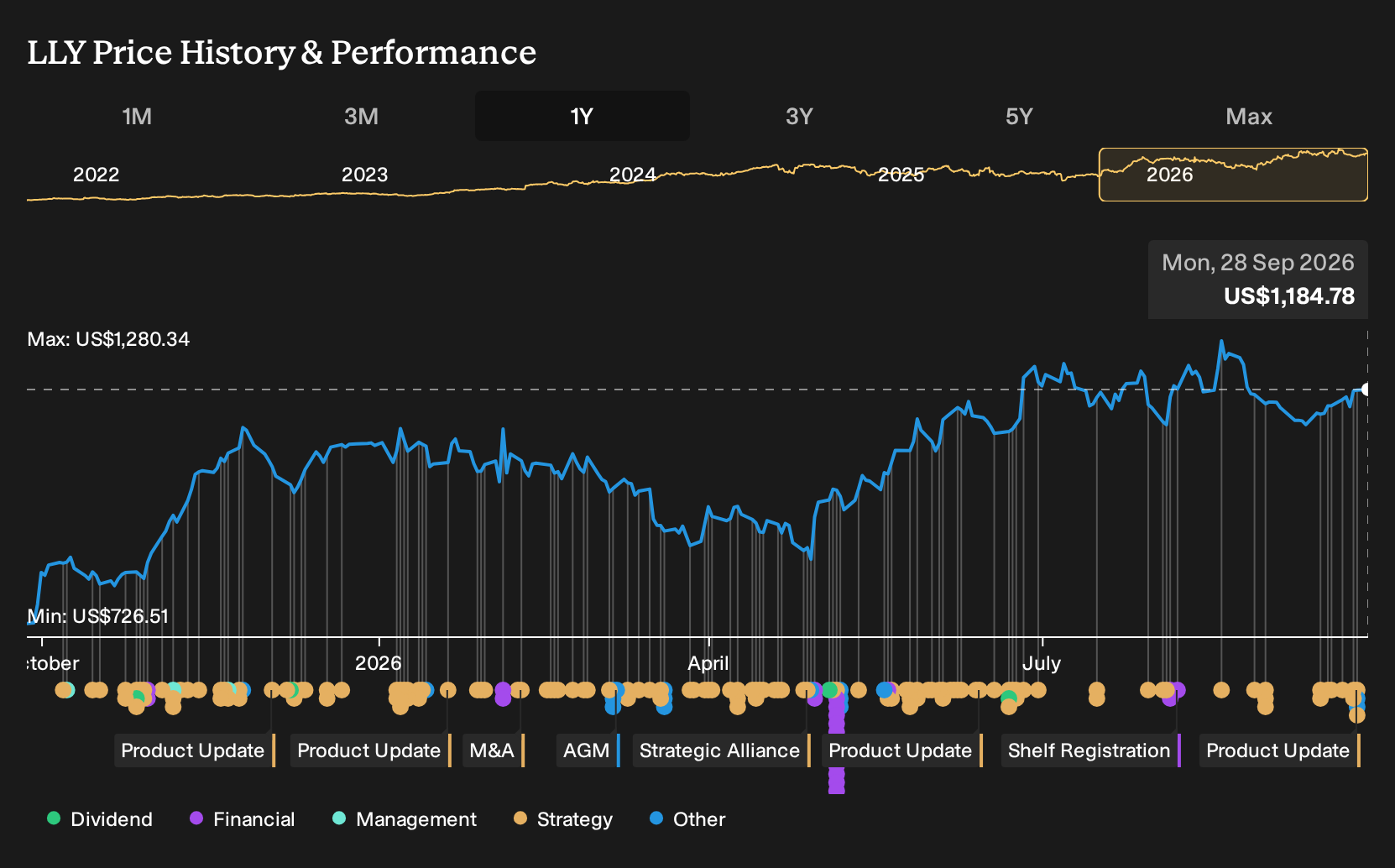
Uncover why Eli Lilly's fair value indicates a 12% potential upside to its current price, which could narrow quickly.
Exploring Other Perspectives
Some of the highest Eli Lilly forecasts lean into manufacturing scale as the real swing factor for GLP 1 demand, rather than new drug labels like Olumiant’s pediatric approval. Those bullish models were already baking in about US$137.7b of revenue and US$55.5b of earnings by 2029. That is a far more optimistic story than consensus, so treat it as just one of several viewpoints to compare as you weigh how this week’s news could shift expectations.
Explore 11 other Eli Lilly fair value estimates, including one that suggests as much as 41% potential increase from the current price.
Decide For Yourself
Don't just follow the ticker. Dig into the data and build a conviction that's truly your own.
- A great starting point for your Eli Lilly research is our analysis highlighting 3 key rewards and 1 important warning sign that could impact your investment decision.
- See our latest analysis for Eli Lilly. The report includes a comprehensive fundamental analysis summarized in a single visual, the Snowflake, making it easy to evaluate Eli Lilly's overall financial health at a glance.
Looking For More Ideas Beyond Eli Lilly?
If the Eli Lilly story has you thinking about how GLP 1 demand, reimbursement shifts and pipeline decisions shape long term returns, it can help to widen the search. Use the Simply Wall St Screener to find other businesses that fit the mix of quality, resilience and potential you want in your portfolio.
- If you want income that works harder for you, check out a curated set of 6 dividend fortresses that combine yield with a focus on staying power.
- For investors who care more about balance sheet strength than headlines, start with a list of solid balance sheet and fundamentals (25 results) so you can focus on companies built to handle stress.
- If you are hunting for future leaders before the crowd pays attention, scan through 16 high quality undiscovered gems and see which stories you want to research next.
This article by Simply Wall St is general in nature. We provide commentary based on historical data and analyst forecasts only using an unbiased methodology and our articles are not intended to be financial advice. It does not constitute a recommendation to buy or sell any stock, and does not take account of your objectives, or your financial situation. We aim to bring you long-term focused analysis driven by fundamental data. Note that our analysis may not factor in the latest price-sensitive company announcements or qualitative material. Simply Wall St has no position in any stocks mentioned.
Have feedback on this article? Concerned about the content? Get in touch with us directly. Alternatively, email editorial-team@simplywallst.com