
- PRICING
- LIVE QUOTES
- LEARN
- HELP


EN
3 AI Infrastructure Stocks Facing Higher Rates And Rising Data Center Demand
Long-term yields are jumping, energy markets are on edge, and the Federal Reserve is keeping rates higher for longer. That mix pressures today’s stock prices but also creates a reset in how future cash flows are valued. Investors watching AI infrastructure spending rise alongside borrowing costs face a rare fork in the road. This article examines three stocks exposed to these crosscurrents and explains how their reactions to the news event might be relevant to your portfolio.
The stocks covered next are only a small sample of this theme, and the full screen surfaced more than 200 additional AI infrastructure enablers with equally compelling business stories that are not detailed here.
If you want to identify, compare, and analyze potential high-conviction ideas across data centers, semiconductors, and power equipment, head straight into the AI Infrastructure Enablers (Data Centers, Semiconductors, and Power Equipment) screener
Nanya Technology (TWSE:2408)
Nanya Technology plugs directly into the AI infrastructure theme through its DRAM and related memory lines that feed servers, networking hardware, and data center equipment, giving you exposure to the picks and shovels side of AI demand rather than consumer-facing applications.
Nanya Technology develops and manufactures DRAM and other memory products for uses from home electronics to enterprise servers and AI data centers. Most revenue comes from its Manufacturing Division at about NT$180.2b, with the Overseas Sales Division adding roughly NT$64.6b. The stock’s market value is around NT$1.7t.
"The company expects a 30% year-to-year increase in bit shipments, driven by the introduction of new technologies like 16-gigabit DDR5, aligning with the rising demand for AI-related applications."
For long-term holders, what happens to pricing power if a single unseen pressure alters how quickly that AI-linked demand actually converts into profitable memory volume?
If that pressure point matters to you, read the full narrative for Nanya Technology to see how Nanya Technology’s AI memory story could be accelerating or quietly stalling.

CXMT (SHSE:688825)
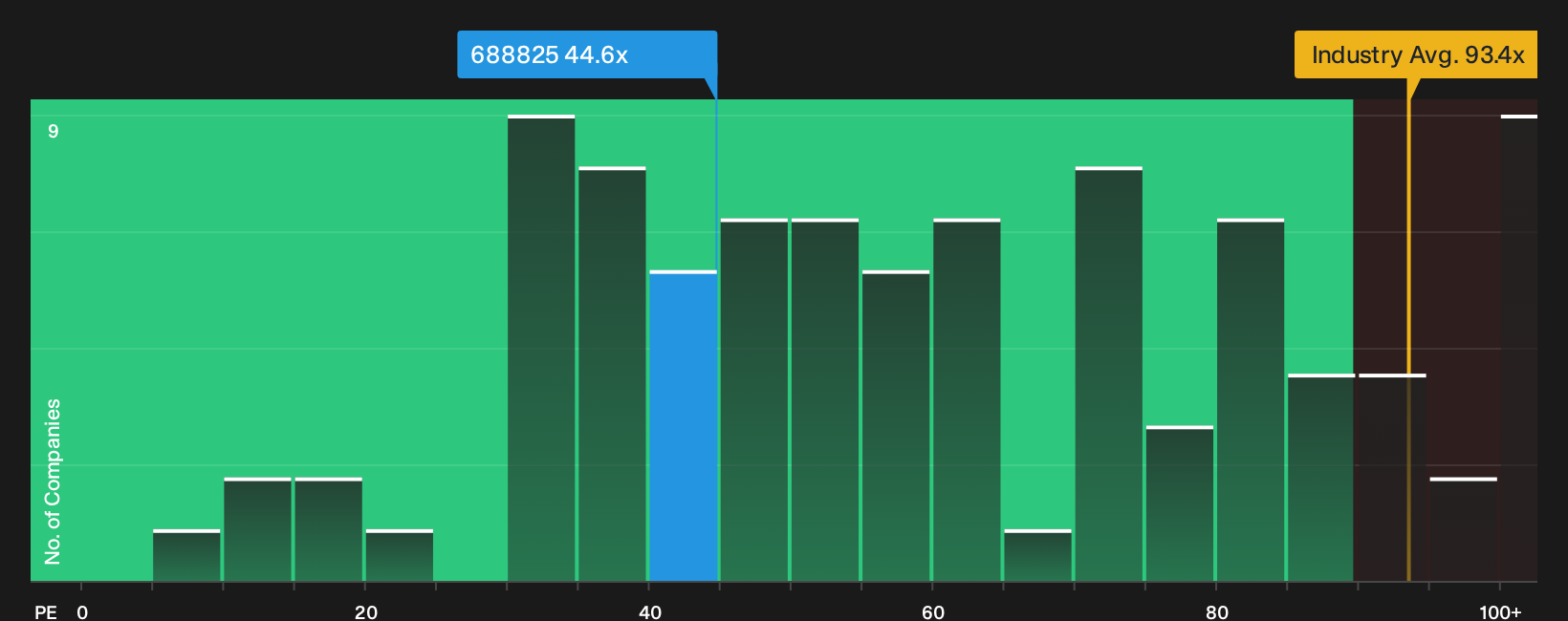
CXMT produces DRAM chips such as DDR4, DDR5 and LPDDR products that sit inside AI data center servers, mobile devices, PCs and smart cars, tying it closely to the AI infrastructure theme. The company carries a market value of about CN¥3,652.2b.
AI data centers consume large amounts of memory, and CXMT’s DRAM focus is directly linked to that spending. Its P/E of 44.6x is below many Chinese semiconductor peers, which places more emphasis on how one unresolved funding and competition pressure may influence future pricing power.
That unresolved pressure is exactly why the DCF valuation analysis for CXMT could be useful for you, particularly if headline multiples are masking the real story.
Intel (INTC)
Intel is a direct play on the AI infrastructure buildout, supplying CPUs and data center chips while also pushing into foundry services that manufacture the hardware other AI suppliers rely on.
"Intel is focusing on flattening its organizational structure to enhance agility, make swifter decisions, and foster innovation, which could lead to improved product development and competitive advantage, positively impacting future revenue and earnings growth."
What really moves the needle from here is how one less obvious pressure shapes the payoff from that AI and foundry push.
Intel’s US$64.6b market cap reflects a broad compute platform that spans client PCs, data center and AI products, and a growing Intel Foundry arm. Revenue is concentrated in client and AI focused chip groups that together contribute more than US$53b.
That hidden pressure is exactly where the story gets interesting, and the full narrative for Intel shows how Intel’s AI and foundry push could be accelerating or quietly decoupling expectations.

Seeking Fresh Alternatives Before They Fly
Market momentum can flip quickly, and the most interesting breakouts rarely stay under the radar for long. Scan fresh ideas before the crowd catches on and consider opportunities at an earlier stage.
- Identify cash generative companies before momentum stories are fully reflected in valuations by running your filter through the 198 high quality undervalued stocks while it still highlights potentially mispriced quality.
- Focus on resilient balance sheets and aim to reduce blow-up risk by scanning the curated list of solid balance sheet and fundamentals (202 results) before spreads widen and funding costs increase.
- Explore structural infrastructure themes by checking the curated 39 power grid technology and infrastructure stocks while demand stories are still developing and prices have not fully adjusted.
This article by Simply Wall St is general in nature. We provide commentary based on historical data and analyst forecasts only using an unbiased methodology and our articles are not intended to be financial advice. It does not constitute a recommendation to buy or sell any stock, and does not take account of your objectives, or your financial situation. We aim to bring you long-term focused analysis driven by fundamental data. Note that our analysis may not factor in the latest price-sensitive company announcements or qualitative material. Simply Wall St has no position in any stocks mentioned.
Have feedback on this article? Concerned about the content? Get in touch with us directly. Alternatively, email editorial-team@simplywallst.com