
- PRICING
- LIVE QUOTES
- LEARN
- HELP


EN
How Dam Risk Reclassification Will Impact Packaging Corp Stock Investors
- Packaging Corporation of America recently submitted a Dam Failure Analysis and Hazard Potential Assessment for the Grandmother Falls Hydroelectric Project to FERC, recommending that the site's hazard classification shift from high to low based on new technical findings.
- This potential reclassification could reshape views on operational risk, compliance burden, and long term liability exposure tied to the hydroelectric asset within Packaging Corporation of America's broader industrial footprint.
- We will now explore how Packaging Corporation of America's investment narrative might shift if regulators accept the proposed lower dam hazard classification.
See how Packaging Corporation of America's hydro risk reassessment compares with other utilities and industrials that score well on balance sheet strength inside our curated list of solid balance sheet and fundamentals (24 results)
Packaging Corporation of America Investment Narrative Recap
To own Packaging Corporation of America, you need to be comfortable with a cyclical packaging and paper business that leans on pricing, mix, and efficiency projects like the Glendale, Arizona box plant to support earnings. The short term story still hinges on how demand and box shipments track against expectations and whether margin pressure from costs can be contained.
The Grandmother Falls dam reclassification request sits in the background of that thesis. Even if FERC accepts a lower hazard rating, the effect on near term catalysts around volumes, pricing, and maintenance driven downtime looks limited. The bigger near term risk remains weaker containerboard and paper volumes or further cost inflation.
This new dam failure analysis submission is the disclosure most connected to the current news. It indicates Packaging Corporation of America is updating technical risk work on a non core hydro asset that supports its broader industrial footprint. The focus sits on methodology, hydraulic modelling, and documentation for regulators rather than changing operating guidance.
If FERC concurs with a lower hazard classification, investors will probably view it through the lens of long dated risk, not this year’s earnings drivers. Any incremental relief in perceived liability would sit alongside existing issues like higher debt levels, past one off losses, and mixed margin trends, which still frame the key execution watchpoints.
Packaging Corporation of America's narrative projects US$11.2b revenue and US$1.5b earnings by 2029. This assumes 5.7% yearly revenue growth and about a US$812.6m earnings increase from current earnings of US$687.4m.
Uncover why Packaging Corporation of America's fair value indicates an 8% potential upside to its current price that could narrow quickly.
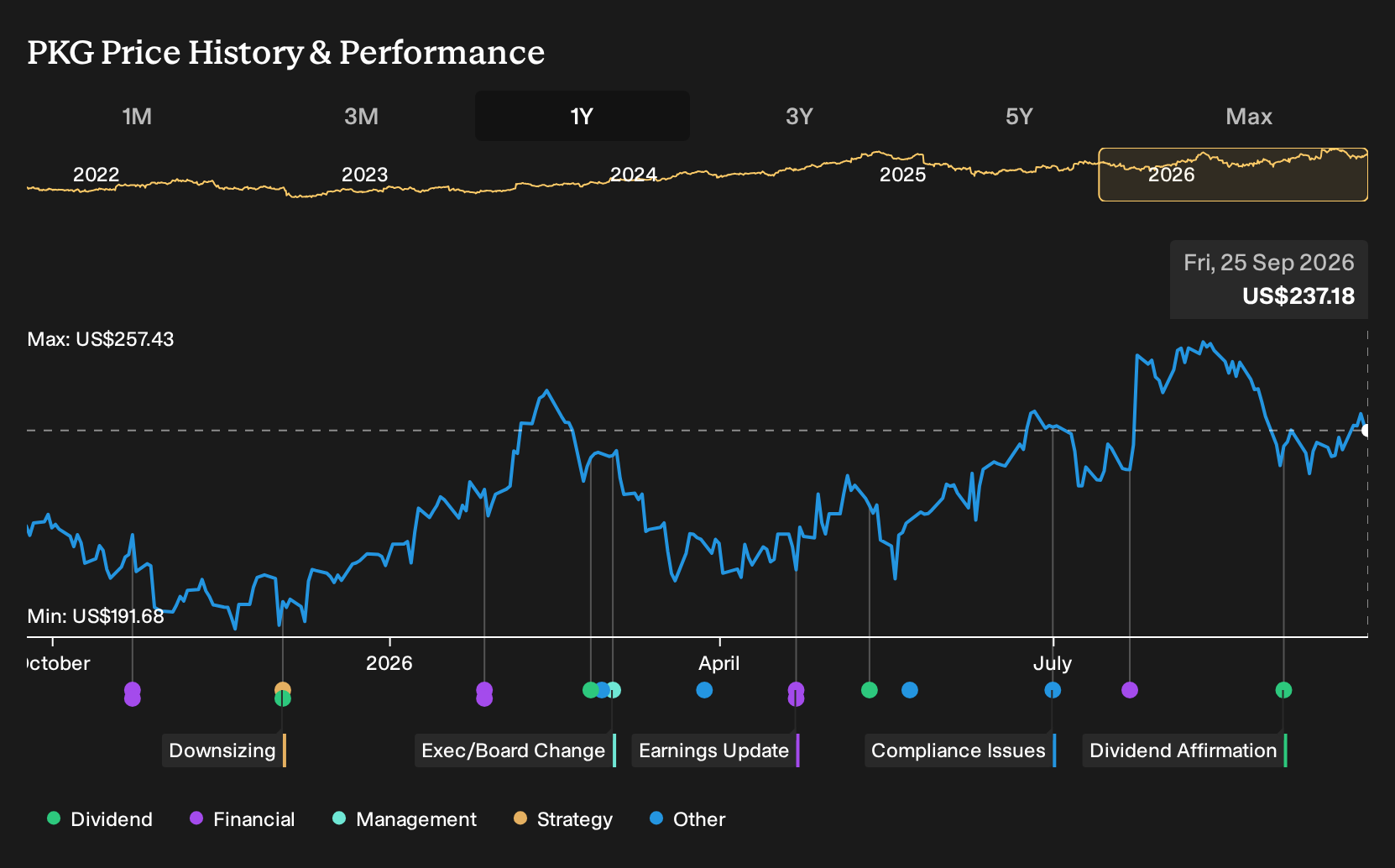
Exploring Other Perspectives
One alternate storyline around Packaging Corporation of America is margin pressure rather than hydro risk. The most cautious analysts were penciling in revenue of about US$11.2b and earnings near US$1.4b by 2029, with a lower 14.5x P/E. If FERC accepts a lower dam hazard rating, that view could shift. You can compare both narratives and decide which assumptions feel more reasonable.
Explore 2 other Packaging Corporation of America fair value estimates, including one that suggests as much as 18% downside from the current price.
Form Your Own Verdict
Don't just follow the ticker; dig into the data and build a conviction that's truly your own.
- A great starting point for your Packaging Corporation of America research is our analysis highlighting 3 key rewards and 4 important warning signs that could impact your investment decision.
- See our latest analysis for Packaging Corporation of America. The report includes a comprehensive fundamental analysis summarized in a single visual, the Snowflake, making it easy to evaluate Packaging Corporation of America's overall financial health at a glance.
Looking For More Investment Ideas Beyond Packaging Corporation of America?
If you want to round out your view beyond Packaging Corporation of America, it can help to scan for other businesses with balance sheets, cash flows, or income streams that better match your risk tolerance. The Simply Wall St Screener is built for that kind of targeted hunt, so you can move from a single ticker to a watchlist that fits your own playbook.
- For investors who want potential mispricing paired with financial quality, start by reviewing 32 high quality undervalued stocks that currently clear strict fundamentals filters.
- If capital preservation and steadier profiles matter more to you than headline growth, filter for companies that qualify as 30 resilient stocks with low risk scores and see which ones fit your comfort zone.
- Those hunting for strong financial foundations and resilient funding profiles can focus on our list of solid balance sheet and fundamentals (24 results) to spot candidates for deeper research.
This article by Simply Wall St is general in nature. We provide commentary based on historical data and analyst forecasts only using an unbiased methodology and our articles are not intended to be financial advice. It does not constitute a recommendation to buy or sell any stock, and does not take account of your objectives, or your financial situation. We aim to bring you long-term focused analysis driven by fundamental data. Note that our analysis may not factor in the latest price-sensitive company announcements or qualitative material. Simply Wall St has no position in any stocks mentioned.
Have feedback on this article? Concerned about the content? Get in touch with us directly. Alternatively, email editorial-team@simplywallst.com