
- PRICING
- LIVE QUOTES
- LEARN
- HELP


EN
Oil Price Spike Could Be A Game Changer For Chevron Stock (CVX)
- Chevron is back in focus after failed U.S. Iran peace talks pushed oil prices higher, while its CEO flagged an entrenched fuel supply crunch with limited buffers in the global energy system.
- The combination of tighter fuel markets and Chevron’s long running focus on cash generating upstream and refining assets highlights how exposed its earnings remain to swings in crude and product pricing.
- We will now look at how this tighter fuel backdrop could reshape Chevron’s investment narrative around cash flow resilience.
Scan beyond Chevron to see how other energy producers are positioned for this tight fuel setup with our hand-picked 40 power grid technology and infrastructure stocks
Chevron Investment Narrative Recap
To own Chevron, you need to believe its integrated oil and gas engine can keep turning commodity swings into steady cash. The current fuel squeeze and higher crude prices support that story on the surface, since the business is highly geared to upstream production and refining margins. The short term catalyst remains operational delivery in core basins like the Permian and successful absorption of recent acquisitions, rather than daily moves in oil.
The biggest near term risk sits in execution and demand volatility. Management is juggling record output, a tighter fuel system and ongoing cost programs while facing analyst expectations for revenue to drift lower over time. If global fuel demand weakens faster than Chevron ramps efficiency and portfolio upgrades, free cash flow resilience could come under more pressure than the recent pricing boost suggests.
The clearest hook into the current backdrop is Chevron’s emphasis on large, low cost resource positions combined with record production growth in the Permian and from the Hess acquisition. A tighter global fuel setup and higher diesel prices directly affect how valuable these barrels are to the business. When physical markets strain, a company with scale production and refinery exposure tends to see bigger swings in operating cash generation.
Those same projects are also at the center of the main catalysts investors are watching. Management targets lower capital intensity in the Permian by 2026 and has already delivered US$3b of annual cost savings. Progress against these goals, plus evidence that Hess integration and Venezuelan joint ventures stay on schedule, will likely matter more for Chevron than short bursts of oil price strength driven by geopolitics.
Chevron's current analyst narrative points to forecast revenue of US$199.4b and projected earnings of US$25.3b by 2029, based on an assumed 1.6% yearly decline in revenue and an earnings increase of about US$4.7b from US$20.6b today.
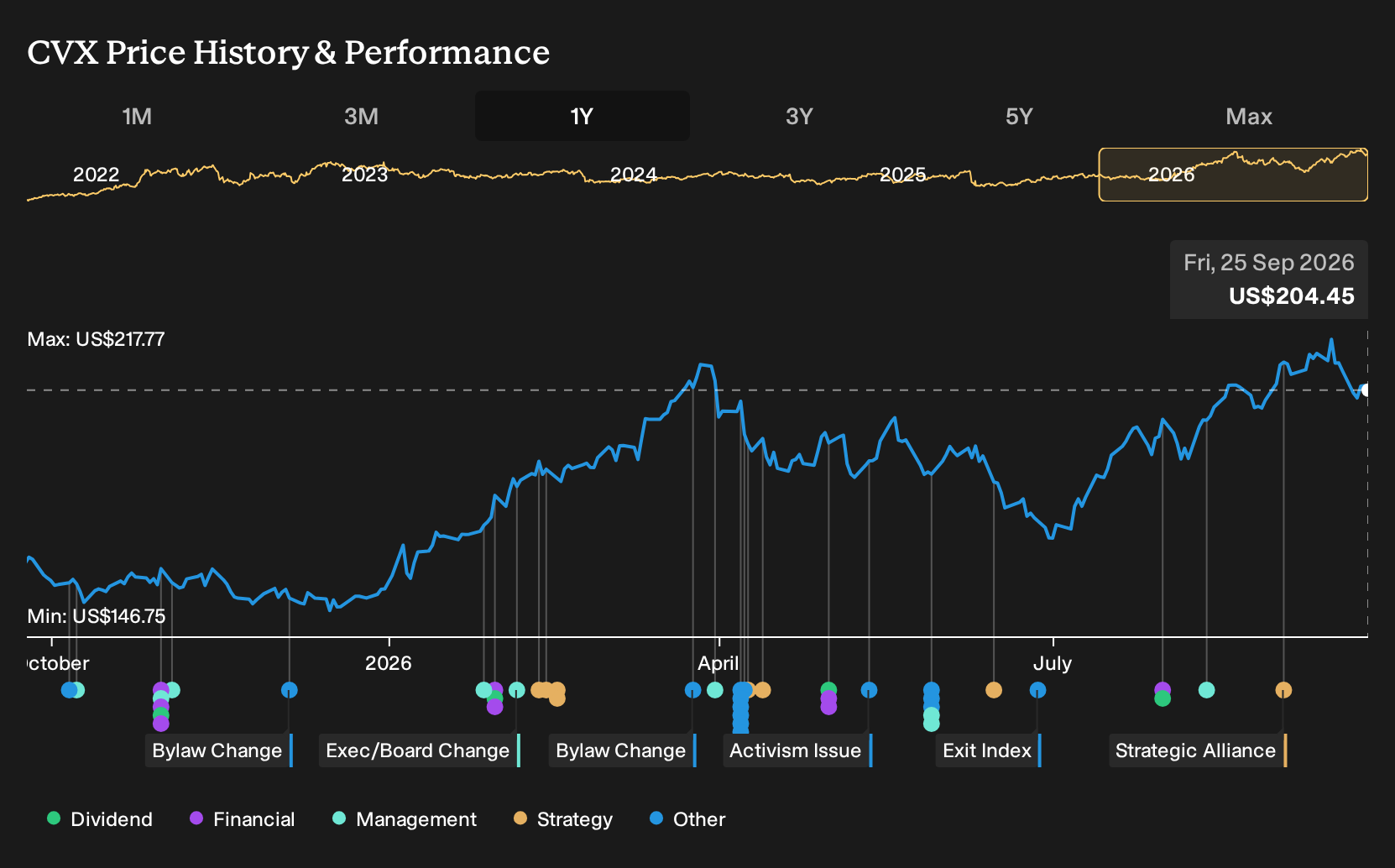
Discover why Chevron's fair value points to a 9% potential upside from its current price, which investors may see realized sooner than anticipated.
Exploring Other Perspectives
Across 3 fair value estimates from the Simply Wall St Community, Chevron’s range runs from about US$223 to more than US$350 per share, which shows how far private investors can stretch on upside or downside. Factor in today’s failed U.S. Iran talks, higher oil and bond yields, and you get an even wider spread of potential outcomes to weigh.
Explore 2 other Chevron fair value estimates, including one that suggests potential upside of as much as 71% from the current price!
The Verdict Is Yours
Disagree with existing narratives? Extraordinary investment outcomes rarely come from following the herd, so consider your own analysis and instincts.
- A great starting point for your Chevron research is our analysis highlighting 3 key rewards and 1 important warning sign that could impact your investment decision.
- See our latest analysis for Chevron. The report includes a comprehensive fundamental analysis summarized in a single visual, the Snowflake, making it easier to evaluate Chevron's overall financial health at a glance.
Looking For More Investment Ideas Beyond Chevron?
Once you have a view on Chevron, it can help to compare it with other opportunities that fit different risk, income, or balance sheet profiles using the Simply Wall St Screener.
- For investors who want potential mispricing combined with quality fundamentals, scan through 32 high quality undervalued stocks that already pass cash flow and balance sheet checks.
- If dependable income is a priority, focus on companies in the 8 dividend fortresses that pair higher yields with an emphasis on resilience.
- For a calmer ride through market swings, filter for businesses in the 30 resilient stocks with low risk scores that score well on financial strength and volatility.
This article by Simply Wall St is general in nature. We provide commentary based on historical data and analyst forecasts only using an unbiased methodology and our articles are not intended to be financial advice. It does not constitute a recommendation to buy or sell any stock, and does not take account of your objectives, or your financial situation. We aim to bring you long-term focused analysis driven by fundamental data. Note that our analysis may not factor in the latest price-sensitive company announcements or qualitative material. Simply Wall St has no position in any stocks mentioned.
Have feedback on this article? Concerned about the content? Get in touch with us directly. Alternatively, email editorial-team@simplywallst.com