
- PRICING
- LIVE QUOTES
- LEARN
- HELP


EN
3 Remote Work Stocks Built For The Digital Nomad Economy
Remote work is no longer a quirky lifestyle choice. It is helping some Americans trade cramped rentals for European homes paid in cash and monthly costs that feel almost unreal compared with U.S. cities. That shift pulls money toward visas, travel, fintech and platforms that keep cross-border workflows alive. This article unpacks three stocks exposed to that story, and why their fortunes may rise or fall with the digital nomad economy.
The three stocks that follow are just a sample of the idea, and the full screen surfaced 15 more companies with equally grounded remote work and digital nomad narratives that are not covered here. To identify and analyze the highest conviction angles in this theme, go straight to the Remote Work and Digital Nomad Economy screener.
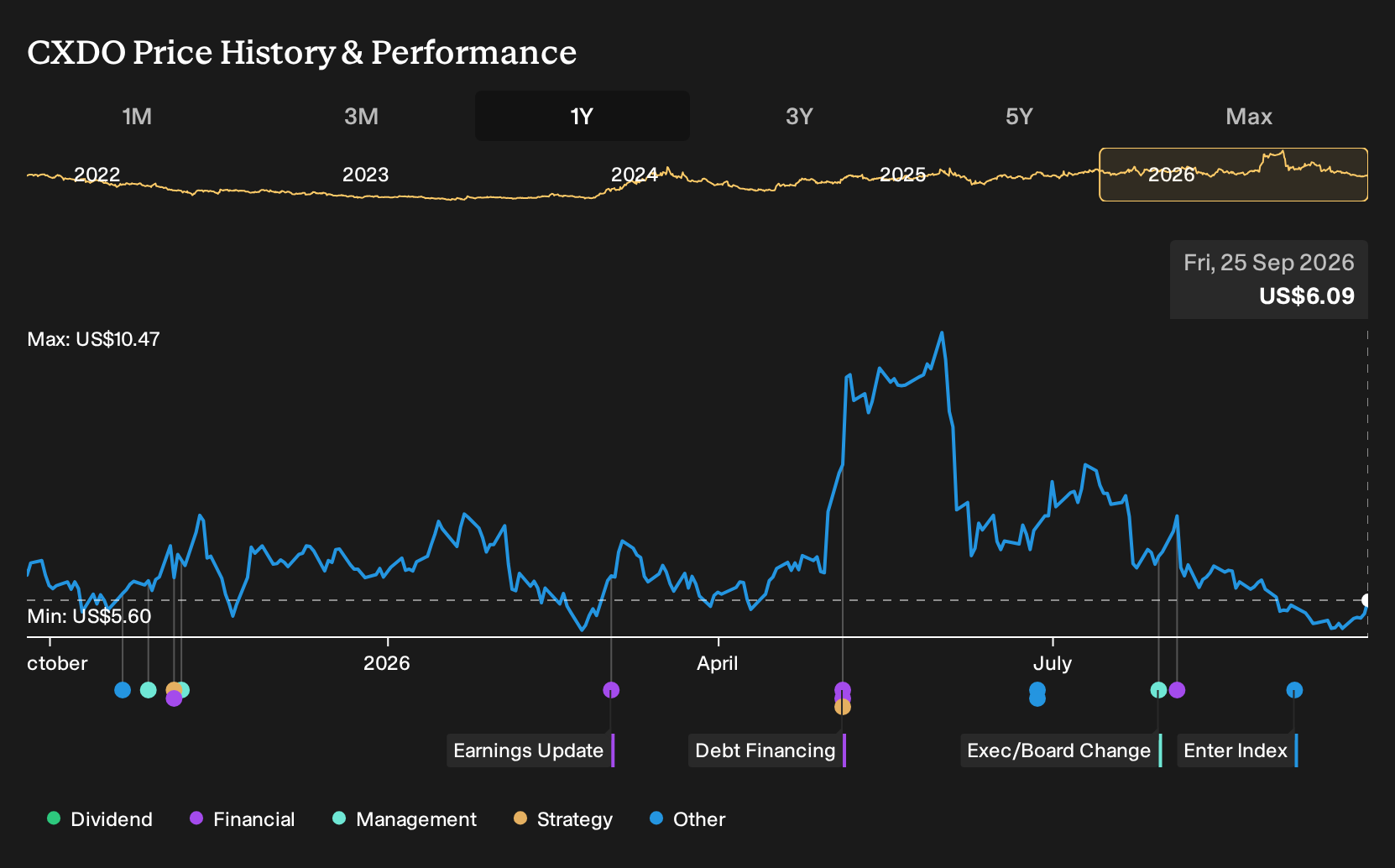
Crexendo (CXDO)
Crexendo is one of the purest plays on the tools remote teams actually use, with its cloud platform handling calls, video and contact center traffic that help distributed workers feel like they are in the same office.
Crexendo generates about US$50 million from Cloud Telecommunications Services and US$31 million from Software Solutions, and with a market cap around US$203 million it is a smaller player providing the kind of always-on communications stack that remote workers quietly rely on.
"The company's highly flexible, cloud-native open architecture aligns it to rapidly scale and win in an enterprise landscape that is accelerating digital transformation and cloud communication adoption. This sets the stage for Crexendo to become a primary beneficiary as remote/hybrid work and security concerns drive businesses to managed, cloud-first solutions, supporting sustained high subscriber and ARPU growth."
What happens to Crexendo’s remote-work potential if one unseen pressure quietly shifts how much customers are willing to pay for these services?
If that pricing pressure matters to your thesis, read the full narrative for Crexendo to see how Crexendo’s model could still accelerate or stall from this point.
Agilysys (AGYS)
Agilysys quietly powers the kind of tech-first hotels and resorts that remote workers and digital nomads increasingly seek out for long stays and reliable, work-ready rooms. This makes it a direct beneficiary of experience-focused travel rather than just traditional vacation demand.
Agilysys develops software ecosystems for hotels, resorts and casinos worldwide, running property management, payments, and guest services. The business generated about US$330 million from providing software solutions to the global hospitality industry and has a market cap near US$2.8b.
"The intensifying threat environment in the hospitality sector will require Agilysys to substantially increase investments in cybersecurity and compliance."
What happens to Agilysys’ remote-work upside if rising digital security expectations quietly reshape the economics of its hospitality software model?
That pressure point is only the start, and the full narrative for Agilysys shows how Agilysys could turn heavier security costs into stickier customers and fresh pricing power.

Similarweb (SMWB)
Similarweb is built for remote-first teams that live online, giving marketers and analysts the shared web intelligence they need to run global campaigns from a laptop anywhere.
Similarweb delivers digital data and analytics across web, app, sales, and retail intelligence, with about US$296 million coming from online financial information services and a market cap near US$669 million.
"Rapid customer adoption of Gen AI, LLM, and Agentic AI data products, with strong pipelines and recurring multi-year contracts from large enterprise and tech customers, is likely to propel sustained double-digit revenue growth and improved earnings visibility."
The real swing factor is how one emerging use case for Similarweb’s data could reshape what big online clients are willing to pay over time.
If that swing factor matters to you, read the full narrative for Similarweb and see how Similarweb’s AI data engine could turn adoption into durable pricing power.

Seeking Alternatives Before Momentum Flies
Fresh ideas move first. By the time every watchlist catches the breakout, the easy entry has usually dropped away. Scan these under-the-radar themes while it matters and consider them early.
- Explore early-stage momentum with a curated batch of 8 elite penny stocks with strong financials that screens for stronger balance sheets instead of speculative stories driven by hype alone.
- Review opportunities related to potential infrastructure build-outs by looking at the 85 AI infrastructure stocks highlighting companies tied to data centers, chips and the backbone of AI demand.
- Evaluate potential income streams by checking the 8 dividend fortresses focused on payout strength, coverage and balance sheet resilience.
This article by Simply Wall St is general in nature. We provide commentary based on historical data and analyst forecasts only using an unbiased methodology and our articles are not intended to be financial advice. It does not constitute a recommendation to buy or sell any stock, and does not take account of your objectives, or your financial situation. We aim to bring you long-term focused analysis driven by fundamental data. Note that our analysis may not factor in the latest price-sensitive company announcements or qualitative material. Simply Wall St has no position in any stocks mentioned.
Have feedback on this article? Concerned about the content? Get in touch with us directly. Alternatively, email editorial-team@simplywallst.com