
- PRICING
- LIVE QUOTES
- LEARN
- HELP


EN
Top 3 Japanese Cash Flow Stocks To Watch In September 2026
Shipping costs are surging as tanker traffic through the Strait of Hormuz falls to single digits, and that puts cash generation firmly back in the spotlight for Japanese companies. Higher freight and energy bills can squeeze weaker balance sheets. Businesses that still convert sales into solid cash while trading below their estimated fair value start to look interesting. This article walks through three such Japan cash flow stocks from our screen.
The three examples below are just a small sample, and the full screen surfaced 37 more companies with equally cash focused stories that are not covered here. To identify and analyze those opportunities in one place, head straight to the Undervalued Stocks Based On Cash Flows screener.
Canon (TSE:7751)
Overview: Canon is a diversified electronics group best known for office and industrial printers that pair hardware sales with recurring consumables and service cash flows.
Market Cap: ¥3,918b
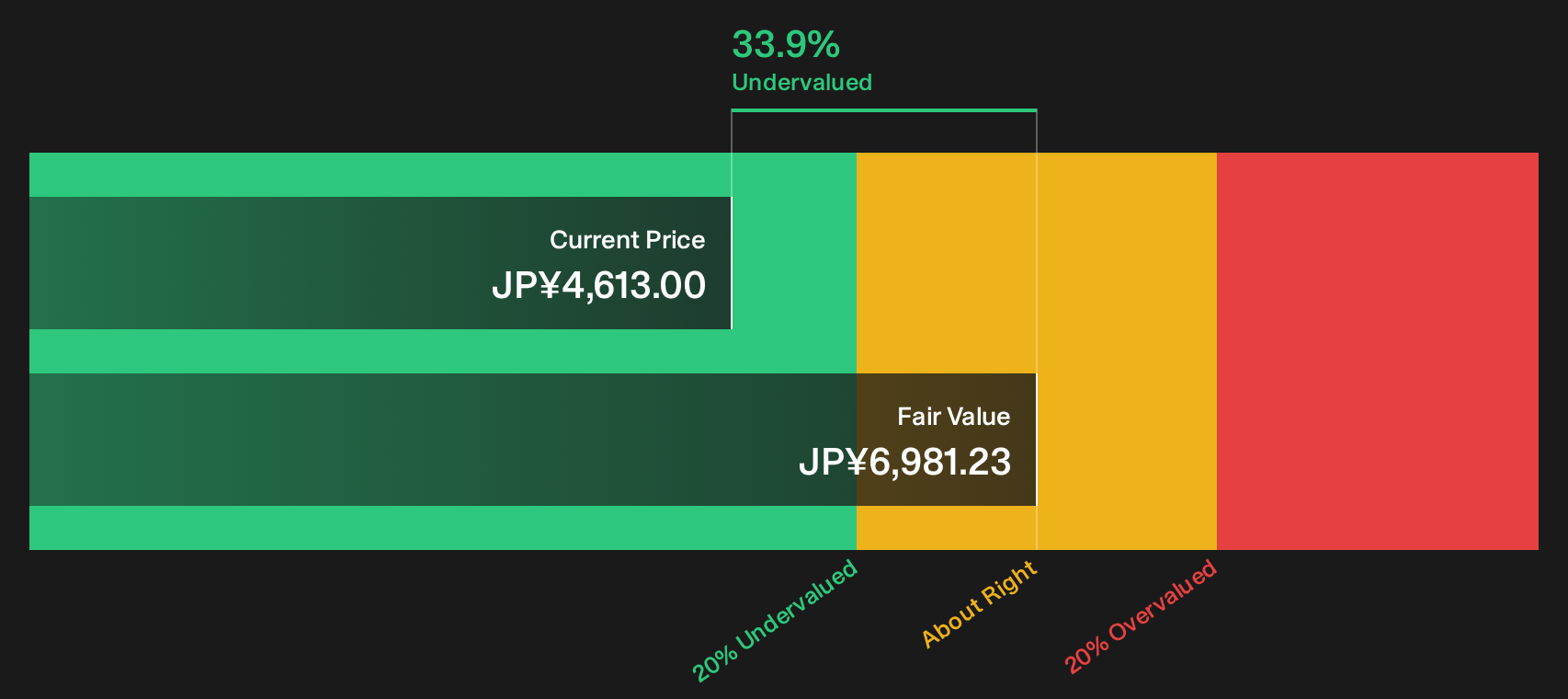
Canon trades at a P/E of about 11.3x versus roughly 20.7x for peers, while the SWS DCF model flags a near 34% discount to its assessed fair value. That gap rests heavily on the Printing Business Unit’s recurring cash from high-volume devices, consumables, and service, which could look very different if a single key assumption breaks.
If that cash engine is stronger or weaker than the headline multiple suggests, the DCF valuation analysis for Canon lays out the assumptions that could flip Canon’s valuation narrative.
MINEBEA MITSUMI (TSE:6479)
Overview: MINEBEA MITSUMI is a Japan based manufacturer of precision bearings, small motors, and electronic components that underpin recurring cash-flow rich industrial and electronics supply chains.
Operations: MINEBEA MITSUMI earns about ¥613.5b from Semiconductors & Electronics, ¥491.2b from Motor, Lighting & Sensing, and ¥305.1b from Precision Technologies.
Market Cap: ¥1.44t
Where Canon leans on office and industrial printing, MINEBEA MITSUMI ties this cash flow screen to the tiny moving parts inside hard drives, cooling systems, and factory equipment, which can keep orders coming even as product cycles shift.
"Accelerating reshoring and deglobalization pressures are increasingly likely to disrupt MinebeaMitsumi's globally distributed manufacturing network, which could force costly reconfiguration and localized production, erode operating efficiency, and increase cost of goods sold, placing sustained downward pressure on net margins."
What really matters for value focused investors is how one untested pressure on those recurring component orders ultimately feeds through to cash yields.
Those cash yields will only make sense in the context of the bigger reshoring story. That is exactly what the full narrative for MINEBEA MITSUMI pulls together, including where accelerating disruption could create upside.

Terumo (TSE:4543)
Overview: Terumo develops and sells medical devices and equipment for cardiovascular procedures, hospital care, and blood and cell therapies worldwide.
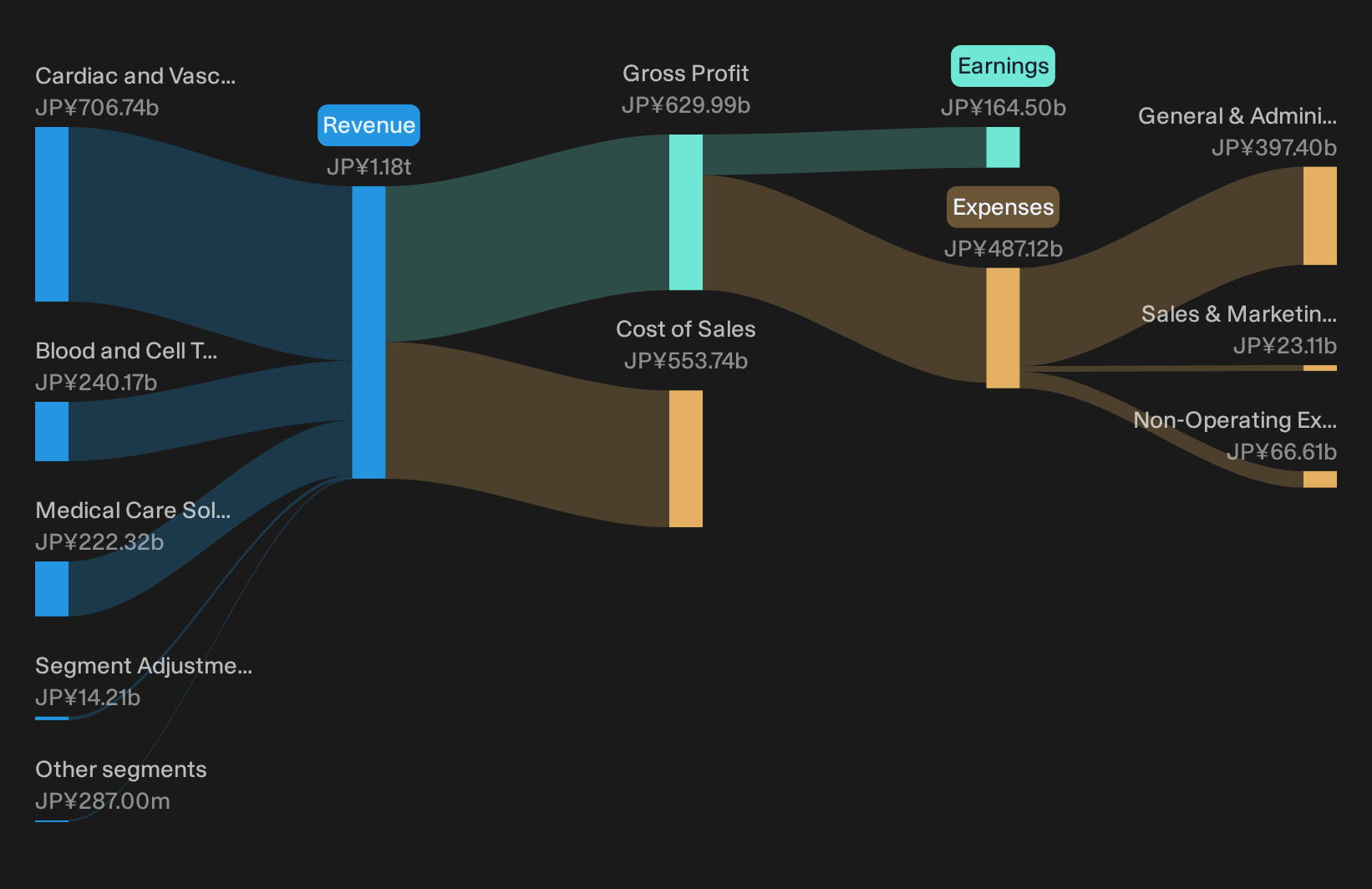
Operations: Terumo generates around ¥706.7b from Cardiac and Vascular, ¥240.2b from Blood and Cell Technologies, and ¥222.3b from Medical Care Solutions.
Market Cap: ¥3.39t
Terumo appears in this undervalued cash flow screen through its Cardiac and Vascular business, where repeat-use devices turn procedure volumes into recurring income.
"Expansion of sales channels and volume commitments in China, especially in Neurovascular products, has enabled Terumo to gain market share and increase prices, counteracting typical negative VBP effects and positioning the company for future revenue growth in this key emerging market."
The real test for Terumo is how long a pricing and volume balance can keep margins and cash conversion aligned with those expectations.
That pricing balance is exactly what the full narrative for Terumo unpacks, mapping how Terumo could turn procedure volumes into accelerating cash generation while risk remains firmly in view.
Seeking Fresh Alternatives Beyond Today
Fresh breakout ideas do not stay under the radar for long. Before momentum runs, before prices start flying, scan these curated shortlists while it matters and aim to get in early.
- Spot potential turnaround income plays by scanning a curated set of higher yielding payers with the 14 dividend fortresses before the crowd starts chasing the payouts.
- Track where infrastructure momentum could build next by reviewing the hand picked utilities and grid enablers inside the 40 power grid technology and infrastructure stocks, while they are still under the radar for now.
- Move beyond the headline AI giants and pinpoint cash generating enablers supporting the boom through the targeted 85 AI infrastructure stocks before valuations feel fully caught up.
This article by Simply Wall St is general in nature. We provide commentary based on historical data and analyst forecasts only using an unbiased methodology and our articles are not intended to be financial advice. It does not constitute a recommendation to buy or sell any stock, and does not take account of your objectives, or your financial situation. We aim to bring you long-term focused analysis driven by fundamental data. Note that our analysis may not factor in the latest price-sensitive company announcements or qualitative material. Simply Wall St has no position in any stocks mentioned.
Have feedback on this article? Concerned about the content? Get in touch with us directly. Alternatively, email editorial-team@simplywallst.com