
- PRICING
- LIVE QUOTES
- LEARN
- HELP


EN
Capital One Financial (COF) Warns AI Shopping Agents Raise Fraud Risks
- Capital One Financial (NYSE:COF) has joined a global group of banks warning about AI shopping agents enabling new fraud and data risks.
- Banks in the coalition are urging policymakers to introduce clearer safeguards and disclosure rules for AI-powered consumer shopping tools.
- Industry participants are highlighting concerns that AI agents could be misused for scams, identity theft, and unauthorized access to financial data.
- The push by Capital One and peers for protections around AI shopping agents is only one piece of the broader Capital One risk story. We have also spotted 4 other big wins worth knowing about at Capital One Financial.
For readers looking to explore more ideas linked to this theme, the next place to look is 87 AI infrastructure stocks.
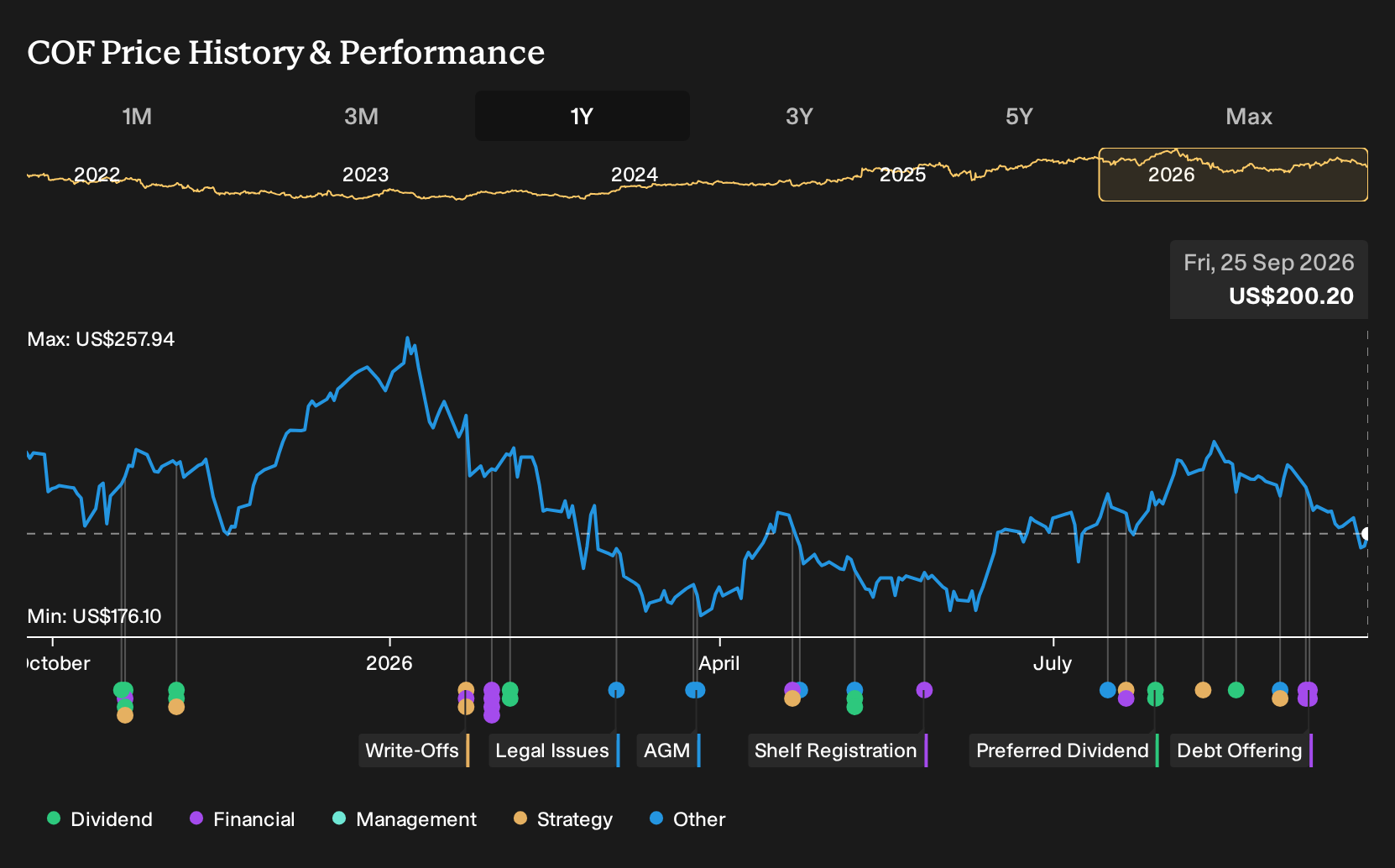
Capital One Financial, a US based consumer finance group with a market value of about $122.8b, operates a major digital bank that offers credit cards and other lending products. Any misuse of AI shopping tools can directly affect customer accounts and sensitive payment data.
See how Capital One Financial's balance sheet measures up.
Why do AI shopping agents create a fresh risk for Capital One Financial?
AI tools that can access payment details and auto complete purchases raise the odds of scams, mistaken orders, or unauthorized use of stored card data. For Capital One Financial, that concentrates risk in its digital banking and card platforms where fraud losses, chargebacks, and remediation costs all hit the income statement.
Does this change the Capital One Financial Narrative?
The Narrative already flags heavy technology and AI investment as a way to lower fraud costs and keep credit performance more stable, while Discover integration and network scale drive earnings power. Fresh warnings on AI shopping agents underline the risk side of that bet, especially legal or regulatory scrutiny that could increase compliance spending or potential fines if controls are judged too weak.
See how these catalysts shape Capital One Financial's path to a $258 fair value.
What should investors watch next to judge if this risk is under control?
The clearest early signal is how reported fraud and charge off metrics move relative to peers over the next few reporting periods, especially on card portfolios most exposed to online spending and the Discover network. Any new regulatory guidance or formal inquiries tied to AI driven transactions would also be an important marker for future operating restrictions or remediation costs.
One big Capital One question this article has not answered
For all the focus on products, risks, and technology at Capital One Financial, the missing piece is who sits in the cockpit and what rewards they receive for the choices they make. See who is actually steering Capital One Financial, and how they are paid.
This article by Simply Wall St is general in nature. We provide commentary based on historical data and analyst forecasts only using an unbiased methodology and our articles are not intended to be financial advice. It does not constitute a recommendation to buy or sell any stock, and does not take account of your objectives, or your financial situation. We aim to bring you long-term focused analysis driven by fundamental data. Note that our analysis may not factor in the latest price-sensitive company announcements or qualitative material. Simply Wall St has no position in any stocks mentioned.
Have feedback on this article? Concerned about the content? Get in touch with us directly. Alternatively, email editorial-team@simplywallst.com