
- PRICING
- LIVE QUOTES
- LEARN
- HELP


EN
PYPL Stock Alert: What to Know as PayPal Takeover Rumors Restart
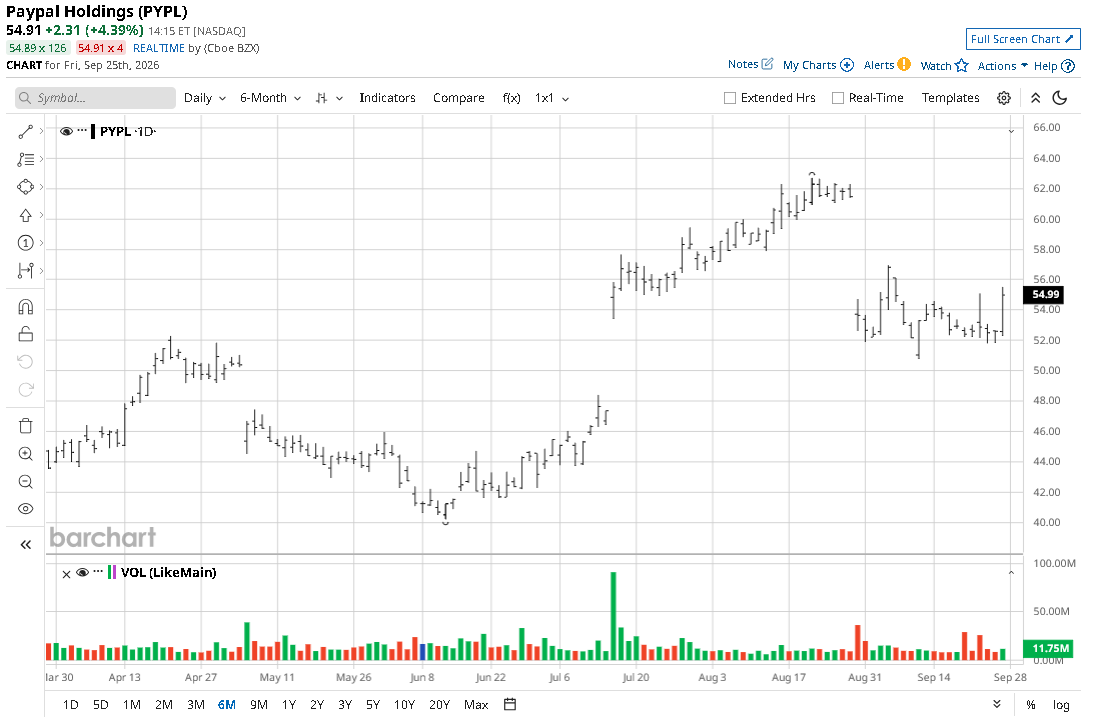
PayPal (PYPL) stock is pushing higher on Sept. 25 following renewed speculation regarding a potential acquisition. Reports surfaced on Friday morning that a major technology company is considering an all-stock buyout proposal for the fintech giant.
PayPal shares have been a muted investment in 2026, currently down about 8% versus the price at which they started this year.
What the Takeover Speculation Means for PayPal Stock
This fresh wave of takeover speculation follows the recent collapse of high-profile negotiations with a consortium led by Stripe and private equity firm Advent International.
Together, Stripe and Advent had explored a buyout valuation of over $50 billion, which translated to about $68 per share. But talks later stalled over deal structure and break-fee preferences.
Market sentiment quickly turned bullish today as investors realized that PayPal remains a top-tier acquisition target for large-cap tech firms seeking immediate scale in payments processing, digital wallets, and merchant services.
Experts view the renewed buyout interest as a significant catalyst that puts a solid valuation floor under PYPL shares, validating the overall worth of its massive user network.
Are PYPL Shares Undervalued at Current Price?
Despite year-to-date volatility, fundamental metrics suggest PayPal shares are rather undervalued at current levels.
The fintech firm is currently trading at a forward price-to-earnings (P/E) multiple of less than 10x, which represents a meaningful discount to its historical averages.
Crucially, PYPL reported a market-beating Q2 and raised its full-year guidance in July, reinforcing that CEO Enrique Lores’s turnaround strategy is showing early signs of progress.
Barchart currently has a “56% BUY” opinion on PayPal. This rating is based on 13 distinct short-, medium-, and long-term technical indicators, adding to the list of reasons why it’s a compelling buy in late 2026.
What’s the Consensus Rating on PayPal?
On the flip side, for Wall Street analysts, PayPal Holdings is now more of a “show me” story.
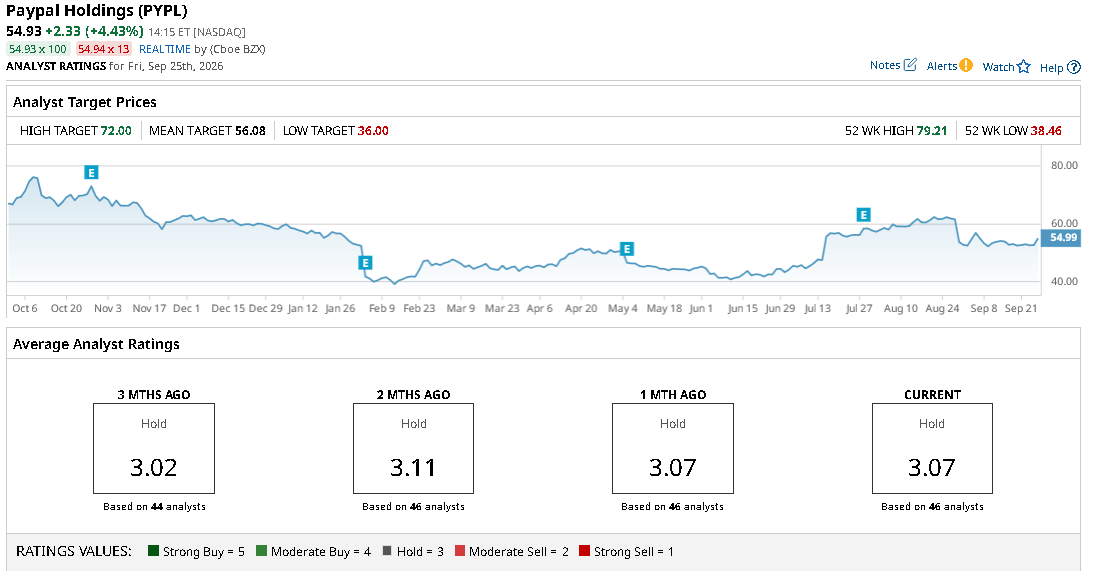
According to Barchart, the consensus rating on PYPL stock sits at “Hold,” with the mean target of about $56 roughly in line with the price at which it’s trading already.
On the date of publication, Wajeeh Khan did not have (either directly or indirectly) positions in any of the securities mentioned in this article. All information and data in this article is solely for informational purposes. For more information please view the Barchart Disclosure Policy here.