
- PRICING
- LIVE QUOTES
- LEARN
- HELP


EN
Cloud Retirement Platform Launch Might Change The Case For Investing In FIS Stock
- Fidelity National Information Services has released a modern, cloud-native version of its FIS Retirement Platform, aimed at helping retirement plan providers and third-party administrators of all sizes meet SECURE 2.0 requirements such as automatic enrollment, emergency savings accounts, student loan matching, and expanded eligibility features.
- The refreshed platform turns retirement data into intelligence across participant engagement, back-office automation, and plan health analytics, which could influence how efficiently providers handle regulatory change and how sticky FIS becomes within retirement recordkeeping workflows.
- We will now look at how Fidelity National Information Services' cloud-native retirement platform launch could reshape the broader investment narrative.
Scan how other retirement and fintech providers are positioned around this same FIS Retirement Platform theme by reviewing our curated list of solid balance sheet and fundamentals (24 results).
Fidelity National Information Services Investment Narrative Recap
To own Fidelity National Information Services, you need to believe that its scale in banking and capital markets software can still matter in a world that is moving to cloud and AI driven workflows. The cloud native FIS Retirement Platform fits neatly into that story. It speaks to client demand for configurable, compliance ready tools rather than bespoke projects.
The more immediate swing factor is execution. Management is trying to simplify operations and manage a balance sheet where debt is not well covered by operating cash flow, at the same time analysts expect earnings to decline. If FRP adoption proves slow or implementation heavy, that becomes the biggest near term risk.
The FRP launch lines up with a wider push at Fidelity National Information Services into cloud based and AI supported offerings such as TreasuryGPT and Banker Assist. These products sit in different parts of the portfolio, yet they all lean on the same thesis that clients will pay for automation, data driven insight, and regulatory comfort.
For you as an investor, this cluster of launches creates a clear operational test. Do new platforms like FRP help offset pressure from fintech rivals and price competition, or does complexity drag on margins at a time when earnings are already forecast to decline? Watching early client wins, implementation timelines, and cross sell into existing banking relationships becomes critical.
Fidelity National Information Services' current analyst narrative points to US$15.1b in revenue and US$2.1b in earnings by 2029, implying forecast yearly revenue growth of 7.4% and an earnings decline of US$1.3b from US$3.4b today.
Discover why Fidelity National Information Services' fair value suggests a 43% potential upside to its current price, and why this opportunity could narrow quickly.
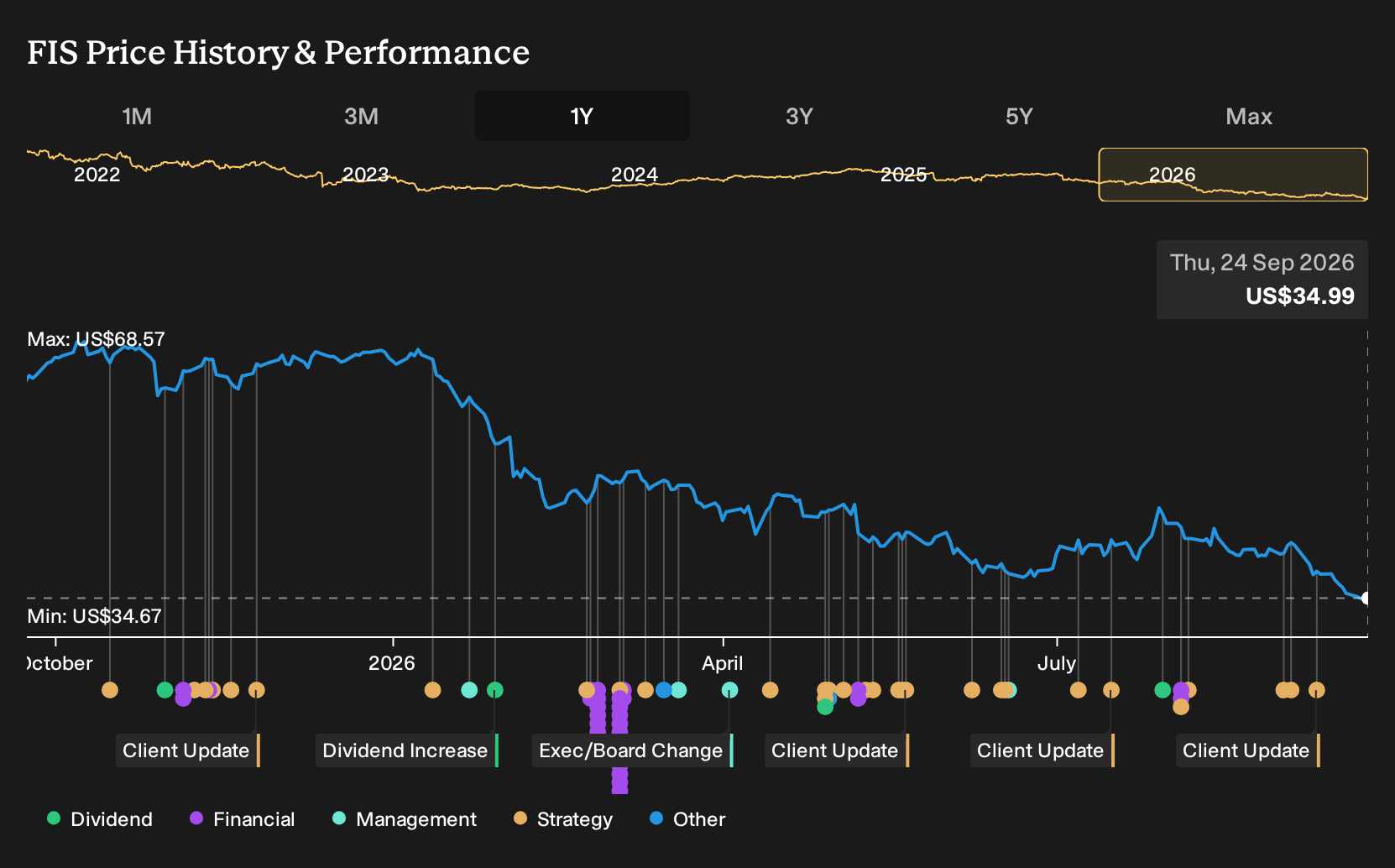
Exploring Other Perspectives
Some of the lowest Fidelity National Information Services forecasts lean into margin pressure from heavy AI and data spending rather than product launches such as the cloud native FIS Retirement Platform. Before this news, those analysts were modelling revenue of about US$14.9b and earnings of US$1.6b by 2029, far below consensus. This shows how widely views can differ and why it helps to explore multiple narratives that may shift as FRP adoption plays out.
Explore 2 other Fidelity National Information Services fair value estimates, including one that suggests it could be worth just $50.00!
Decide For Yourself
Disagree with existing narratives? Extraordinary investment returns rarely come from following the herd, so consider your own analysis and research.
- A great starting point for your Fidelity National Information Services research is our analysis highlighting 3 key rewards and 3 important warning signs that could impact your investment decision.
- See our latest analysis for Fidelity National Information Services. The report includes a comprehensive fundamental analysis summarized in a single visual, the Snowflake, making it easy to evaluate Fidelity National Information Services' overall financial health at a glance.
Looking For More Investment Ideas Beyond Fidelity National Information Services?
If the Fidelity National Information Services story has you thinking about portfolio upgrades, it can help to line it up against other companies with different risk and return profiles. The Simply Wall St Screener lets you scan for opportunities that fit your own style instead of relying only on consensus views.
- Prefer stability and resilience over drama? Filter for companies with stronger balance sheets and healthier fundamentals using our list of solid balance sheet and fundamentals (24 results).
- Hunting for mispriced quality where expectations look low compared to business strength? Start with this curated set of 16 high quality undiscovered gems.
- Want to focus on businesses where downside risk scores appear more contained? Build your watchlist from our selection of 30 resilient stocks with low risk scores.
This article by Simply Wall St is general in nature. We provide commentary based on historical data and analyst forecasts only using an unbiased methodology and our articles are not intended to be financial advice. It does not constitute a recommendation to buy or sell any stock, and does not take account of your objectives, or your financial situation. We aim to bring you long-term focused analysis driven by fundamental data. Note that our analysis may not factor in the latest price-sensitive company announcements or qualitative material. Simply Wall St has no position in any stocks mentioned.
Have feedback on this article? Concerned about the content? Get in touch with us directly. Alternatively, email editorial-team@simplywallst.com