
- PRICING
- LIVE QUOTES
- LEARN
- HELP


EN
Arteris (AIP) Launches FlexGen Multi Die, Is The Stock Still Cheap?
Arteris event puts multi-die opportunity in focus
Arteris (AIP) recently expanded its multi-die portfolio with FlexGen Multi-Die, a product designed to help chipmakers move from single-die SoCs to chiplet-based designs for AI and high-performance computing.
Arteris arrives at this FlexGen Multi-Die launch with the share price at US$24.19 and momentum that has flipped more than once this year. The 7 day share price return of 8.14% and 30 day gain of 4.13% contrast with a 90 day share price decline of 44.12%, while the year to date share price return of 55.26% sits alongside a 1 year total shareholder return of 145.83% and a 3 year total shareholder return of about 2.7x, pointing to strong long term gains even after recent volatility.
Scan beyond Arteris and look for other chip and AI infrastructure plays that fit this multi-die and high-performance computing theme through our curated 84 AI infrastructure stocks
Recent gains sit on top of sharp 3 month volatility, which leaves a simple question hanging over Arteris: has the stock been repriced to reflect the business or just sentiment around chiplet enthusiasm?
Most Popular Narrative: 41% Undervalued
The most followed narrative on Arteris pitches a fair value of $41.00 against the last close at $24.19, which frames the FlexGen Multi-Die launch against a broader story of AI data center demand, chiplet adoption, and rich licensing assumptions.
The ongoing industry transition to chiplet-based and heterogeneous integration architectures is expanding Arteris' addressable market, with chiplet-related design starts expected to rise from 5% to 30% in coming years. This structural trend supports both higher sales volume and increased average selling prices, benefiting future top-line revenue.
See why 5 investors see Arteris as 41% undervalued.
Analysts behind this narrative use a discount rate of 8.54% and assume revenue growth of about 24.5% a year, with profit margins eventually lining up with the wider US software group. The implied future P/E of roughly 170x those projected earnings is far above the 32.5x cited for the industry. As a result, the gap between the $24.19 share price and the $41.00 fair value depends heavily on that long term earnings ramp and the chiplet story playing out as modeled.
These same assumptions sit alongside some clear tension points. Arteris reported revenue of $84.6 million and a net loss of $39.5 million, is forecast to remain loss making for at least three years, has a negative return on equity of 58.4%, and has increased losses over five years. Analysts still see strong revenue expansion, yet the path from that top line growth to durable profitability remains uncertain, especially with higher R&D and a reliance on a handful of large AI and automotive contracts.
Result: Fair Value of $41.00 (UNDERVALUED)
Still, Arteris relies heavily on a few large AI and automotive customers, and rising R&D spending could squeeze margins if those major projects slow.
Find out about the key risks to this Arteris narrative.
Another view on Arteris valuation
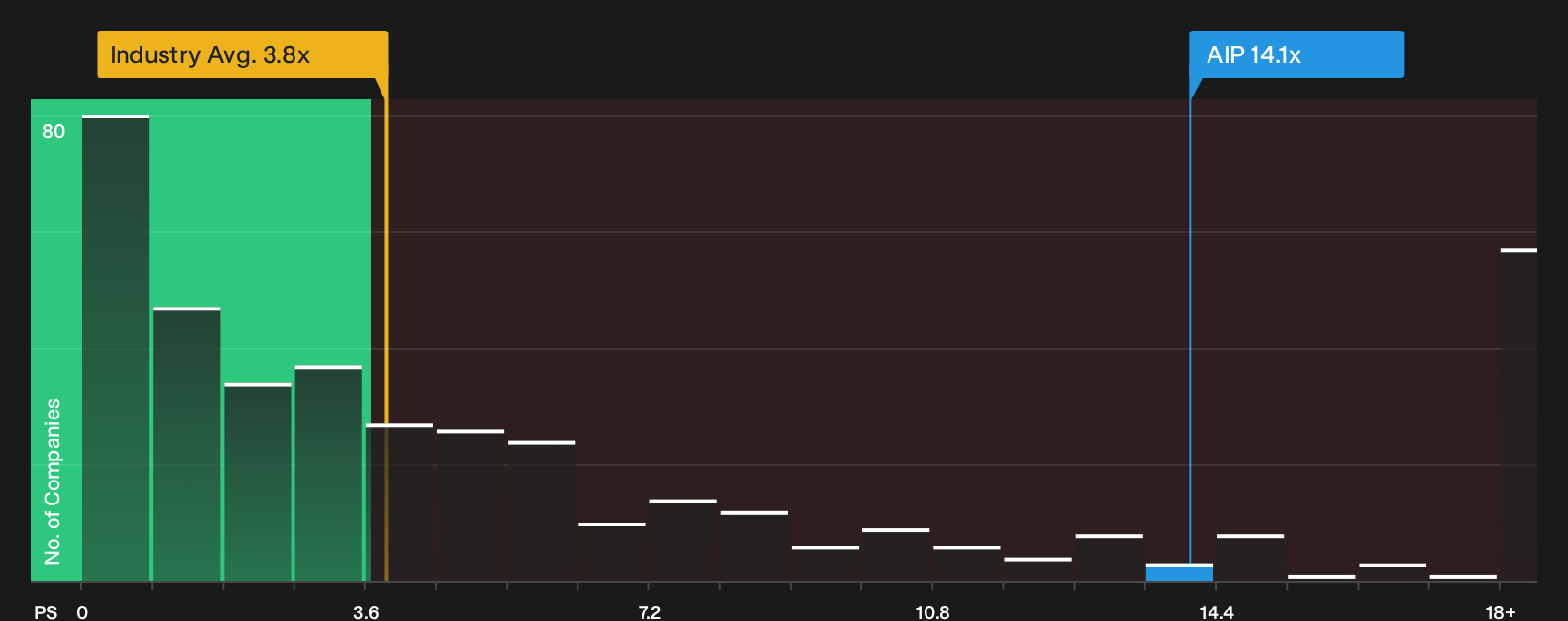
The earlier Arteris fair value story leans heavily on long term earnings estimates and high future P/E assumptions. Using current sales instead, the stock trades on a P/S of 14.1x, versus 3.8x for the wider US software group and about 2x for peers, while the fair ratio sits at 6x.
That gap means investors are already paying a steep premium to today’s revenue for Arteris, even though the business is still loss making and not forecast to reach profitability over the next three years. How comfortable are you with paying more than double the fair ratio, given the chiplet and AI narrative around the stock?
See what the numbers say about this price — find out in our valuation breakdown.
Next Steps
Mixed signals on Arteris valuation and risk profile are clear. Move quickly to review the underlying numbers and carefully weigh both sides of the story by digging into the 3 key rewards and 4 important warning signs.
Looking for more investment ideas beyond Arteris?
If Arteris has sharpened your thinking, do not stop here. Use the Simply Wall Street Screener to uncover fresh opportunities that might better match your game plan.
- Target value with discipline by scanning companies that combine quality fundamentals with appealing pricing using the 30 high quality undervalued stocks.
- Shield your portfolio from shocks by focusing on financially resilient businesses sourced through the 31 resilient stocks with low risk scores.
- Spot under-followed opportunities early by checking out a curated set of strong fundamentals through the 16 high quality undiscovered gems.
This article by Simply Wall St is general in nature. We provide commentary based on historical data and analyst forecasts only using an unbiased methodology and our articles are not intended to be financial advice. It does not constitute a recommendation to buy or sell any stock, and does not take account of your objectives, or your financial situation. We aim to bring you long-term focused analysis driven by fundamental data. Note that our analysis may not factor in the latest price-sensitive company announcements or qualitative material. Simply Wall St has no position in any stocks mentioned.
Have feedback on this article? Concerned about the content? Get in touch with us directly. Alternatively, email editorial-team@simplywallst.com