
- PRICING
- LIVE QUOTES
- LEARN
- HELP


EN
Halliburton (HAL) Stock May Be Below Fair Value On Venezuela Deal News
Halliburton has delivered a 67.1% share price gain over the past five years, yet its recent pullback and new contracts in places like Venezuela and Cyprus leave a clear question for you as an investor: Is the current US$32.76 price tag still aligned with what the company earns today and what those earnings may support over time?
- A 67.1% return over five years puts real weight on whether Halliburton’s current valuation can be explained by its underlying earnings power.
- Fresh agreements in Venezuela and offshore Cyprus may support expectations for future oilfield activity, which can feed into margins and the timing of cash generation.
- There is a second opinion on Halliburton worth weighing. See what analysts think Halliburton's shares could be worth.
The issue now is whether Halliburton’s present share price is adequately supported by its earnings when set against the Fair Ratio benchmark.
If you are weighing Halliburton against other opportunities tied to energy and infrastructure build outs, a focused screen of 39 power grid technology and infrastructure stocks.
Is Halliburton Still Cheap on Earnings?
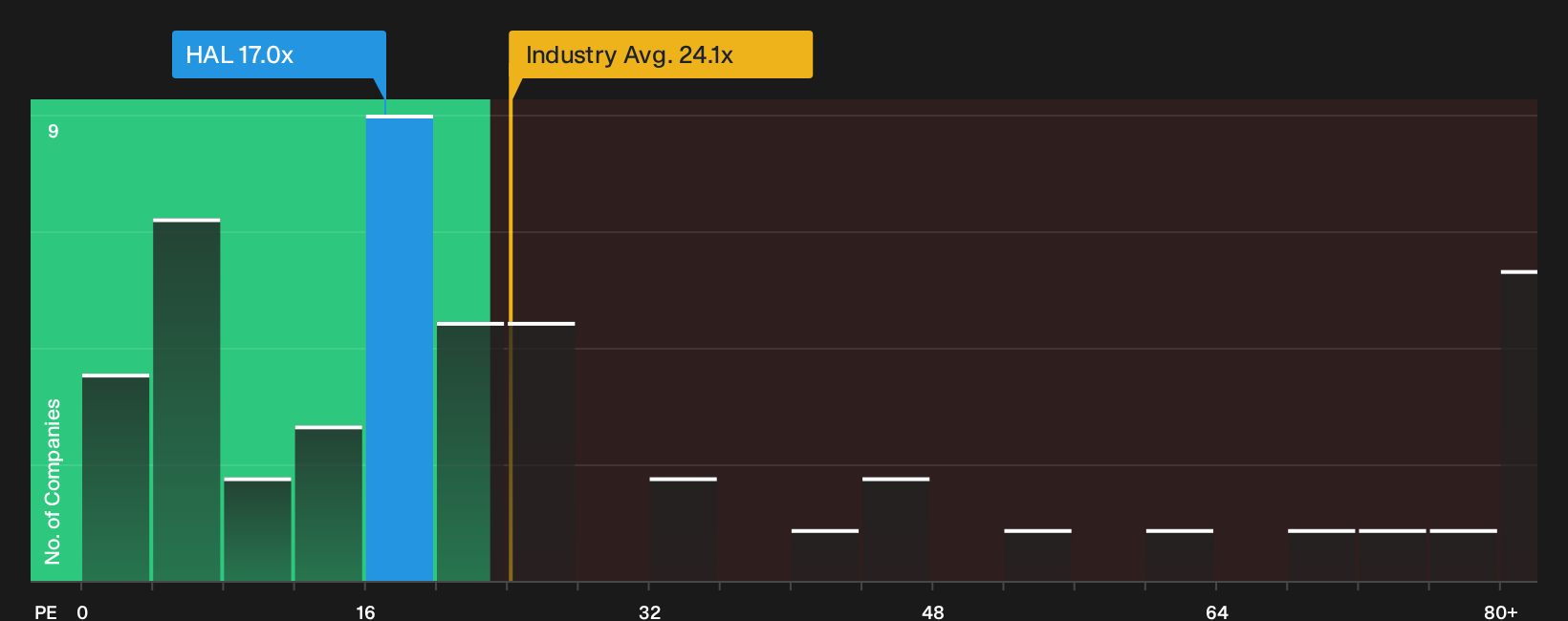
The P/E ratio suits Halliburton because earnings are still the main anchor for how investors think about this business. On this lens, the stock trades on about 17.0x earnings, which is below the Energy Services industry average of roughly 24.1x and also under the peer group at about 35.3x. That tells you the market is paying a lower price for each dollar of Halliburton’s profit than it is for many similar service contractors.
The Fair Ratio model, which blends factors like Halliburton’s margins, scale, capital needs and risk profile into a tailored earnings multiple, points to a higher level than where the shares currently trade. Because recent contracts in Venezuela and offshore Cyprus have kept attention on Halliburton’s project pipeline, this lower P/E still represents a discount to what similar companies are pricing in. The gap suggests the current valuation leans toward undervalued on this earnings measure, while the details of your own thesis will decide whether that discount looks deserved or appealing. Explore the numbers behind Halliburton's P/E valuation.
The Halliburton Narrative: What Would Justify Today's Price?
Halliburton’s valuation puzzle only really comes into focus once you spell out the stories that could sit behind today’s earnings multiple. Simply Wall St Narratives do that by mapping out what would need to happen to Halliburton’s future margins, growth and profit profile for the shares to be worth materially more or materially less than the current price, and each one treats its fair value as a thesis about the business that you can track over time rather than a one off snapshot.
One of the top community narratives on Halliburton: roughly fairly valued
"The main factor that needs to work in Halliburton's favor is continued growth and a shift toward higher margin international and offshore work..."
Discover why this Narrative puts Halliburton at roughly fairly valued.
The open question Halliburton’s valuation cannot answer
Halliburton’s share price and earnings multiples only tell part of the story, because the people choosing projects, allocating capital and setting priorities, and how they are rewarded for it, can tilt your whole thesis. See who runs Halliburton and how they are paid.
This article by Simply Wall St is general in nature. We provide commentary based on historical data and analyst forecasts only using an unbiased methodology and our articles are not intended to be financial advice. It does not constitute a recommendation to buy or sell any stock, and does not take account of your objectives, or your financial situation. We aim to bring you long-term focused analysis driven by fundamental data. Note that our analysis may not factor in the latest price-sensitive company announcements or qualitative material. Simply Wall St has no position in any stocks mentioned.
Have feedback on this article? Concerned about the content? Get in touch with us directly. Alternatively, email editorial-team@simplywallst.com