
- PRICING
- LIVE QUOTES
- LEARN
- HELP


EN
Oracle Just Dealt Bloom Energy a Major Blow. What Comes Next for BE Stock.
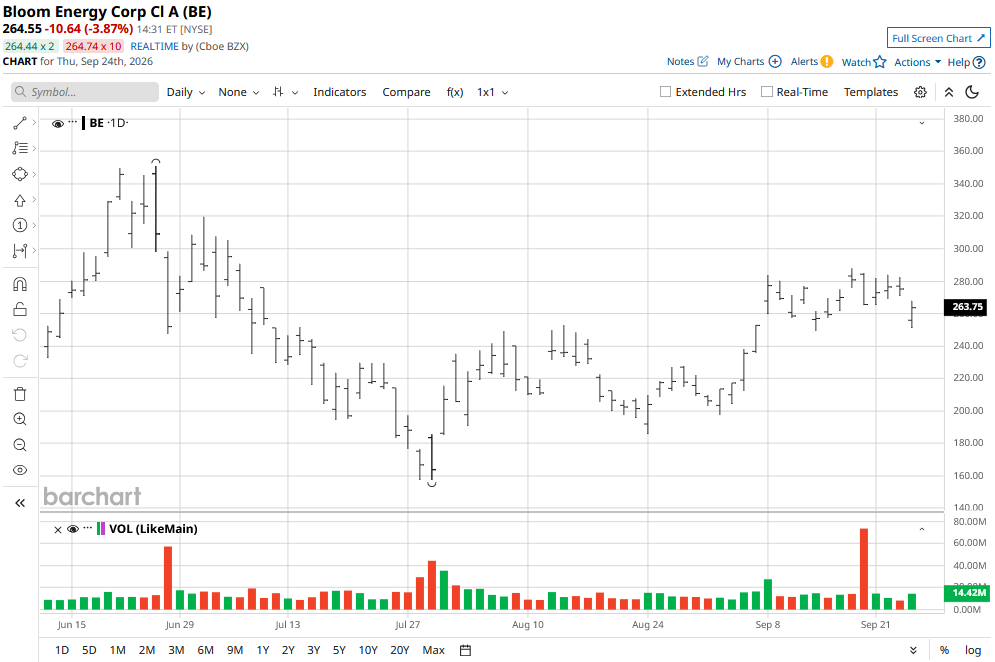
Bloom Energy (BE) stock is under pressure on Thursday as investors react to potential operational delays affecting one of its flagship data center power projects. The selloff was triggered following reports that Oracle (ORCL) has issued a force majeure notice on Project Jupiter, its $165 billion New Mexico AI data center campus set to be powered by Bloom Energy’s solid-oxide fuel cells.
Despite today’s decline, Bloom Energy stock is trading about 60% above its recent low.
What the Oracle News Means for Bloom Energy Stock
Oracle has issued the force majeure notice to safeguard itself from financial liability and potential payment suspensions if the site misses its targeted 2028 operational launch date.
At the heart of the issue is a major natural gas pipeline developed by Energy Transfer LP, which faced repeated permit denials from the New Mexico State Land Office, delaying its completion from this September to February 2027.
Because Bloom Energy’s solid-oxide Energy Servers generate electricity on-site from natural gas, the missing pipeline link leaves its fuel cells without their core ingredient: fuel.
BE shares are slipping today because the development places the company’s deployment timelines and near-term revenue projections at immediate risk.
Should You Buy the Dip in BE Shares Today?
While Thursday’s pullback may look like a discount for long-term clean energy bulls, caution is warranted in buying Bloom Energy shares on the dip because of the astronomical valuation.
The company is currently trading at a forward price-to-earnings (P/E) multiple of more than 130x, which leaves virtually no margin of error for operational delays or permit setbacks.
In fact, significant insider selling over the past year, exceeding $150 million with not even a single buy transaction, reinforces that even executives likely view the clean energy stock as overvalued.
And it’s not like BE currently pays a dividend to offset these valuation risks either.
How Wall Street Recommends Playing Bloom Energy
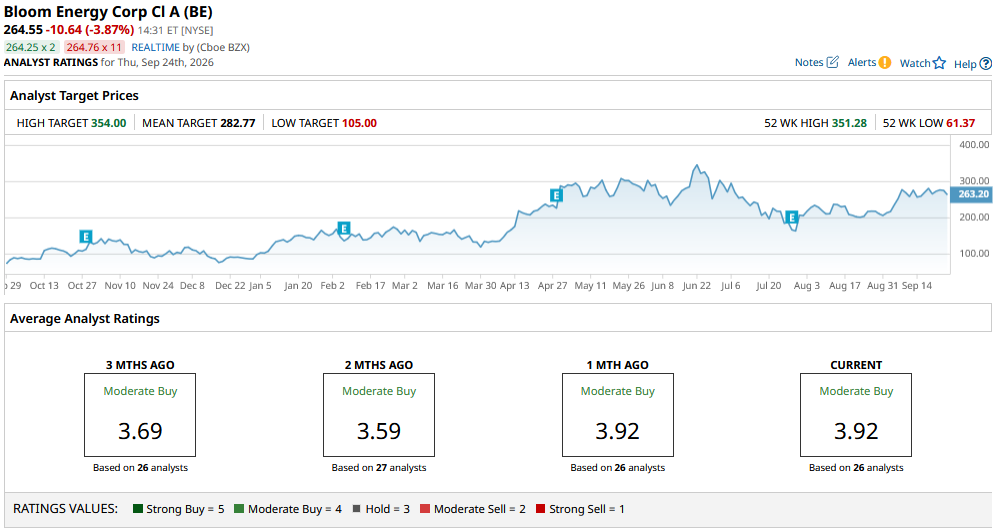
Heading into Sept. 24, Wall Street firms had a consensus “Moderate Buy” rating on BE stock.
But the mean price target of about $283 was roughly in line with the price at which Bloom Energy was trading already, meaning analysts didn’t see notable upside potential in the company’s share price either.
On the date of publication, Wajeeh Khan did not have (either directly or indirectly) positions in any of the securities mentioned in this article. All information and data in this article is solely for informational purposes. For more information please view the Barchart Disclosure Policy here.