
- PRICING
- LIVE QUOTES
- LEARN
- HELP


EN
Asana (ASAN) Could Be 2% Overvalued Following Its Rebound
Asana (ASAN) drew fresh attention after recent trading left the shares at US$9.47, with performance mixed over different periods and longer term returns still negative for many shareholders.
Recent trading has been choppy for Asana, with a 1-day share price return of 4.3% and a 90-day share price gain of 48.2%, while the year-to-date share price return is down 26.93% and the 1-year total shareholder return has fallen 33.12%. This combination points to short-term momentum picking up after a weaker longer track record for investors who have held the stock through earlier drawdowns.
Look beyond Asana's rebound and evaluate other software companies that may offer more attractive risk-reward profiles with the curated list of 16 high quality undiscovered gems.
Asana has a recognised product and clear revenue base, yet the share price only recently bounced off a long stretch of weak returns. Is that the setup for a bargain or a value trap at US$9.47?
Most Popular Narrative: 2% Overvalued
On the most followed narrative, Asana screens slightly above its estimated fair value of $9.27 against the latest close at $9.47, so the story hinges on whether future execution can justify only a small premium.
Product innovation (AI Studio Plus self-serve, Smart Workflow Gallery, new add-ons for compliance, permissions, time sheets, and budgeting) is systematically increasing customer retention and reducing churn, leading to higher net dollar retention rates and greater customer lifetime value. Operational discipline and resource reallocations toward higher ROI/efficiency areas are materially expanding operating margins, resulting in strong free cash flow and a foundation for continued margin expansion and profitability.
See why 14 investors see Asana as 2% overvalued.
Result: Fair Value of $9.27 (OVERVALUED)
Still, the Asana narrative could be knocked off course if competitive pressure from larger software platforms erodes pricing power, or if softer guidance signals weaker net retention ahead.
Find out about the key risks to this Asana narrative.
Another View On Asana's Value
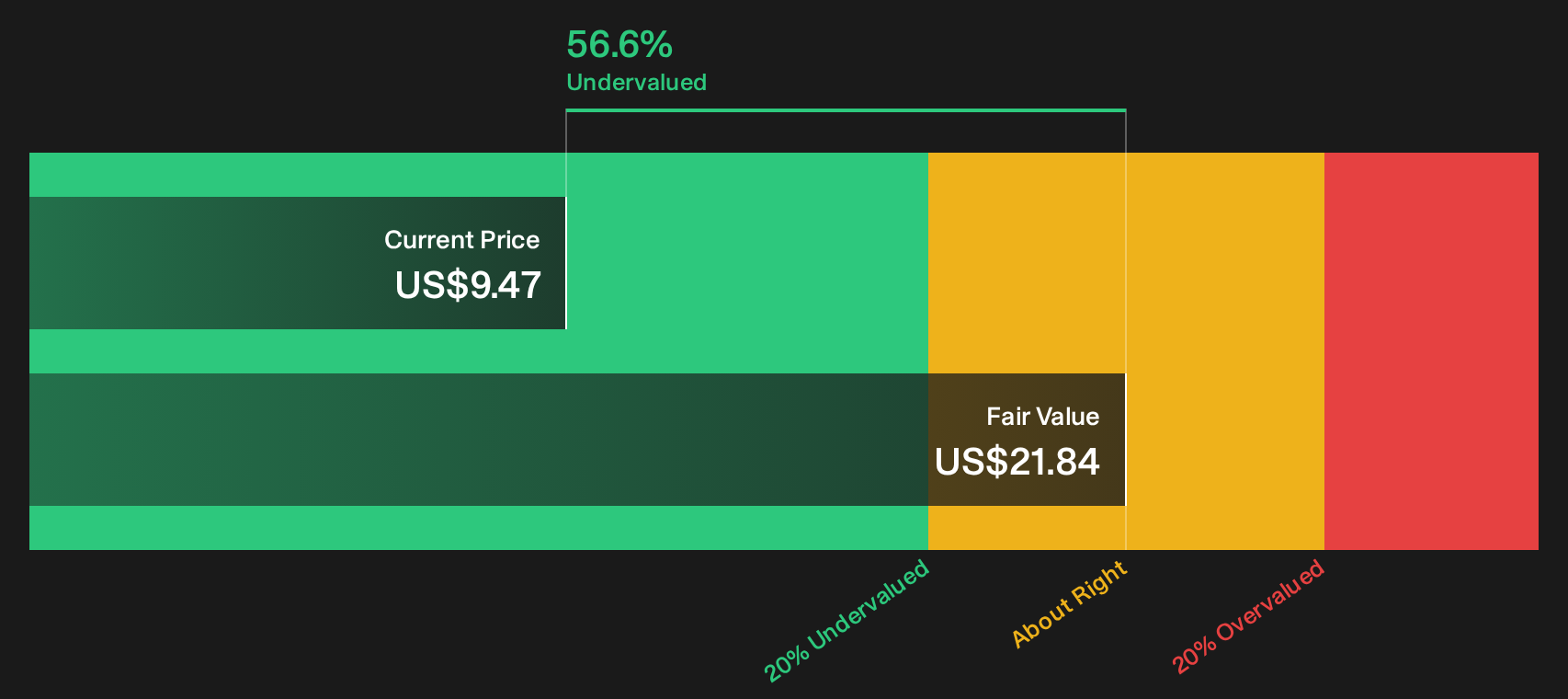
Where the fair value narrative pegs Asana as slightly overvalued around $9.27, the SWS DCF model points in a very different direction. On that cash flow view, Asana at $9.47 trades well below an estimated future cash flow value of $21.84, which raises a simple question: Which story do you trust more, earnings multiples or long range cash flows?
Look into how the SWS DCF model arrives at its fair value.
Next Steps
Mixed signals around Asana's value can be confusing. Move quickly from opinion to evidence by weighing both the upside and the red flags in the 3 key rewards and 2 important warning signs.
Looking for more investment ideas beyond Asana?
Do not stop with Asana when the broader market still holds potential opportunities that could suit your goals and risk comfort.
- Target resilient performers that aim to protect your downside by scanning a curated set of 31 resilient stocks with low risk scores tailored to steadier profiles.
- Hunt for stronger balance sheets and cleaner fundamentals by reviewing the focused list of solid balance sheet and fundamentals (23 results) that filters out weaker financial structures.
- Seek out mispriced opportunities with robust quality markers through a data backed sweep of the 30 high quality undervalued stocks.
This article by Simply Wall St is general in nature. We provide commentary based on historical data and analyst forecasts only using an unbiased methodology and our articles are not intended to be financial advice. It does not constitute a recommendation to buy or sell any stock, and does not take account of your objectives, or your financial situation. We aim to bring you long-term focused analysis driven by fundamental data. Note that our analysis may not factor in the latest price-sensitive company announcements or qualitative material. Simply Wall St has no position in any stocks mentioned.
Have feedback on this article? Concerned about the content? Get in touch with us directly. Alternatively, email editorial-team@simplywallst.com