
- PRICING
- LIVE QUOTES
- LEARN
- HELP


EN
Walmart Stock And Other Defensive Plays for Higher Grocery and Gas Prices
Inflation running at 3.4% and war-driven spikes in gas and grocery bills are pushing households to cut back on treats and stick to essentials. That pressure can punish some stocks while creating fresh interest in others that align more closely with stretched wallets. This article explains how that shift relates to the latest Fed moves and Treasury yields, then highlights three US Consumer Staples and Discount Retailers stocks exposed to these forces.
The stocks covered below are just a starter pack, while the full screen surfaced 15 more U.S. Consumer Staples and Discount Retailers with equally compelling narratives that do not fit into a short article. To see the broader field and identify which tickers best match your own risk, income, and valuation preferences, head straight into the US Consumer Staples and Discount Retailers screener.
Arko (ARKO)
Arko taps straight into the US Consumer Staples and Discount Retailers theme by pairing fuel with low-ticket essentials in convenience stores that cater to value focused shoppers stretched by inflation and higher gas prices.
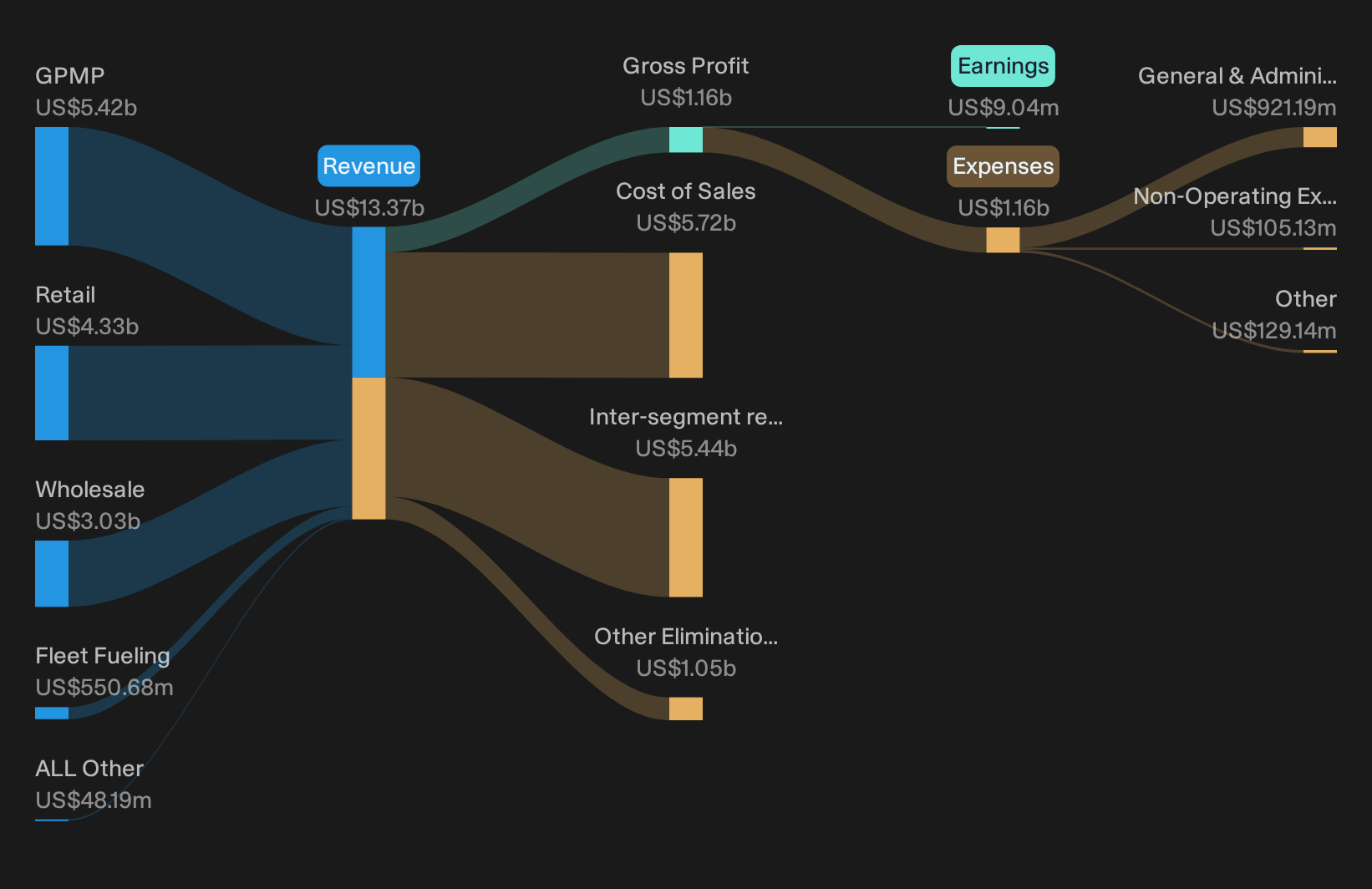
Arko runs convenience outlets across the United States, selling fuel and everyday staples alongside wholesale and fleet fueling operations. Retail contributed about US$4.3b in revenue, wholesale US$3.0b, GPMP US$5.4b, and fleet fueling US$0.6b, with a market value around US$488 million.
Ongoing dealerization program is unlocking $20+ million in annualized operating income and at least $10 million in structural G&A savings. This is promoting higher net margins and earnings stability as a leaner retail footprint emerges.
What really matters now is how one unresolved pressure shapes Arko’s ability to turn those efficiency gains into consistently stronger margins.
That unresolved pressure is exactly what the full narrative for Arko unpacks, showing how Arko’s fuel mix, store economics, and balance sheet decisions could either amplify or stall those margin gains.
Coca-Cola (KO)
Coca-Cola belongs in this Consumer Staples and Discount Retailers theme because its everyday beverages behave like affordable habits. They give households a small treat that still fits into tighter budgets when inflation and higher rates push spending toward routine essentials.
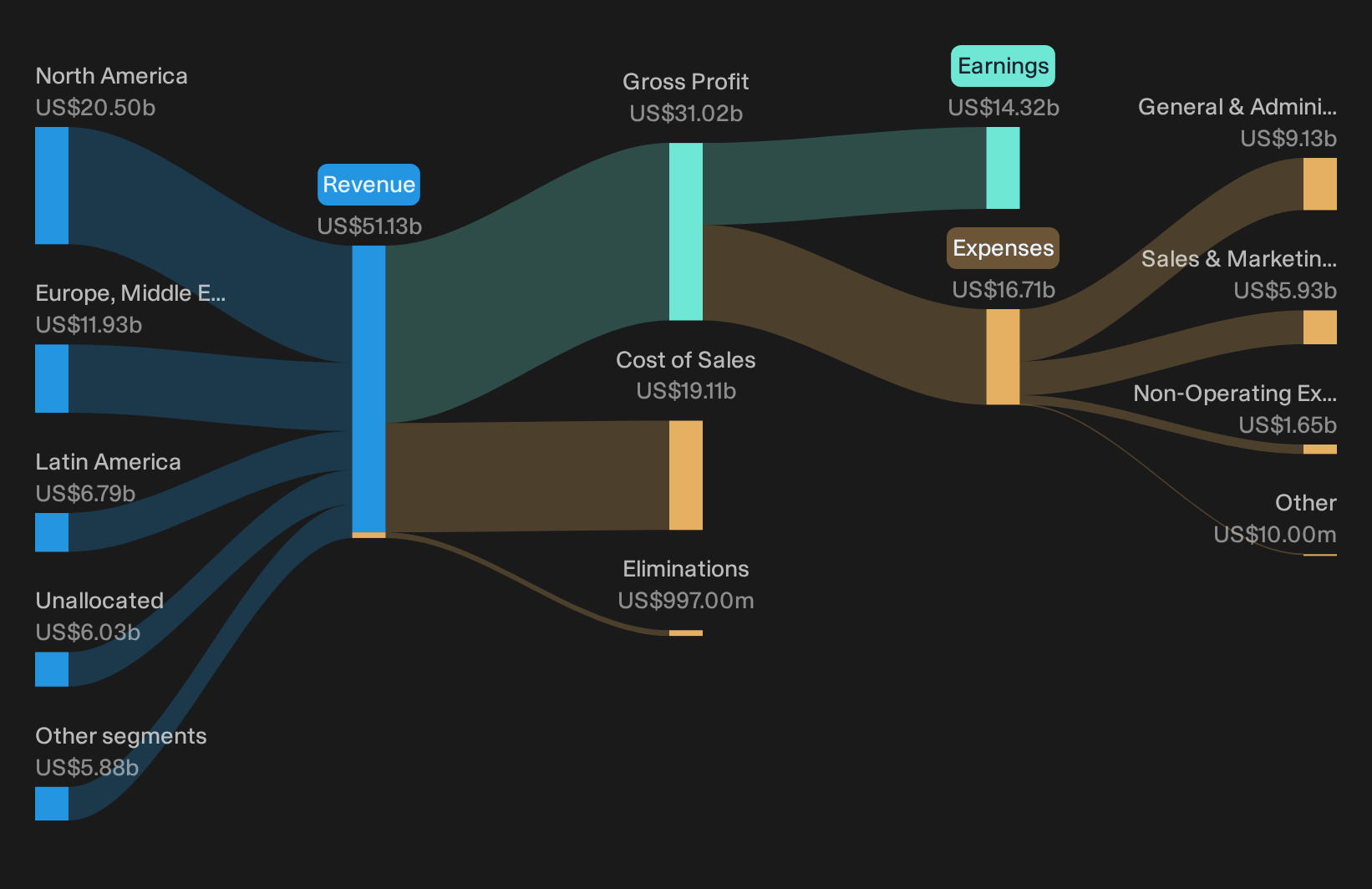
Coca-Cola is a global beverage company whose portfolio of soft drinks, water, coffee, tea, sports and juice products generated about US$50.1b in nonalcoholic beverage revenue, supported by a worldwide bottling network. The stock carries a market value near US$381.2b.
Strong presence and untapped potential in emerging markets (e.g., Africa and India) for future volume drivers.
What happens to Coca-Cola’s pricing power and cash generation if a single cost pressure tied to inflation and interest rates shifts direction?
If that cost line is what you are watching, the full narrative for Coca-Cola shows how Coca-Cola’s pricing power and volumes could be quietly decoupling from headline inflation.
Walmart (WMT)
Walmart may be the clearest expression of this screener’s theme. It uses its scale across supercenters, Sam’s Club warehouses and online channels to focus shoppers on low price essentials as inflation and higher rates keep households hunting for value.
Walmart generates about US$495.3b from Walmart U.S., US$141.4b from Walmart International, US$99.1b from Sam’s Club and US$74 million from Corporate and Support, and the stock carries a market value near US$873.7b.
Aggressive adoption of AI for both customer engagement (Sparky assistant, personalization) and supply chain/logistics (digital twins, predictive delivery windows, inventory management) is described as a potential source of future cost reductions and productivity gains, which could support higher operating margins and profitability.
The real swing factor is what happens to Walmart’s pricing power and mix if one cost pressure tied to inflation refuses to ease.
If that stubborn cost line is what you care about, the full narrative for Walmart shows where Walmart’s pricing power, mix and AI push could be accelerating or stalling.

Seeking Fresh Alternatives Before They Fly
Markets often move before headlines reflect what is happening. Fresh ideas may already be building momentum out of the spotlight. Review these curated sets while potential entry points remain available.
- Identify cash generating giants before they attract broad attention by scanning a curated 30 high quality undervalued stocks that still appear overlooked by many investors.
- Focus on structural power demand with a targeted 39 power grid technology and infrastructure stocks featuring companies involved in grid upgrades, transmission technology, and resilient electrical infrastructure projects.
- Explore resilient earners using a hand picked 31 resilient stocks with low risk scores built around durable balance sheets, consistent profitability, and lower volatility profiles.
This article by Simply Wall St is general in nature. We provide commentary based on historical data and analyst forecasts only using an unbiased methodology and our articles are not intended to be financial advice. It does not constitute a recommendation to buy or sell any stock, and does not take account of your objectives, or your financial situation. We aim to bring you long-term focused analysis driven by fundamental data. Note that our analysis may not factor in the latest price-sensitive company announcements or qualitative material. Simply Wall St has no position in any stocks mentioned.
Have feedback on this article? Concerned about the content? Get in touch with us directly. Alternatively, email editorial-team@simplywallst.com