
- PRICING
- LIVE QUOTES
- LEARN
- HELP


EN
Is Carvana Stock Underperforming the S&P 500?
Tempe, Arizona-based Carvana Co. (CVNA) operates an e-commerce platform for buying and selling used cars. Valued at a market cap of $70.4 billion, the company provides vehicle acquisition, inspection, and reconditioning; an online search and shopping experience; financing; complementary products; and a logistics network, among other services.
Companies with a market cap of $10 billion or more are typically referred to as “large-cap stocks.” CVNA fits squarely in that category, with a market cap above this threshold that reflects its size and influence in the auto and truck dealerships industry.
Despite its strength, CVNA stock slipped 34.3% from its 52-week high of $97.38, reached on Jan. 23. The stock is down 1.4% over the past three months, lagging behind the S&P 500 Index’s ($SPX) 4.6% rise during the same time frame.
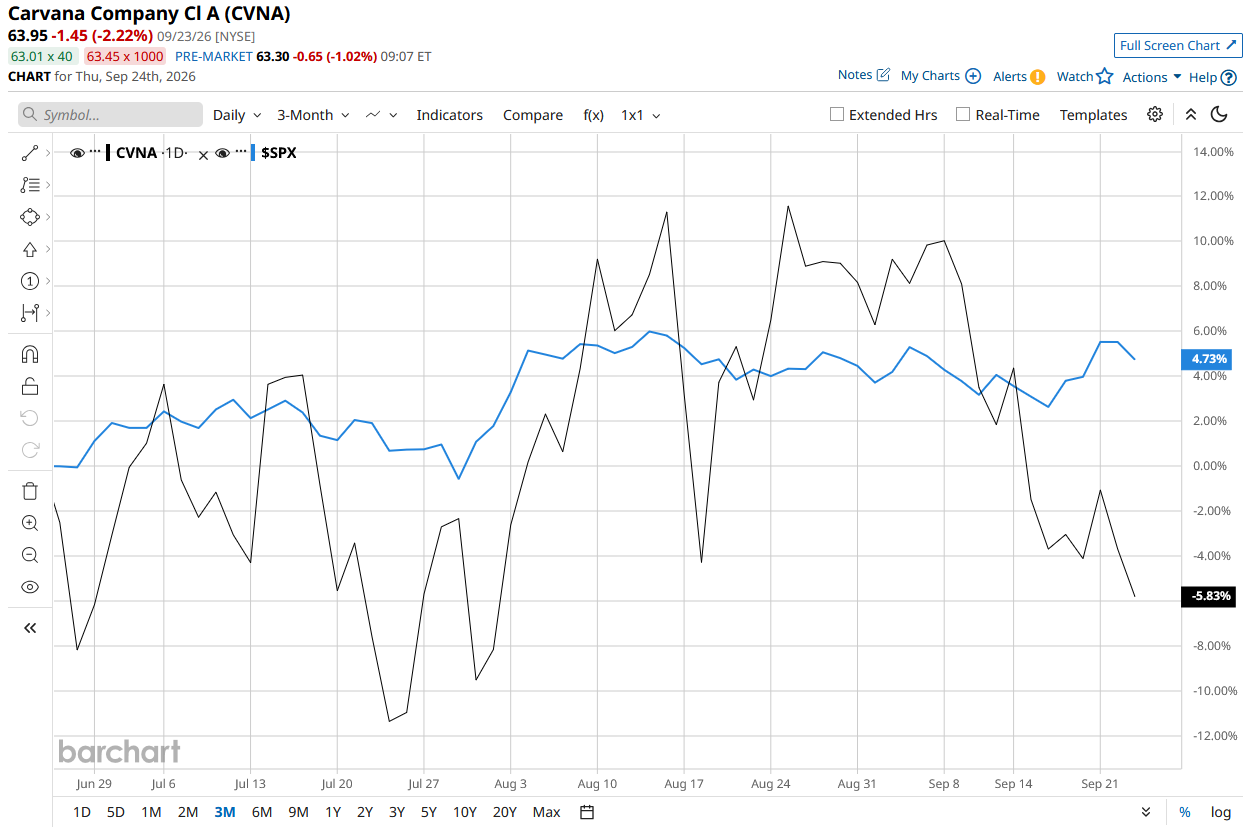
However, the scenario remains the same in the longer term. The stock has declined 15.8% over the past 52 weeks, while SPX delivered 15.8% returns over the same time frame, outpacing the stock.
CVNA has been trading below its 200-day and 50-day moving averages since this month, indicating short-term bearish momentum.
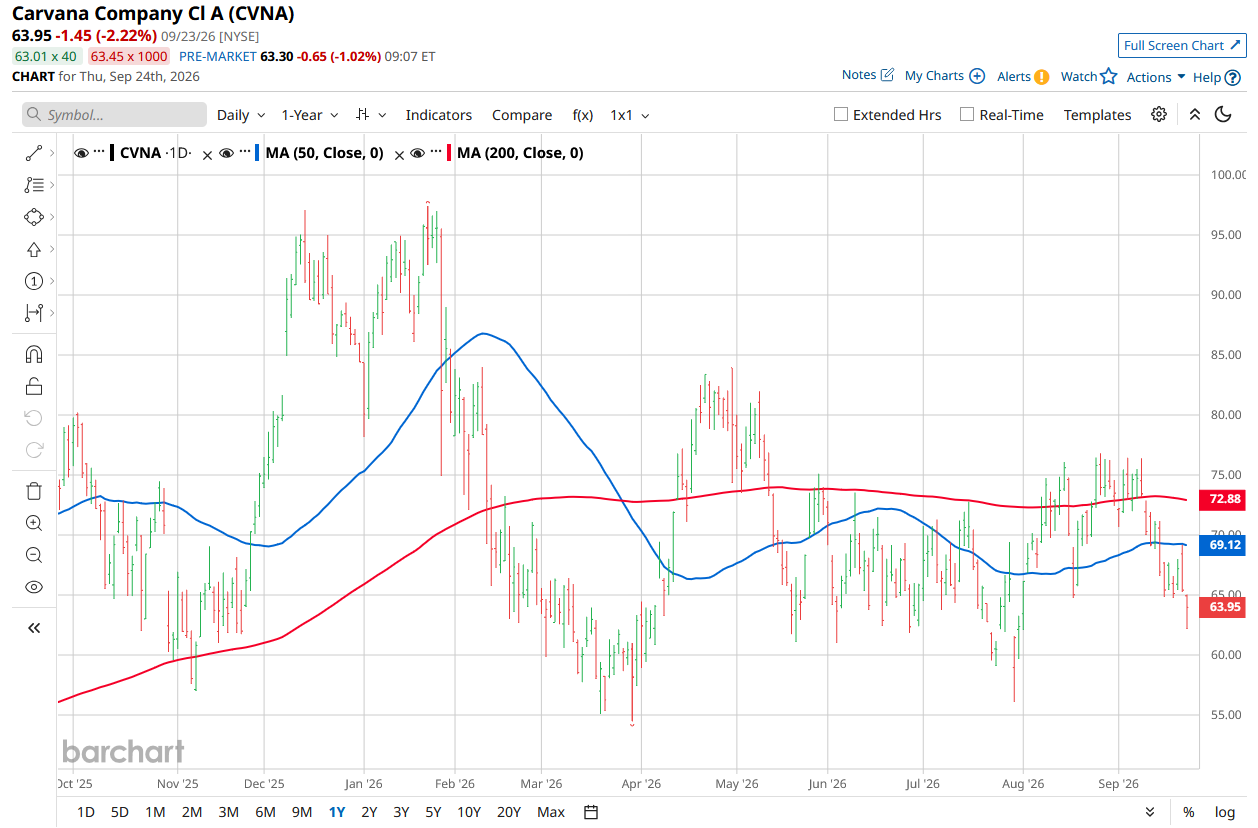
On July 30, CVNA stock fell 7.4% following the release of its Q2 2026 earnings. The company’s revenue for the quarter amounted to $7.4 billion, surpassing the Street’s estimates. Moreover, its adjusted EPS came in at $0.42, matching the consensus estimates. However, its adjusted EBITDA margin contracted by 200 bps to 10.4%, accompanied by a fall in its non-GAAP gross profit per unit. Management expects its full-year adjusted EBITDA in the range of $2.7 billion to $3 billion, which also missed Wall Street’s expectations, leading to a loss of investor confidence.
When stacked against its rival, Penske Automotive Group, Inc. (PAG), CVNA has underperformed. Over the past year, PAG stock has grown 20.5%.
Analysts’ view of CVNA stock is moderately bullish. Among the 23 analysts covering the stock, the overall consensus rating is “Moderate Buy.” Its mean price target of $84.89 offers a 32.7% upside potential.
On the date of publication, Aritra Gangopadhyay did not have (either directly or indirectly) positions in any of the securities mentioned in this article. All information and data in this article is solely for informational purposes. For more information please view the Barchart Disclosure Policy here.