
- PRICING
- LIVE QUOTES
- LEARN
- HELP


EN
3 Grain Logistics Stocks Positioned For Food Supply Chain Shifts
Food has become a fault line for geopolitics, with foreign aid cuts, war in Ukraine, Middle East conflict and a possible strong El Niño all tugging at the same fragile supply chain. That kind of pressure can punish some holdings while creating openings in others. This article walks through three grain storage and agricultural logistics stocks exposed to these shocks and explains how their role in global flows could matter for a diversified portfolio today.
The three stocks below are just a sample of what this theme can look like in a portfolio, and the full screen surfaced 34 more companies with equally detailed grain and logistics stories that are not covered here.
If you want to go straight to the source and identify your own highest conviction ideas in this space, head into the Global Agricultural Logistics and Grain Storage Operators screener
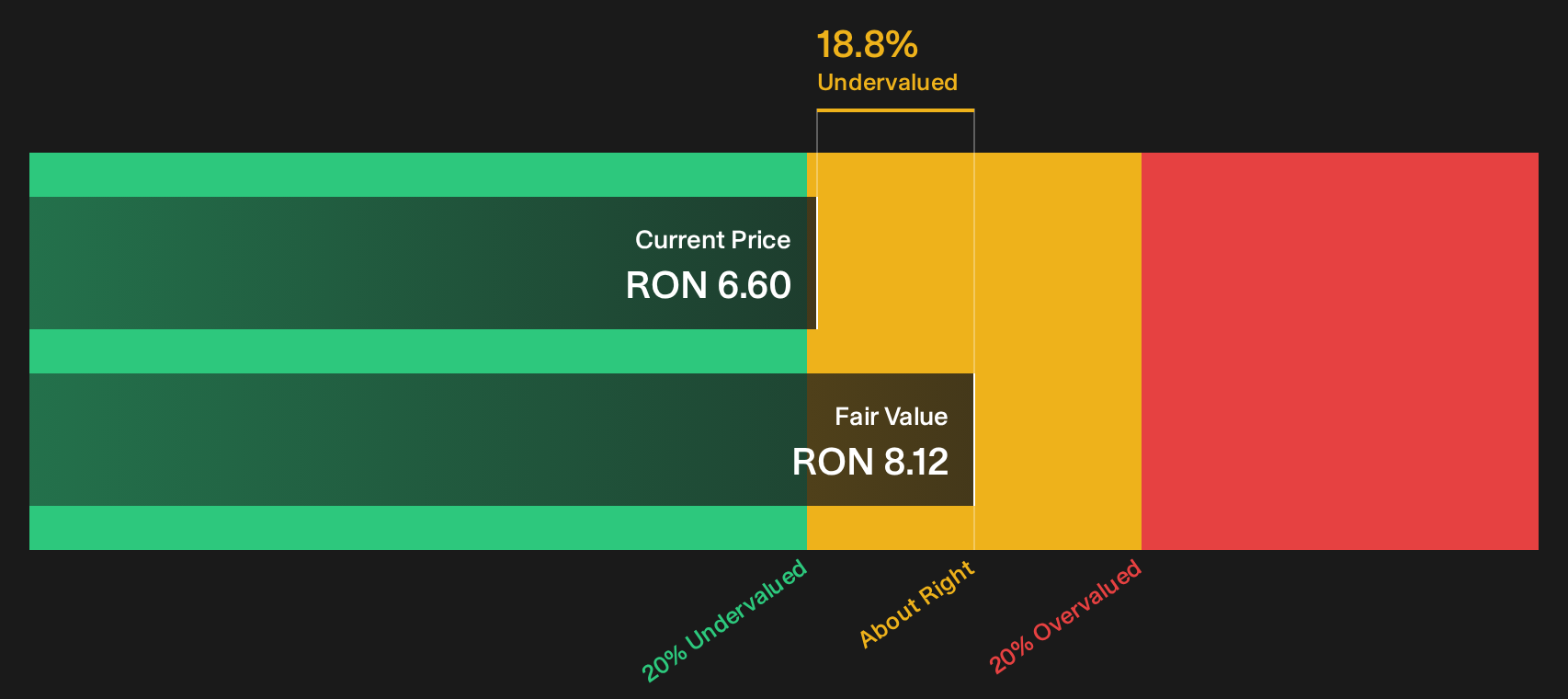
TTS (Transport Trade Services) (BVB:TTS)
Overview: TTS (Transport Trade Services) runs freight forwarding, river transport and port operations along the Danube and Black Sea, handling grain and other bulk cargo.
Operations: The group records RON443 million from forwarding, RON300 million from river transport and RON136 million from port operations, with smaller other revenue and intersegment offsets.
Market Cap: RON1.19 billion
TTS plugs directly into the Global Agricultural Logistics and Grain Storage Operators theme through its Danube barges and Black Sea port storage in Constanta, where grain and other bulk flows move between ships, rail and trucks. For investors watching food trade disruption, this Romanian freight chain offers targeted exposure to rerouted volumes. Potential returns depend on how changes in underlying conditions affect freight pricing and contract terms.
Those shifting conditions make it worth stress testing TTS (Transport Trade Services) against different freight scenarios with the DCF valuation analysis for TTS (Transport Trade Services), where contract sensitivity starts to show.
Grindrod (JSE:GND)
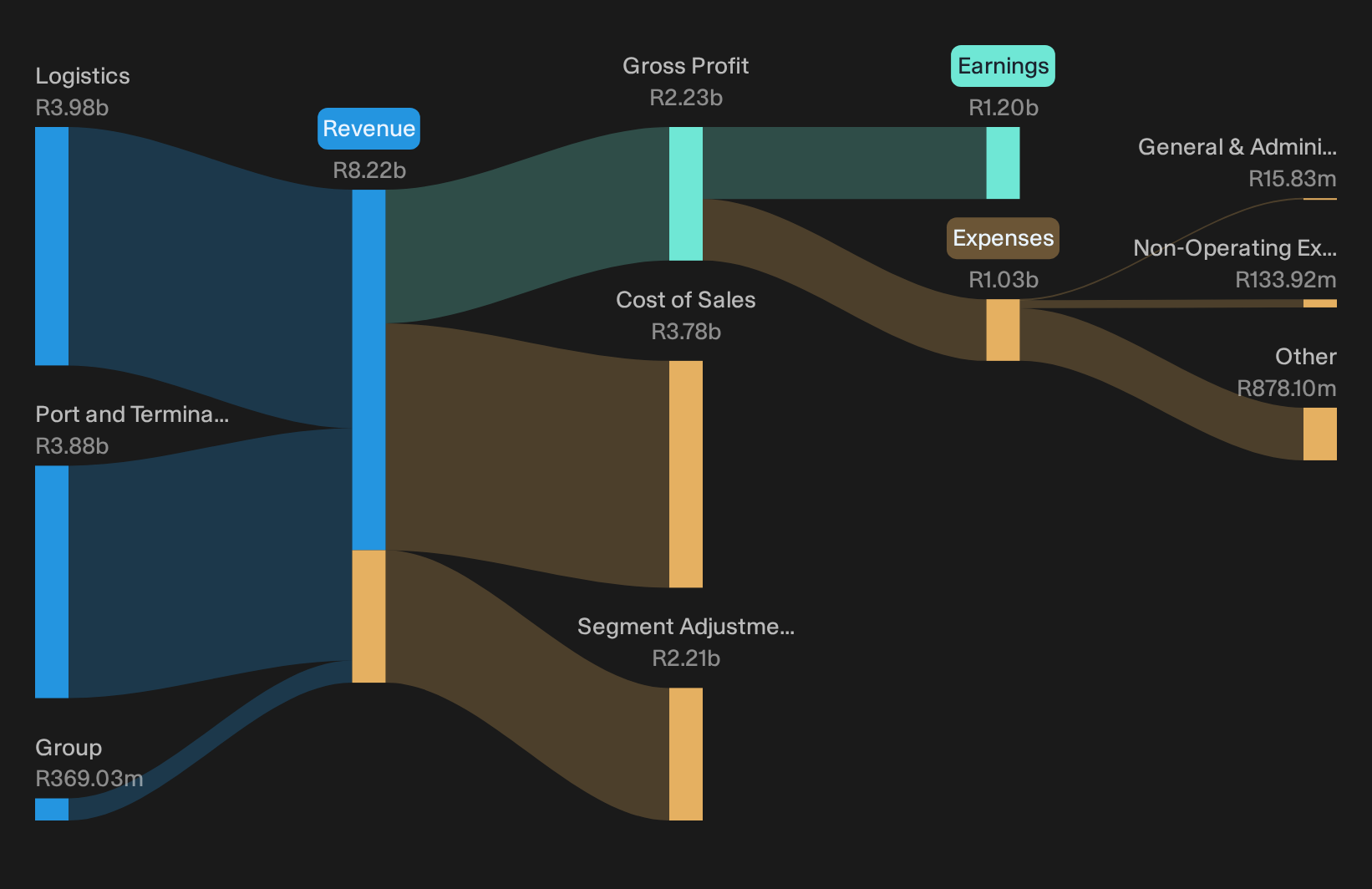
Overview: Grindrod runs ports, terminals, rail and road freight for bulk commodities and agricultural cargo, linking African corridors with global trade routes.
Operations: Grindrod generates about ZAR4.0 billion from Logistics and ZAR3.9 billion from Ports and Terminals, with segment adjustments reducing reported totals.
Market Cap: ZAR19.4 billion
Grindrod matters for this food supply chain theme because its African ports and freight corridors are where rerouted grain and fertilizer flows physically move when trade routes shift under geopolitical and weather pressure.
"The return of 13 locomotives from Sierra Leone for redeployment in South Africa could enhance asset utilization and revenue generation through leasing arrangements and rail service contracts, contributing to earnings."
What investors need to watch is how one unseen pressure in these corridors ultimately feeds through to pricing power and margins.
When those pressures shift, full narrative for Grindrod shows how Grindrod’s rail, port and freight mix could see earnings decouple from headline trade risk.
PPB Group Berhad (KLSE:PPB)
Overview: PPB Group Berhad runs an integrated grains and agribusiness operation built around flour milling, grain trading and related logistics and storage.
Operations: PPB Group Berhad generates about MYR3.7b from grains and agribusiness, MYR980 million from consumer products and MYR651 million from film, plus smaller property and other income.
Market Cap: MYR13.3b
PPB Group Berhad provides direct exposure to grain handling and flour milling in a context where food supply chains face geopolitical and weather-related pressures. Most of its revenue currently comes from grains and agribusiness. Any change in how those throughput volumes convert into earnings will be influenced by pricing dynamics in that segment.
Those throughput shifts are exactly what the analyst forecasts for PPB Group Berhad maps against, so you can see where PPB Group Berhad’s grain margins might begin to inflect.

Seeking Alternatives Before The Crowd
Fresh ideas often move first and slow research can get caught chasing what already has momentum. Scan these curated screens while they are still under the radar for now and consider them early.
- Spot potential breakouts early by reviewing the 171 high quality undervalued stocks before momentum traders push valuations away from your preferred entry range.
- Explore income opportunities by checking the 161 dividend fortresses while payouts and balance sheets still align for long term compounding.
- Monitor the next hardware wave by scanning the 85 AI infrastructure stocks while demand stories are forming and institutional money is only starting to notice.
This article by Simply Wall St is general in nature. We provide commentary based on historical data and analyst forecasts only using an unbiased methodology and our articles are not intended to be financial advice. It does not constitute a recommendation to buy or sell any stock, and does not take account of your objectives, or your financial situation. We aim to bring you long-term focused analysis driven by fundamental data. Note that our analysis may not factor in the latest price-sensitive company announcements or qualitative material. Simply Wall St has no position in any stocks mentioned.
Have feedback on this article? Concerned about the content? Get in touch with us directly. Alternatively, email editorial-team@simplywallst.com